Giriraj Singh Hails 12 Years of Textile Growth Under Modi Govt
Synopsis
Union Textiles Minister Giriraj Singh has credited twelve years of BJP-led governance for driving India's textile sector toward global success and self-reliance, pointing to policy frameworks like ATUFS and the PLI Scheme as key enablers of the sector's transformation.
Key Takeaways
Union Textiles Minister Giriraj Singh posted on 26 May 2026 hailing twelve years of textile sector growth under the Modi government .
He stated the sector has advanced on the path of 'growth and self-reliance' ( vikas aur atmanirbharta ) through sound policy over 12 years .
The Amended Technology Upgradation Fund Scheme (ATUFS) , launched in 2016 , aimed to modernise textile units and boost global competitiveness.
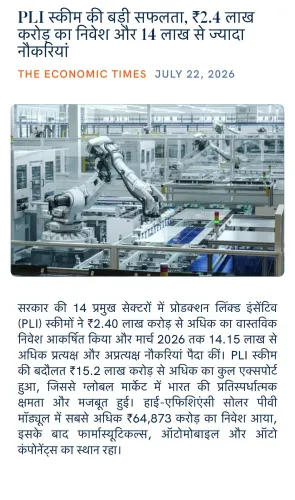
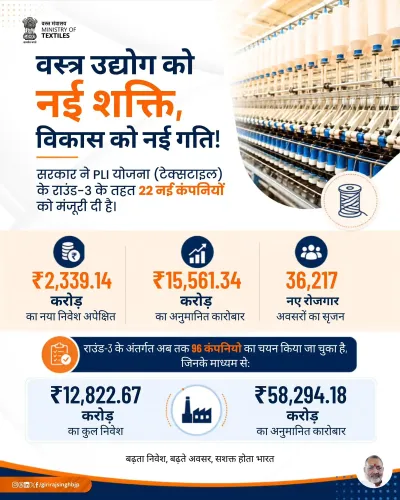
The PLI Scheme for Textiles , notified in 2021 , targets investment in man-made fibre and apparel manufacturing.
The textile sector is one of India's largest employers, covering spinning mills, garment factories, handloom clusters and export houses.
Future policy attention will focus on PLI implementation progress and textile allocations in upcoming Union Budgets .
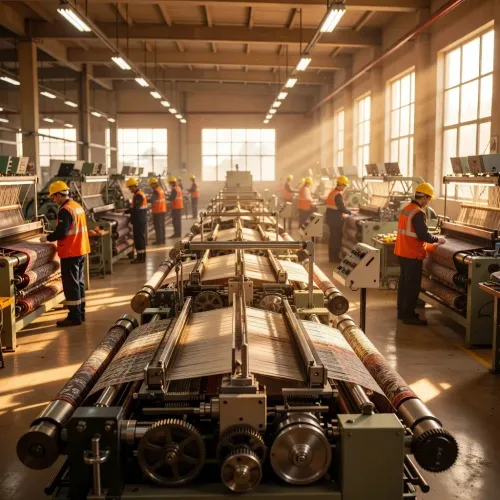
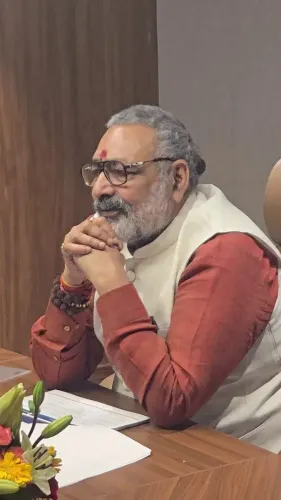
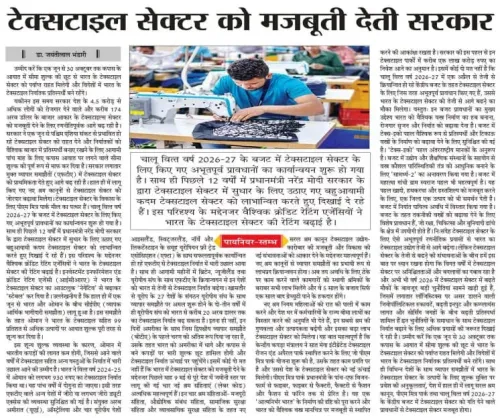
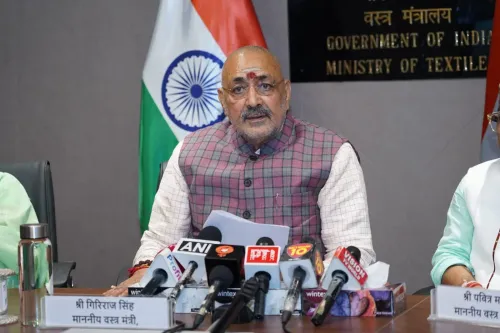
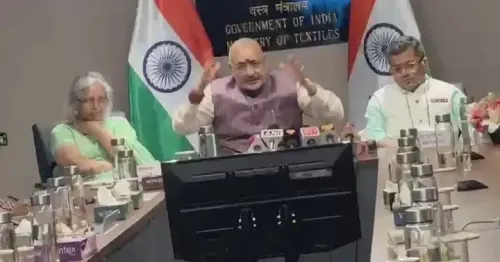
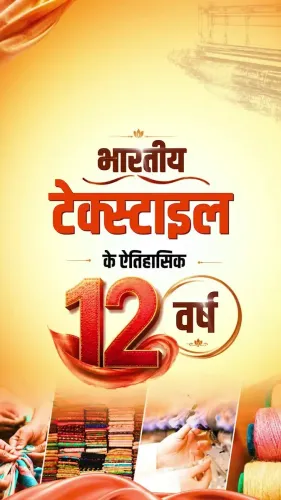
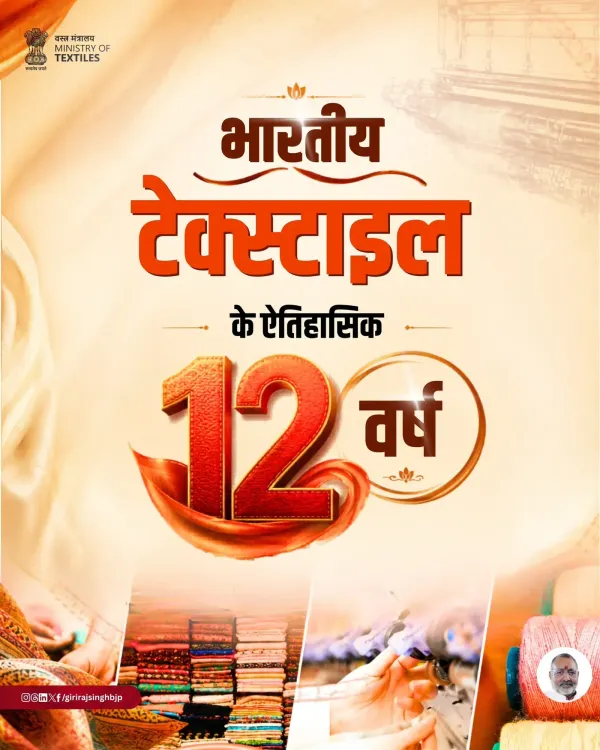
Union Textiles Minister Giriraj Singh on Tuesday, 26 May 2026 credited twelve years of BJP-led governance for transforming India's textile sector, saying the industry has achieved significant global success through sound thinking and good policy. The minister posted on X with four images, framing the sector's progress as a symbol of 'New India's' rising strength and prosperity.
In his post, Singh wrote: 'भारतीय टेक्सटाइल क्षेत्र आज विकास और आत्मनिर्भरता के रास्ते पर तेजी से आगे बढ़ रहा है' ['The Indian textile sector is today rapidly advancing on the path of growth and self-reliance']. He added that over the past twelve years, the sector has 'achieved great success across the world' with the help of the right thinking and good policies. The post was tagged with #12YearsOfProgress, #ModiGovt and #Glorious12Years.
Context
The post marks what the BJP is commemorating as twelve years of the Narendra Modi-led government, which first came to power in May 2014. Singh's framing positions the textile sector as a flagship example of the administration's economic record, invoking the Atmanirbhar Bharat (self-reliant India) vision that has underpinned manufacturing policy since 2014. The minister, a Lok Sabha MP from Begusarai, Bihar, has been a vocal advocate for domestic industry revival.
Policy Backdrop
Two major interventions anchor the government's textile narrative. The Amended Technology Upgradation Fund Scheme (ATUFS), launched in 2016, was designed to modernise textile processing units and sharpen their global competitiveness. Subsequently, the Production Linked Incentive (PLI) Scheme for Textiles, notified in 2021, targeted fresh investment in man-made fibre and technical apparel manufacturing, sectors where India had historically lagged behind competitors such as China, Bangladesh and Vietnam.
Both schemes sit within the broader Make in India framework, which treats textiles as a strategic, labour-intensive sector capable of generating mass employment and improving the country's trade balance. The Ministry of Textiles has consistently aligned its programmes with the Atmanirbhar Bharat goal of reducing import dependence while scaling domestic value addition and technology adoption.
Stakeholders and Impact
India's textile and apparel industry is one of the country's largest employers, supporting millions of workers across spinning mills, garment factories, handloom clusters and export houses. Textile exporters and garment manufacturers have been the primary beneficiaries of the PLI and ATUFS incentives, while handloom weavers have been addressed through separate welfare and branding schemes under the same ministry. The sector is also a significant contributor to merchandise export earnings.
Singh's remarks are likely to resonate with industry bodies that have long lobbied for policy continuity, though stakeholders in the handloom and power-loom segments have at times called for faster disbursal of scheme benefits and streamlined compliance requirements.
What's Next
The government's ability to sustain this momentum will be tested by implementation progress on the PLI Scheme for Textiles and the contours of textile-related allocations in upcoming Union Budgets. Global headwinds — including shifting trade patterns and competition from low-cost manufacturing hubs — mean that policy consistency and faster on-ground execution will be critical. Any fresh export strategy document or scheme expansion announced in the near term will be closely watched by industry and investors alike.
Point of View
Using the textile sector as a proxy for the broader economic transformation narrative the party wants to project. By invoking Atmanirbhar Bharat and global success in the same breath, the minister is stitching together two of the government's most prominent brand planks — self-reliance and international standing — into a single sectoral story. The framing also serves a domestic political purpose: textiles is a high-employment sector with a strong footprint in electorally significant states, making it an effective vehicle for outreach to workers and small manufacturers. Whether the claims hold up to scrutiny will depend on verifiable export and employment data, which the opposition is likely to contest.
NationPress
16 Oct 2026
Frequently Asked Questions
What did Giriraj Singh say about India's textile sector?
Giriraj Singh said India's textile sector is rapidly advancing on the path of growth and self-reliance, and has achieved great global success over the past twelve years due to sound thinking and good government policies.
What is the PLI Scheme for Textiles in India?
The Production Linked Incentive (PLI) Scheme for Textiles was notified in 2021 to attract fresh investment and boost manufacturing of man-made fibre and technical apparel in India, sectors where the country had historically lagged behind global competitors.
What is ATUFS and how does it help India's textile industry?
The Amended Technology Upgradation Fund Scheme (ATUFS), launched in 2016, provides financial support to textile processing units for technology modernisation, helping them improve quality and competitiveness in global markets.
What is Atmanirbhar Bharat and its link to textiles?
Atmanirbhar Bharat is the Modi government's self-reliance initiative, launched in 2014 onward, which promotes domestic manufacturing and reduced import dependence. The textile sector has been a key focus area under this framework.
Who is Giriraj Singh and what ministry does he head?
Giriraj Singh is a senior BJP leader and Lok Sabha MP from Begusarai, Bihar, currently serving as Union Minister of Textiles in the Narendra Modi government.