Giriraj Singh: PLI Round-3 Clears 22 Firms, Rs 2,339 Cr Investment
Synopsis
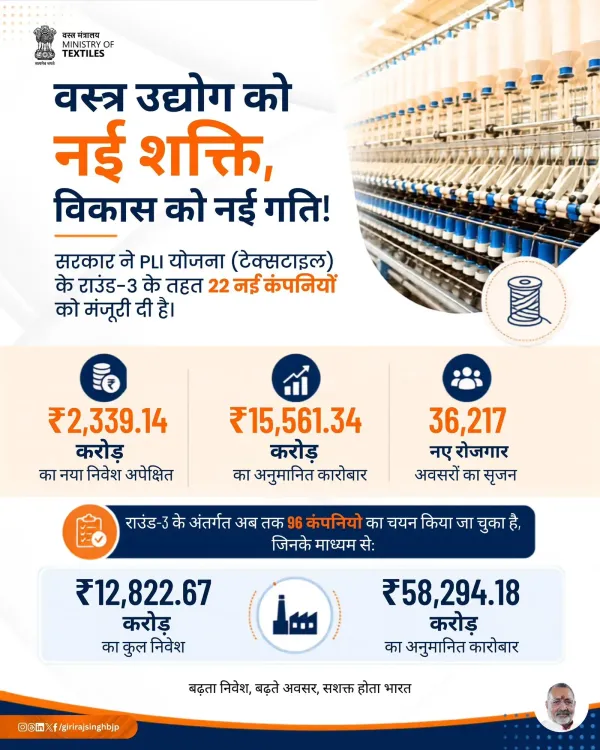
Union Textiles Minister Giriraj Singh announced PLI Round-3 approval for 22 new companies, projecting Rs 2,339 crore in investment, Rs 15,561 crore in turnover, and 36,217 jobs — advancing India's Atmanirbhar Bharat manufacturing push.
Key Takeaways
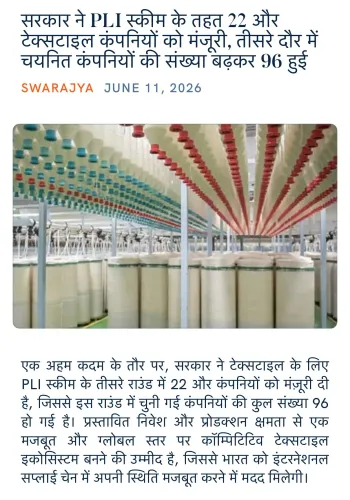
22 new companies have been approved under Round-3 of the PLI scheme for textiles , announced by Union Minister Giriraj Singh on June 11, 2026 .
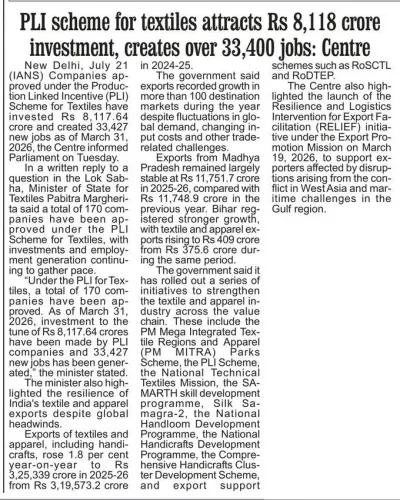
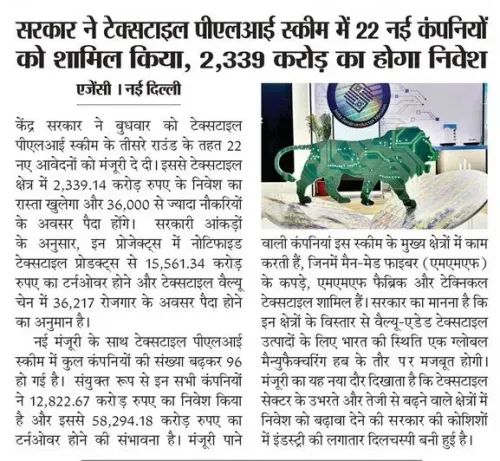
The approvals are projected to attract ₹2,339 crore in fresh investment into the textile sector.
Potential turnover from these approvals is estimated at ₹15,561 crore .
36,217 new employment opportunities are expected to be created as the approved companies scale up production.
The PLI scheme for textiles was launched in 2021 with a total government outlay of ₹10,683 crore over five years, targeting man-made fibres and technical textiles.
Round-3 follows two earlier rounds completed between 2022 and 2024 , broadening the scheme's industrial base.
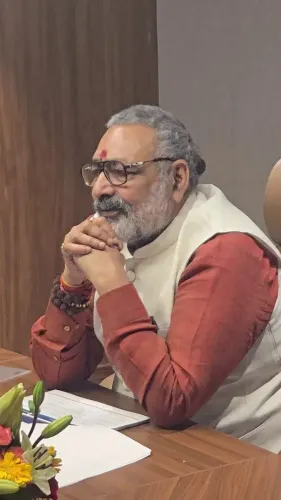
Union Textiles Minister Giriraj Singh announced on Thursday, June 11, 2026, that 22 new companies have received approval under Round-3 of the Production Linked Incentive (PLI) scheme for textiles, unlocking projected investment of ₹2,339 crore, potential turnover of ₹15,561 crore, and 36,217 new employment opportunities. The minister shared the update on X, framing the approvals as a milestone in India's broader Atmanirbhar Bharat manufacturing drive.
Context
Posting in Hindi, Singh wrote: 'PLI योजना के माध्यम से भारत का वस्त्र क्षेत्र नई ऊंचाइयों की ओर अग्रसर है' ('India's textile sector is advancing towards new heights through the PLI scheme'). He added that the Round-3 approvals would 'pave the way for investment of ₹2,339 crore, potential business of ₹15,561 crore, and 36,217 new employment opportunities.' The announcement signals continued government momentum in scaling the scheme beyond its first two rounds.
Policy Backdrop
The PLI scheme for textiles was approved by the Union Cabinet in 2021 with a total outlay of ₹10,683 crore over five years, targeting the man-made fibre and technical textiles segments. The scheme is part of a wider government push that has extended PLI incentives across 14 sectors since 2020, aimed at deepening domestic manufacturing capacity and reducing import dependence. Textiles, one of India's largest employment-generating sectors, was included to help Indian producers scale into higher-value product categories and increase global market share.
The first two rounds of PLI approvals for textiles were completed between 2022 and 2024, covering companies in apparel, fabrics, and technical textiles. Round-3 adds 22 more companies to the approved list, broadening the scheme's industrial footprint.
Stakeholders and Impact
The immediate beneficiaries are the 22 newly approved textile manufacturers, who will now be eligible for production-linked financial incentives once they meet prescribed investment and turnover thresholds. For the wider textile workforce, the government projects 36,217 new jobs as these companies scale up operations — a figure that carries particular weight given the sector's role as one of India's largest employers of semi-skilled and women workers.
Industry bodies have consistently sought expanded PLI coverage to compete with lower-cost manufacturing hubs in Bangladesh, Vietnam, and China. The Round-3 approvals are likely to be welcomed as a signal that the government intends to sustain, rather than wind down, incentive support for the sector.
What's Next
The key metric to watch will be the actual disbursement of incentives, which depends on the 22 approved companies meeting their committed investment and production targets over the next two years. Any further expansion of the scheme — including a potential Round-4 or an extension of the overall outlay — is expected to feature in discussions around the next Union Budget. Singh's post closes by reaffirming that 'the resolve of Atmanirbhar Bharat is continuously strengthening with growing investment, an empowered industry, and job creation,' suggesting the ministry intends to use these figures as a benchmark for future rounds.
Point of View
Turnover, and job-creation projections, Minister Singh is effectively setting a measurable accountability benchmark — one the ministry will need to defend if actual disbursements lag. The emphasis on Atmanirbhar Bharat framing also signals that the government continues to treat textile PLI as a flagship in its domestic manufacturing narrative ahead of the next budget cycle. Whether the 22 new approvals translate into on-ground capacity additions will depend on credit availability and global demand conditions — factors outside the scheme's direct control.
NationPress
26 Oct 2026
Frequently Asked Questions
What is the PLI scheme for textiles in India?
The Production Linked Incentive (PLI) scheme for textiles is a central government programme approved in 2021 with an outlay of Rs 10,683 crore over five years, offering financial incentives to manufacturers in the man-made fibre and technical textiles segments to scale production, attract investment, and generate employment.
How many companies have been approved under PLI textiles Round-3?
Under Round-3 of the PLI scheme for textiles, 22 new companies have been approved, according to an announcement by Union Textiles Minister Giriraj Singh on June 11, 2026.
How many jobs will PLI textiles Round-3 create?
The government projects that PLI textiles Round-3 will create 36,217 new employment opportunities as the 22 approved companies meet their investment and production commitments.
What is the expected investment from PLI textiles Round-3?
PLI textiles Round-3 is projected to attract ₹2,339 crore in investment and generate potential turnover of ₹15,561 crore .
What is Atmanirbhar Bharat and how does it relate to the textile PLI scheme?
Atmanirbhar Bharat — meaning 'self-reliant India' — is the government's overarching policy framework to reduce import dependence and deepen domestic manufacturing. The PLI scheme for textiles is one of 14 sector-specific PLI programmes launched since 2020 under this framework to build India's industrial capacity.