Giriraj Singh Reviews PLI Scheme Progress for Textiles
Synopsis
Union Textiles Minister Giriraj Singh chaired a PLI Scheme review meeting on July 29, 2026, evaluating progress under the ₹10,683 crore scheme targeting man-made fibres and technical textiles, and deliberating on measures to accelerate sector growth and expand opportunities for entrepreneurs.
Key Takeaways
Union Textiles Minister Giriraj Singh chaired a review meeting of the PLI Scheme for Textiles on July 29, 2026 .
The meeting assessed progress to date and deliberated on measures to give the textiles sector 'new momentum' and create more opportunities for entrepreneurs.
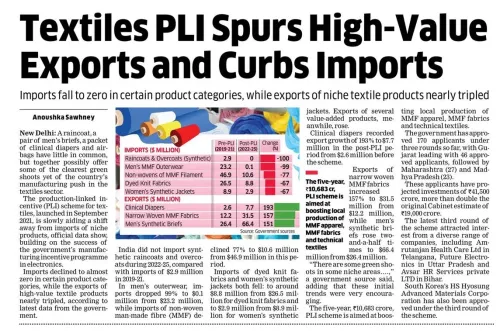
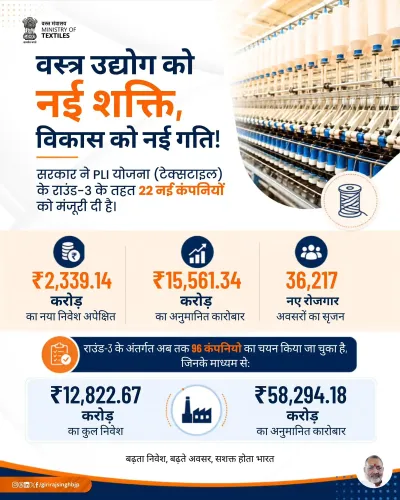
The PLI Scheme for Textiles carries an outlay of ₹10,683 crore over five years, approved by the Cabinet in September 2021 .
The scheme targets man-made fibre (MMF) apparel, MMF fabrics, and technical textiles — segments central to India's export diversification strategy.
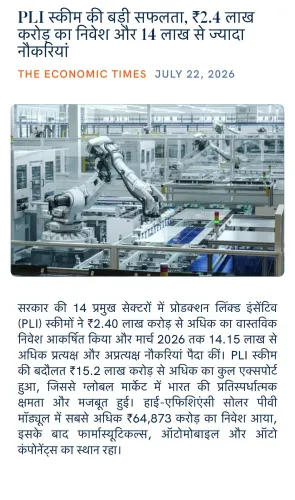
The review is part of routine periodic monitoring under the Aatmanirbhar Bharat framework, which spans PLI schemes across 14 sectors .
Disbursement figures and investment realisation reports are expected to follow in subsequent quarterly reviews by the Ministry of Textiles.
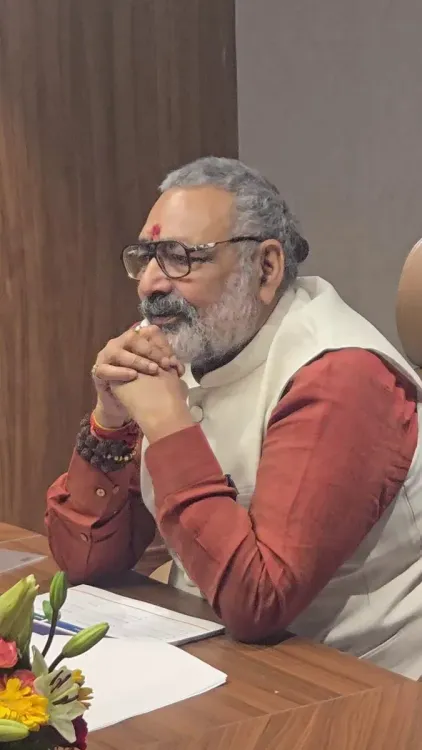
India's textiles sector got a close look from the top on Wednesday, July 29, 2026, as Union Textiles Minister Giriraj Singh chaired a review meeting on the Production Linked Incentive (PLI) Scheme for Textiles, assessing progress to date and deliberating on measures to inject fresh momentum into the sector and expand opportunities for entrepreneurs.
Singh posted on X that he 'chaired a review meeting of the PLI scheme, assessed progress so far, and held detailed deliberations on measures to give new momentum to the textiles sector and create more opportunities for entrepreneurs,' adding that 'work continues towards holistic development of the textiles sector and ensuring better opportunities for entrepreneurs.'
What the PLI Scheme for Textiles Is Built to Do
The PLI Scheme for Textiles was approved by the Cabinet in September 2021 with a total outlay of ₹10,683 crore over a five-year implementation period. It is specifically targeted at man-made fibre (MMF) apparel, MMF fabrics, and technical textiles — segments the government has identified as critical to shifting India's textile export profile away from its traditional cotton base.
The scheme sits within the broader Aatmanirbhar Bharat framework launched in 2020, which rolled out PLI incentives across 14 sectors to deepen domestic manufacturing and reduce import dependence. Textiles, being one of India's most labour-intensive industries, carries outsized significance in that agenda — every uptick in investment translates directly into factory-floor jobs.
Why Periodic Reviews Like This One Matter
Progress reviews of this nature are a standard feature of PLI scheme governance, designed to track whether investment commitments and production milestones are being met by beneficiary companies. For entrepreneurs in the MMF and technical textiles space, these meetings are where policy signals get sharpened — or redirected.
The Ministry of Textiles conducts such assessments periodically, with disbursement figures and investment realisation reports expected to follow in subsequent quarterly reviews. The emphasis Singh placed on 'creating more opportunities for entrepreneurs' suggests the ministry is actively examining whether the scheme's current design is drawing in the scale of private capital it was built for.
India's textiles sector is a strategic export earner, and the pivot to man-made fibres is not just domestic policy — it is a direct play for a larger share of global apparel supply chains that competitors have long dominated. The PLI scheme is the government's primary lever to close that gap. Whether the July 2026 review accelerates disbursements or triggers design tweaks will become clear in the months ahead.
Point of View
With the minister's public communication emphasising entrepreneur opportunity — a framing that suggests the government is conscious of uptake and wants to project forward momentum. The PLI scheme for textiles has been a slow burner relative to faster-moving sectors like electronics, making periodic high-visibility reviews a tool for both accountability and industry signalling. Singh's focus on man-made fibres reflects a longer-term strategic bet: India cannot compete in global apparel supply chains on cotton alone, and the PLI is the structural mechanism to change that. How quickly disbursements accelerate from here will be the real test of whether the scheme is delivering on its ₹10,683 crore promise.
NationPress
13 Sept 2026
Frequently Asked Questions
What is the PLI Scheme for Textiles in India?
The PLI Scheme for Textiles is a Production Linked Incentive programme approved by the Cabinet in September 2021 with an outlay of ₹10,683 crore over five years. It targets man-made fibre apparel, MMF fabrics, and technical textiles to boost domestic manufacturing and exports under the Aatmanirbhar Bharat initiative.
What did Giriraj Singh announce about the PLI scheme on July 29, 2026?
Union Textiles Minister Giriraj Singh chaired a review meeting of the PLI Scheme for Textiles on July 29, 2026 , assessing progress to date and holding detailed discussions on measures to give the sector new momentum and create more opportunities for textile entrepreneurs.
What is Aatmanirbhar Bharat and how does the textiles PLI fit in?
Aatmanirbhar Bharat is a government initiative launched in 2020 to promote domestic manufacturing and reduce import dependence. The PLI Scheme for Textiles is one of 14 sectoral PLI schemes under this framework, designed to attract private investment and scale up value-added production in India.
Why is the government focusing on man-made fibres in the textiles PLI scheme?
India's textile exports have historically been dominated by cotton, while global apparel supply chains increasingly demand man-made fibre products. The PLI scheme specifically targets MMF apparel, MMF fabrics, and technical textiles to help Indian manufacturers capture a larger share of these high-growth global segments.
What happens after a PLI textiles review meeting?
After periodic review meetings, the Ministry of Textiles is expected to release disbursement figures and investment realisation reports in subsequent quarterly reviews, tracking whether beneficiary companies are meeting their committed investment and production milestones under the scheme.