Xi Jinping tells Modi: China, India are partners, not rivals
Synopsis
At the 18th BRICS Summit in New Delhi, Xi Jinping told PM Modi that China and India are 'partners, not rivals' — a striking rhetorical reframe from Beijing after years of border-driven frost. Xi laid out a four-point framework for long-term ties, but the real test lies in whether partnership talk translates into border calm and trade rebalancing.
Key Takeaways
Xi Jinping described China and India as 'partners, not rivals' during a bilateral meeting with PM Modi at the 18th BRICS Summit in New Delhi .
The Chinese foreign ministry said the two leaders have met twice in two years, steering ties from a 'restart' to 'further enhancement.' Xi outlined a four-point framework covering strategic understanding, win-win cooperation, border peace, and multilateral coordination.
Both nations were described as key Global South members shouldering responsibilities for world peace and development.
China called for mutual support on BRICS presidencies and cooperation in the UN , SCO , and G20 .
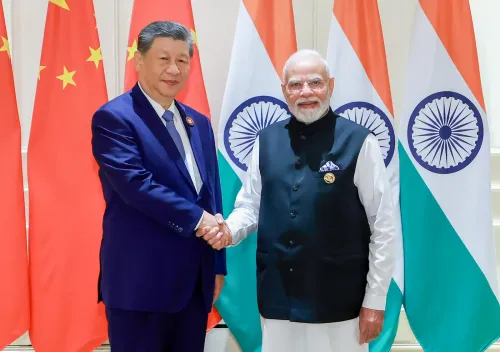
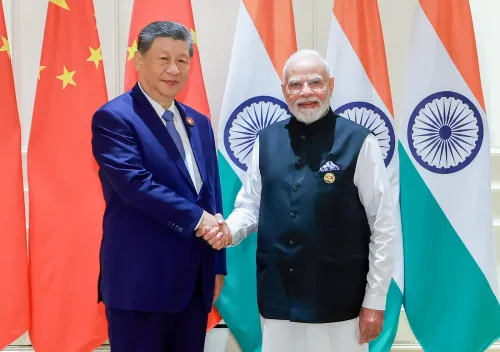
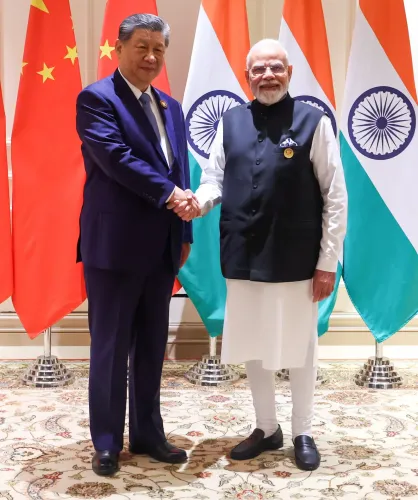
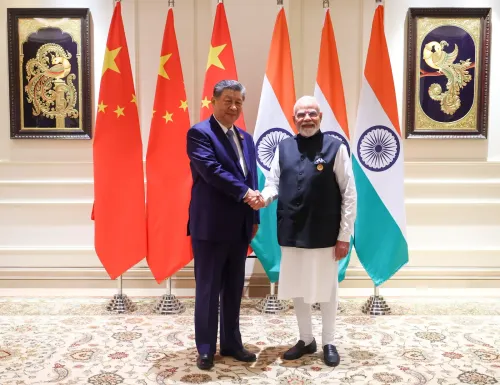
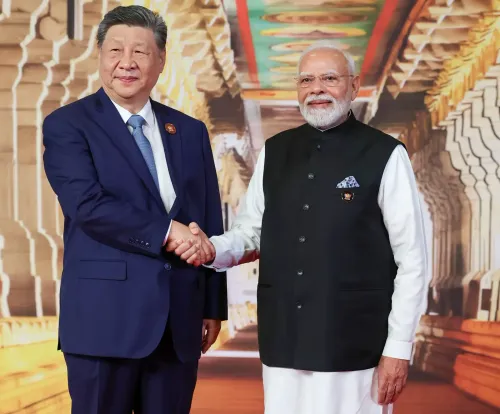
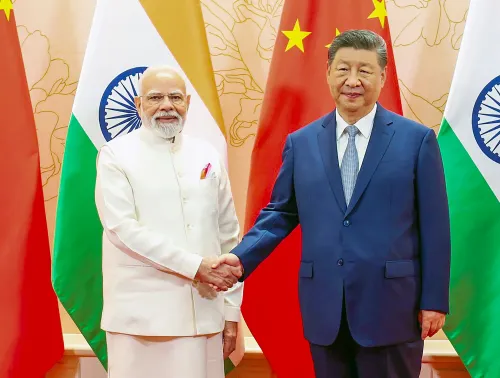
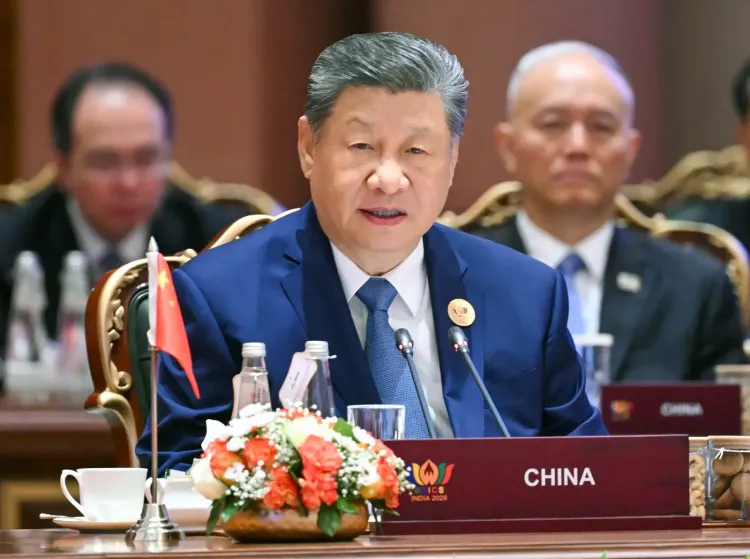
Chinese President Xi Jinping on Saturday, 12 September told Prime Minister Narendra Modi that China and India are 'partners, not rivals' and 'opportunities, not threats' for each other's development. The remarks came during their bilateral meeting on the sidelines of the 18th BRICS Summit in New Delhi, according to a statement released by the Chinese Ministry of Foreign Affairs.
Two years of diplomatic reset
The Chinese foreign ministry noted that in the past two years, Xi and Modi have met twice, steering China-India relations from what it described as a 'restart' to a 'further enhancement.' Institutional exchanges between the two nations have reportedly resumed, the cooperation agenda has been 'continuously extended,' and bilateral trade has hit a new high, the ministry added.
This comes amid a broader thaw in ties that had deteriorated sharply following the 2020 Galwan Valley border clash. While the two sides completed troop disengagement at key friction points along the Line of Actual Control (LAC) in recent months, deep strategic mistrust persists — particularly over infrastructure build-ups and contested boundary alignments.
Xi's four-point framework
According to the ministry statement, Xi outlined four principles for the steady, long-term development of China-India relations:
First, both sides should 'calibrate their direction with an objective and rational strategic understanding.' Xi stressed that China and India are partners and opportunities for each other — a judgment he said is rooted in the development stages of both nations and the current international environment.
Second, the two countries should pursue 'mutual success through win-win cooperation,' with development as the 'greatest common denominator' and a focus on strengthening friendly exchanges and mutually beneficial ties.
Third, both nations must 'eliminate interference with the political wisdom of mutual respect and understanding,' committing to the 'parallel development and mutual promotion' of bilateral relations and border issues while maintaining peace and tranquillity in border areas.
Fourth, China and India should 'benefit the world through open and inclusive multilateral cooperation,' including supporting each other's presidency of BRICS and deepening coordination within the United Nations, the Shanghai Cooperation Organisation (SCO), and the G20.
Global South responsibilities
The ministry statement underscored that as the world's two most populous countries and important members of the Global South, China and India 'shoulder important responsibilities' in a 'complex and volatile international situation.' It called on both sides to keep the 'future of humanity in mind,' prioritise the well-being of their people, and jointly promote 'high-quality development of BRICS cooperation.'
Significance and what lies ahead
The framing of ties as a partnership rather than a rivalry is notable, coming from the Chinese side — which has in recent years been more cautious in characterising the relationship publicly. However, critics argue that the rhetoric of partnership has historically coexisted with significant friction on the border, trade imbalances exceeding $85 billion in China's favour, and divergent positions on issues ranging from Pakistan to India's UN Security Council bid.
Notably, this is only the second time the two leaders have met since relations began normalising after prolonged diplomatic frost. With both nations holding or preparing to hold BRICS chairmanship roles, the multilateral stage offers a calibrated space for engagement without the political cost of standalone summits. Observers will be watching whether the four-point framework translates into concrete outcomes — particularly on border management mechanisms, market access, and visa facilitation — in the months ahead.
Point of View
Not rivals' language is diplomatically significant but far from novel — similar formulations surfaced during the Wuhan and Mamallapuram informal summits before the Galwan crisis shattered them. The real question is structural: India's trade deficit with China has ballooned past $85 billion, border infrastructure competition continues, and Beijing still blocks India's NSG and UNSC bids. A four-point framework without measurable deliverables risks being remembered as atmospherics rather than architecture. New Delhi would do well to pocket the rhetoric while pressing for verifiable outcomes on border protocols and market access.
NationPress
28 Oct 2026
Frequently Asked Questions
What did Xi Jinping say about China-India relations at the BRICS Summit?
Xi Jinping said China and India are 'partners, not rivals' and 'opportunities, not threats' for each other's development during his meeting with PM Modi on the sidelines of the 18th BRICS Summit in New Delhi on 12 September.
What is Xi Jinping's four-point framework for India-China ties?
The four points are: calibrating direction through rational strategic understanding; pursuing mutual success via win-win cooperation; eliminating interference through mutual respect, especially on border issues; and benefiting the world through open multilateral cooperation in forums like BRICS, the UN, SCO, and G20.
How many times have Xi Jinping and PM Modi met recently?
According to the Chinese foreign ministry, Xi and Modi have met twice in the past two years, guiding relations from a 'restart' to a 'further enhancement.' Institutional exchanges have gradually resumed and bilateral trade has reportedly reached a new high.
Why is the China-India 'partners not rivals' statement significant?
The framing is notable because it comes after years of diplomatic frost triggered by the 2020 Galwan Valley border clash. However, critics argue that similar rhetoric preceded past crises, and substantive issues — including trade imbalances and border tensions — remain unresolved.
What role do China and India play in the Global South according to the statement?
The Chinese ministry described both nations as the world's two most populous countries and important Global South members, saying they 'shoulder important responsibilities' for promoting world peace, stability, and development amid a complex international situation.