India-China ties: Modi-Xi BRICS meet opens door to trade, stability
Synopsis
The Modi-Xi bilateral at the New Delhi BRICS Summit may have cracked open a diplomatic window — but a Saviours report cautions that goodwill alone won't make India a global manufacturing hub. The harder work is domestic: infrastructure, R&D, and the structural competitiveness that turns geopolitical opportunity into economic reality.
Key Takeaways
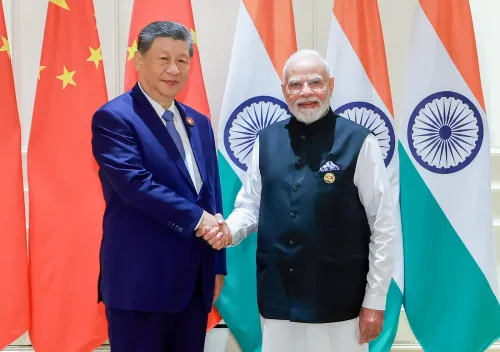
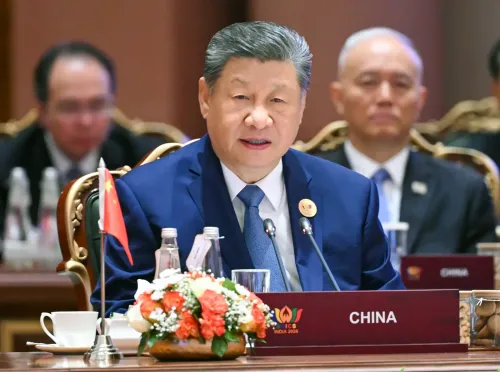
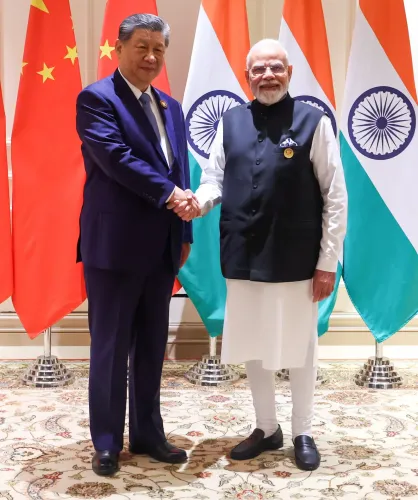
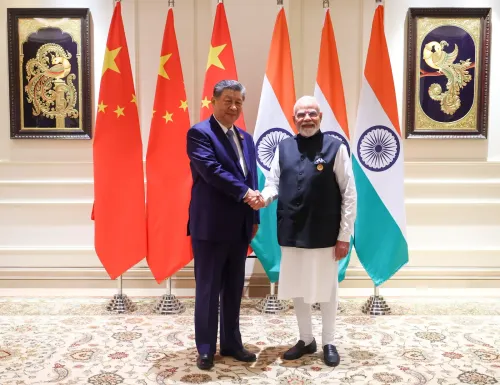
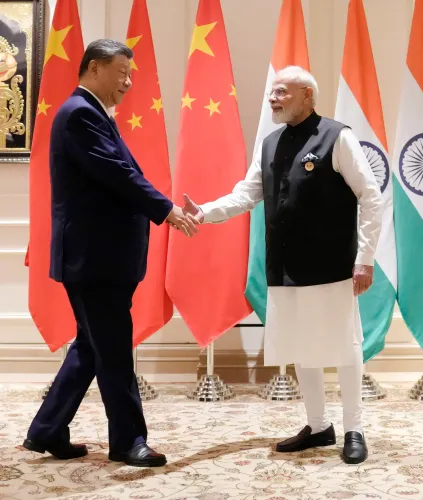
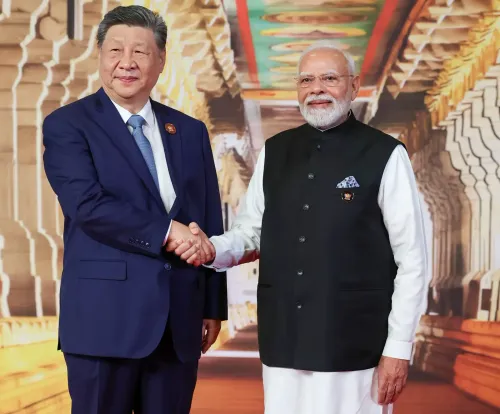
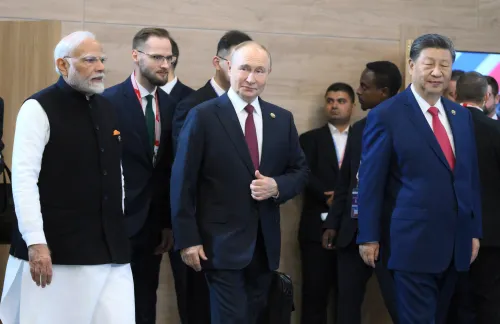
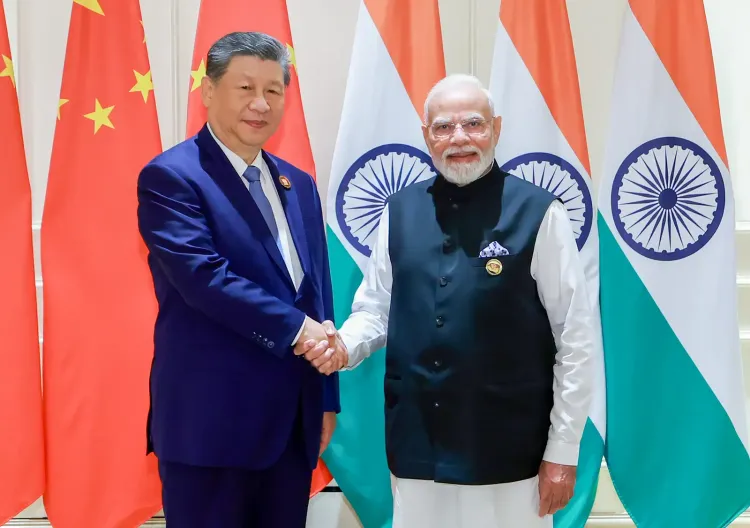
PM Narendra Modi and Chinese President Xi Jinping held bilateral talks on the sidelines of the 18th BRICS Summit in New Delhi .
Modi invoked the 'three mutuals' — mutual respect, mutual sensitivity, and mutual interest — as the framework for steering ties.
A Saviours report by former IPS officer Ashok Kumar Abrol calls for a pragmatic balance: strength without belligerence, self-reliance without isolation.
The report warns India cannot become a global manufacturing hub by default as factories shift away from China — structural reforms in infrastructure, energy, logistics, and R&D are essential.
The BRICS 2026 theme — 'Resilience, Innovation, Cooperation and Sustainability' — mirrors the report's core message that differences must not be allowed to grow into disputes.
The bilateral engagement between Prime Minister Narendra Modi and Chinese President Xi Jinping on the sidelines of the 18th BRICS Summit in New Delhi last week has opened a window for stronger economic ties and greater regional stability — but must be assessed through a pragmatic, not optimistic, lens, according to a report published by Saviours.
What Modi and Xi Said
In his bilateral talks with President Xi, Prime Minister Modi stressed that both sides must remain sensitive to each other's core concerns and allow the relationship to be guided by what he termed the 'three mutuals' — mutual respect, mutual sensitivity, and mutual interest. Both leaders reportedly echoed the same spirit during the meeting, signalling a shared, if cautious, intent to stabilise ties after years of friction.
The Pragmatic Case for Engagement
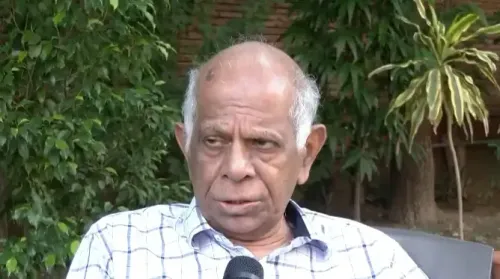
Ashok Kumar Abrol, a former Indian Police Service (IPS) officer writing for Saviours, argued that while the current engagement can create space for improved relations, it cannot overnight transform the two countries into allies or erase the historical legacy of 1962 and the deep strategic differences that persist. He noted, however, that if dialogue translates into greater stability, predictable trade, improved market access, and more reliable supply chains, both nations stand to benefit economically.
'For India, this matters even more. The world is looking for alternatives and additional manufacturing centres. India possesses a huge domestic market, a young workforce, expanding infrastructure, digital capabilities and a growing entrepreneurial ecosystem. But becoming the world's second manufacturing hub will not happen simply because some factories move out of China,' Abrol wrote.
India's Structural Prerequisites
Abrol emphasised that favourable global conditions alone will not propel India into a leading manufacturing role. 'India must create the conditions that make the country competitive in its own right. That requires reliable infrastructure, competitive energy, skilled manpower, efficient logistics, stable regulations, technological capability and — above all — a much greater commitment to research and development,' he added.
The report argued that the most pragmatic posture toward China is neither outright confrontation nor capitulation, but a calibrated balance: strength without belligerence, self-reliance without isolation, competition without hostility, and cooperation without dependence.
The Civilisational Dimension
'India does not need to become another China. Nor does India need to defeat China to succeed. It needs to become sufficiently innovative, productive and technologically self-confident to engage China — and the world — from a position of strength,' Abrol noted, adding that a prosperous and stable India need not be an adversary to Beijing.
He stressed that the future of Asia would be shaped not only by which country grows stronger, but by whether its two largest civilisations can manage their differences with maturity: 'Differences are inevitable. Disputes are manageable. Conflict is avoidable. And cooperation need not mean surrender.'
BRICS Theme and the Road Ahead
The report noted that the 18th BRICS Summit theme — 'Resilience, Innovation, Cooperation and Sustainability' — aligns closely with its central premise that differences should not be allowed to harden into disputes. India's real strategic achievement, the report argued, would be developing the economic and technological strength needed to engage across the Himalayas from a position of confidence rather than fear. All eyes will now be on whether the diplomatic momentum generated at the New Delhi summit translates into concrete policy and trade outcomes in the months ahead.
Point of View
But the Saviours report is right to resist triumphalism: bilateral warmth has not historically translated into structural trust between New Delhi and Beijing. India's opportunity as a China-alternative manufacturing hub is real but time-bound — the window is open now because of global supply-chain anxiety, not because India has yet earned it. The report's most pointed observation is also the most overlooked in mainstream coverage: India's path to strategic parity with China runs through domestic R&D investment and regulatory stability, not diplomatic optics. Until those foundations are stronger, engagement, however well-intentioned, risks being asymmetric in China's favour.
NationPress
19 Sept 2026
Frequently Asked Questions
What was decided at the Modi-Xi meeting at the BRICS Summit?
Prime Minister Narendra Modi and Chinese President Xi Jinping held bilateral talks on the sidelines of the 18th BRICS Summit in New Delhi, with both leaders stressing the need to guide ties through 'three mutuals' — mutual respect, mutual sensitivity, and mutual interest. No specific agreements have been publicly detailed, but the meeting was framed as a step toward stabilising relations.
What are the 'three mutuals' Modi mentioned in the India-China talks?
The 'three mutuals' refer to the principles of mutual respect, mutual sensitivity, and mutual interest that Prime Minister Modi outlined during his bilateral meeting with President Xi at the BRICS Summit. Both leaders reportedly endorsed the same framework as a guiding spirit for the relationship.
Can improved India-China ties help India become a global manufacturing hub?
According to the Saviours report, greater stability and predictable trade with China could improve India's economic environment, but India cannot rely on factories merely shifting out of China. The report stresses that India must independently build competitive infrastructure, reliable logistics, skilled manpower, and strong R&D capabilities to claim a leading global manufacturing position.
What does the Saviours report recommend as the right approach toward China?
The report advocates a balance of strength without belligerence, self-reliance without isolation, competition without hostility, and cooperation without dependence. It argues that India neither needs to emulate nor defeat China, but must build enough economic and technological confidence to engage from a position of strength.
How does the BRICS 2026 theme connect to India-China relations?
The 18th BRICS Summit theme — 'Resilience, Innovation, Cooperation and Sustainability' — aligns with the report's central argument that differences between India and China should be managed maturely and not allowed to escalate into disputes. The report sees the theme as validating its core premise on stable civilisational engagement.