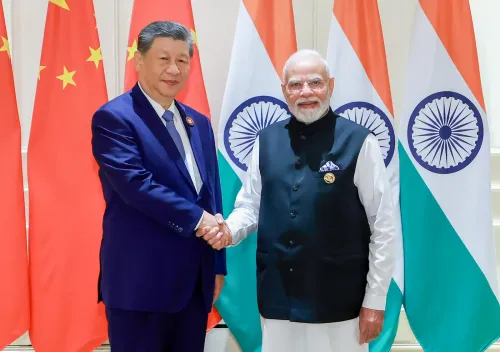
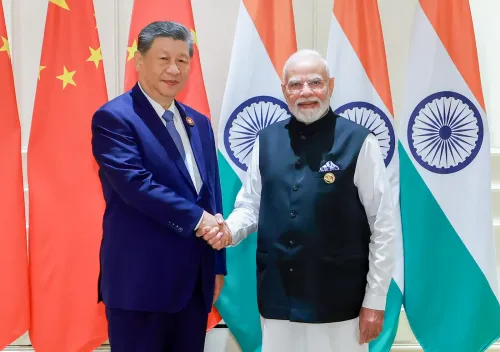
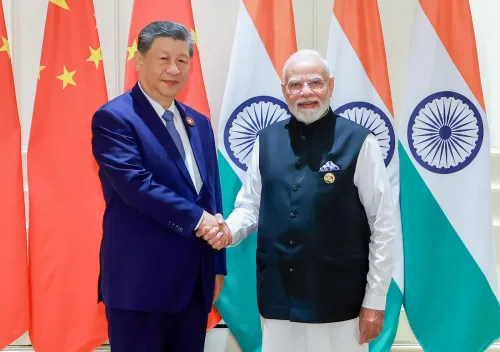
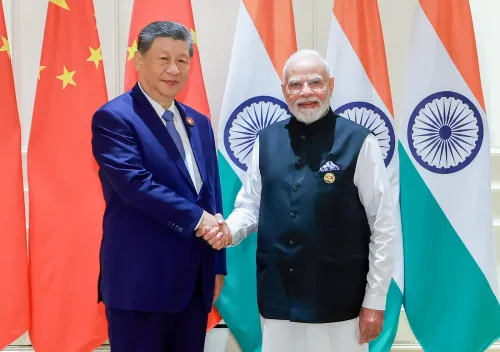
Modi-Xi meet: India, China agree to fix $112 bn trade imbalance
Synopsis
Modi and Xi's BRICS-sideline meeting wasn't routine diplomacy — it was forced by numbers. With India's trade deficit hitting $112 billion and Chinese inputs underpinning 66% of key industrial imports, the structural dependency is no longer ignorable. Xi's first India visit in seven years signals both sides see the status quo as unsustainable.
Key Takeaways
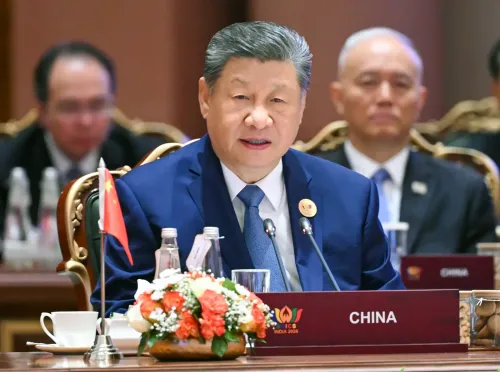
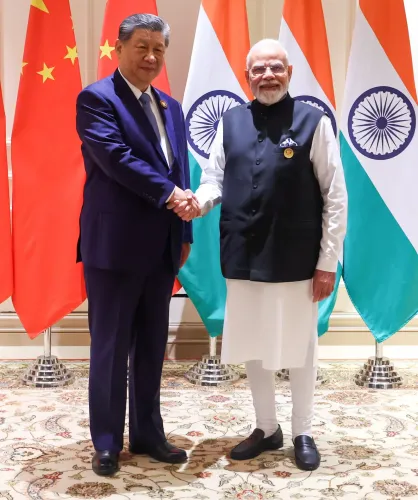
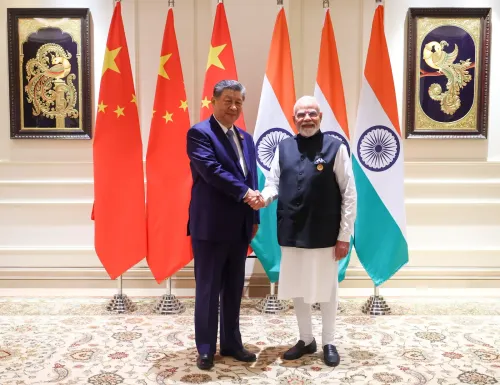
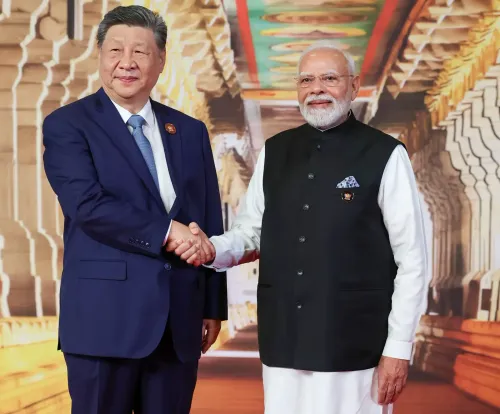
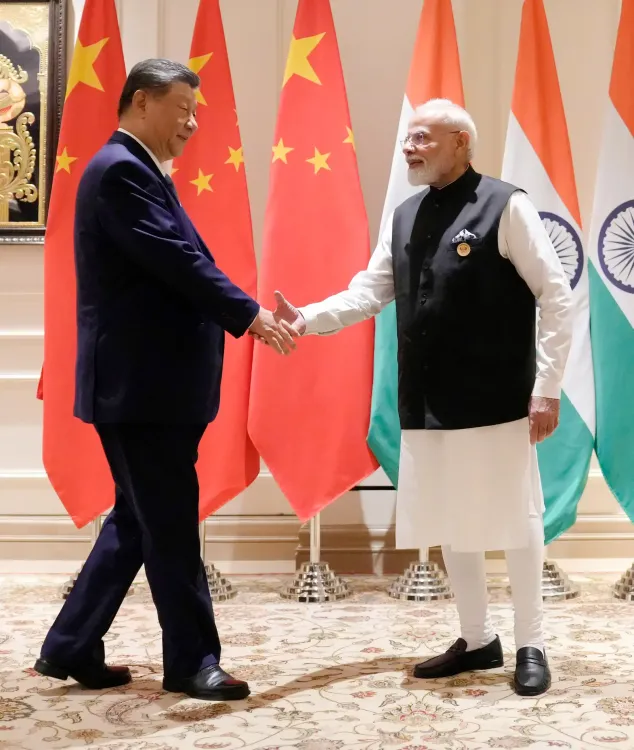
PM Modi and President Xi Jinping met on the sidelines of BRICS Summit 2026 in New Delhi on 12 September .
Both leaders agreed to address the structural trade imbalance and supply chain vulnerabilities.
India's trade deficit with China surged to $112.16 billion in 2025-26, up from $99.21 billion a year earlier.
China has overtaken the US as India's largest trading partner, with bilateral trade reaching $151.10 billion .
India imports over 40% of six critical minerals from China, creating exposure in EVs, renewables, and defence .
This was Xi's first visit to India in nearly seven years .
Prime Minister Narendra Modi and Chinese President Xi Jinping on Saturday, 12 September, agreed on the urgent need to address the structural trade imbalance between India and China, alongside supply chain vulnerabilities and the facilitation of 'meaningful and predictable market access,' the Ministry of External Affairs (MEA) said following their bilateral meeting in New Delhi. The talks took place on the sidelines of the BRICS Summit 2026, marking Xi's first visit to India in nearly seven years.
Key outcomes of the bilateral meeting
According to the MEA statement, the two leaders reviewed progress in people-to-people ties and 'underscored the need to further promote cultural exchanges, business linkages, and greater mobility.' On trade, both sides acknowledged 'each other's concerns, including structural trade imbalance and supply chain issues.'
This is the third consecutive year in which Modi and Xi have held face-to-face talks, following their meetings in Kazan and Tianjin. The continuity of engagement reportedly signals a measured diplomatic thaw, even as the trade deficit between the two nations has ballooned.
What Xi and Modi said
President Xi stated that 'China-India relations have developed, with both sides keeping in mind the long-term development of bilateral relations from a strategic perspective.' He added that despite differences, the two nations have been able to 'support and help each other to achieve common development.'
Prime Minister Modi, in turn, expressed gratitude for Beijing's cooperation during India's BRICS chairship. 'We now have the opportunity to discuss bilateral cooperation,' he said.
India-China trade deficit hits record $112 billion
The backdrop to these talks is a rapidly widening trade gap. India's trade deficit with China surged to $112.16 billion in 2025-26, up from $99.21 billion in 2024-25. While Indian exports to China rose 36.62 per cent to $19.47 billion, imports climbed 16.03 per cent to $131.63 billion, pushing total bilateral merchandise trade to $151.10 billion — a 18.31 per cent increase year-on-year.
Notably, China has overtaken the United States as India's largest trading partner, a shift that underscores the scale of commercial interdependence between the two Asian giants.
Supply chain exposure runs deep
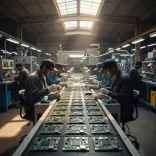
The imbalance is not merely a consumer-goods story. A large share of India's imports from China consists of essential industrial inputs, components, and capital goods used by Indian manufacturers. Four key sectors — electronics, machinery, computers, and organic chemicals — account for roughly 66 per cent of these imports, according to a Global Trade Research Initiative (GTRI) report.
China supplies approximately 43 per cent of India's electronics imports and 40 per cent of machinery and computer imports, making these core inputs vital to domestic manufacturing rather than discretionary consumer purchases. India also imports over 40 per cent of six key critical minerals from China, exposing major vulnerabilities in its renewable energy, electric vehicle (EV), and defence supply chains.
The GTRI report highlights that any withholding of these exports by China could trigger significant disruptions across India's clean energy, electronics, and pharmaceutical sectors.
What lies ahead
Beijing, for its part, is reportedly seeking an easing of India's investment rules to allow Chinese companies to participate in the fast-growing Indian market — a sensitive issue given longstanding security scrutiny of Chinese FDI since 2020. Whether New Delhi offers any concession on this front could determine the pace at which the trade-rebalancing agenda advances.
With both leaders now signalling intent to address the deficit structurally rather than rhetorically, the next few months will test whether diplomatic goodwill translates into concrete market-access arrangements and supply chain diversification roadmaps.
Point of View
Or whether both sides will once again settle for communiqué language that changes nothing structurally. With Chinese inputs feeding 66% of India's industrial import basket and critical mineral dependence exceeding 40%, New Delhi's leverage is limited unless it accelerates domestic alternatives. Seven years between Xi's India visits tells its own story; the deficit doubling in that span tells a louder one.
NationPress
28 Oct 2026
Frequently Asked Questions
What did PM Modi and President Xi agree on at the BRICS Summit 2026?
They agreed on the need to address India-China structural trade imbalance, supply chain vulnerabilities, and meaningful market access. Both leaders also discussed promoting cultural exchanges, business linkages, and greater mobility between the two countries.
How large is India's trade deficit with China in 2025-26?
India's trade deficit with China reached $112.16 billion in 2025-26, up from $99.21 billion the previous year. Total bilateral merchandise trade rose 18.31 per cent to $151.10 billion.
Why is the India-China trade imbalance a supply chain concern?
Roughly 66 per cent of India's imports from China are industrial inputs in electronics, machinery, computers, and organic chemicals — not consumer goods. India also sources over 40 per cent of six critical minerals from China, creating vulnerabilities in EV, renewable energy, and defence supply chains.
When did President Xi last visit India before the BRICS Summit?
The BRICS Summit 2026 visit marks President Xi Jinping's first trip to India in nearly seven years. The two leaders have, however, met in third countries — in Kazan and Tianjin — over the past two years.
What does China want from India in return?
China is reportedly seeking an easing of India's investment rules to enable Chinese companies to invest in the fast-growing Indian market — a sensitive issue given India's tightened FDI scrutiny of Chinese entities since 2020.