Pradhan spotlights Sambalpur's aftercare path for care leavers
Synopsis
Union Education Minister Dharmendra Pradhan has spotlighted Sambalpur district's effort to build a support system for young adults leaving child care institutions at 18, drawing attention to a structural gap in India's juvenile justice and welfare framework.
Key Takeaways
Dharmendra Pradhan shared a detailed essay on 27 September 2026 highlighting Sambalpur's model for care leavers exiting institutional care at age 18.
The Juvenile Justice (Care and Protection of Children) Act, 2015 mandates aftercare support including education and rehabilitation for young adults leaving child care institutions.
Sambalpur , a district in western Odisha, is being positioned as a site of grassroots innovation in bridging the post-18 welfare gap.
Mission Vatsalya , the central child protection scheme, has been expanding aftercare components, with potential links to Education Ministry skill and higher-education pathways.
Care leavers aged 18 to 25 without family networks face heightened risk of poverty and social exclusion, making transition support a critical policy need.
Pradhan's post uses ministerial reach to elevate a district-level model to national visibility, signalling interest in replicable aftercare frameworks.
What happens to a child the day they turn 18 and the gates of a child care institution close behind them? Union Education Minister Dharmendra Pradhan put that question at the centre of national attention on Sunday, 27 September 2026, sharing a detailed essay on Sambalpur's emerging model for young adults who age out of institutional care.
The '18 problem' — and why Sambalpur is trying to solve it
Across India, tens of thousands of children live in state-run or recognised child care institutions. The Juvenile Justice (Care and Protection of Children) Act, 2015 mandates aftercare support — education, rehabilitation, livelihood linkages — for those who cross the age threshold. But the gap between what the law promises and what a young adult actually finds on the other side of the gate has long been a quiet crisis in India's child welfare architecture.
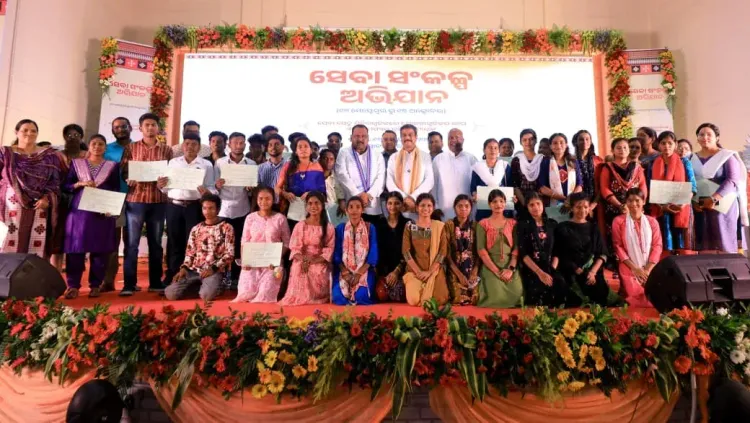
Sambalpur, a district in western Odisha, is being highlighted as a site where local actors are attempting to bridge precisely that gap — building structures that accompany care leavers into adulthood rather than releasing them into a void. Pradhan's post, which links to a longer essay, frames this not as a government scheme update but as a story worth telling on its own terms.
Pradhan's Odisha connection and the education-welfare link
The post carries specific weight coming from Pradhan. A senior BJP leader and former Union Petroleum Minister, he represents Sambalpur in Parliament and has consistently positioned his constituency as a laboratory for social policy. As Education Minister, he has sought to weave welfare and learning into a single continuum — a framing that aftercare for institutionalised youth fits squarely into.
The broader national context gives this local story a sharper edge. Mission Vatsalya, the central government's flagship child protection scheme, has been expanding its aftercare components, and the Education Ministry has signalled interest in integrating such provisions with skill and higher-education pathways. Whether the Sambalpur model feeds into that national architecture is a question the coming months will answer.
What 'beyond 18' means in policy terms
The phrase 'beyond 18' captures a structural problem that advocates have flagged for years. Institutional care, whatever its flaws, provides shelter, meals, and routine. Aftercare requires an entirely different set of resources — transitional housing, mentorship, employment pipelines, mental health support. Care leavers who lack family networks are statistically among the most vulnerable to poverty, exploitation, and social exclusion in the critical 18-to-25 window.
By amplifying Sambalpur's work, Pradhan is signalling that local innovation in child welfare deserves the same political visibility as flagship central schemes. It is a soft but deliberate use of ministerial reach — directing a national audience toward a district-level answer to a national-level failure.
The real test, as always, is whether a spotlight becomes a blueprint — and whether Sambalpur's 'new path' can be walked by care leavers in districts that haven't yet built one.
Point of View
Framing aftercare as an education-continuum issue rather than purely a social welfare matter could unlock new institutional pathways for care leavers. The post also arrives as Mission Vatsalya's aftercare provisions remain unevenly implemented across states, giving the Sambalpur spotlight potential policy leverage. Whether it translates into replicable programme design or stays a one-off ministerial gesture is the question advocates will be watching.
NationPress
27 Sept 2026
Frequently Asked Questions
What is aftercare for children leaving child care institutions in India?
Aftercare refers to the support — including shelter, education, livelihood assistance, and counselling — provided to young adults who exit state-recognised child care institutions after turning 18, as mandated by the Juvenile Justice Act of 2015.
What is Mission Vatsalya?
Mission Vatsalya is the central government's flagship child protection and welfare scheme that consolidates support for children in need of care, including expanding aftercare provisions for those who age out of institutional settings.
Why is Sambalpur significant in child welfare discussions?
Sambalpur, a district in western Odisha, is being highlighted for developing grassroots models to support care leavers transitioning out of institutional care at 18 — a gap the Juvenile Justice Act addresses but which remains unevenly implemented nationally.
What does the Juvenile Justice Act say about children turning 18 in institutions?
The Juvenile Justice (Care and Protection of Children) Act, 2015 mandates that states provide aftercare support — including educational, rehabilitative, and livelihood assistance — to young adults leaving child care institutions upon turning 18.
What is Dharmendra Pradhan's connection to Sambalpur?
Dharmendra Pradhan is the Union Minister of Education and a senior BJP leader who represents Sambalpur in Parliament, making his focus on the district's welfare innovations both a political and policy priority.