Pradhan backs arts college in Sambalpur named after Murari Mishra
Synopsis
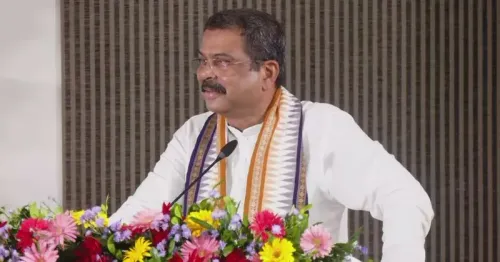
Union Education Minister Dharmendra Pradhan has called for a collective effort to establish an arts college in Sambalpur, Odisha, named after classical Sanskrit playwright Murari Mishra, envisioning it as a hub for dance, literature, performing arts, and modern digital art.
Key Takeaways
Dharmendra Pradhan proposed a new arts college in Sambalpur, Odisha , named after Sanskrit dramatist Murari Mishra .
The proposed institution would cover dance, literature, performing arts, and modern digital art.
Pradhan made the call in a reply to Prime Minister Narendra Modi on X on 8 August 2026 .
Murari Mishra is the classical Sanskrit author of Anargharaghava , a celebrated work in India's ancient dramatic tradition.
The proposal aligns with National Education Policy 2020 's emphasis on multidisciplinary arts and digital education.
No formal government approval, funding, or land allocation has been announced yet.
A classical Sanskrit playwright who lived centuries ago may soon lend his name to a modern arts institution in western Odisha. Union Education Minister Dharmendra Pradhan on Saturday, 8 August 2026, called for a collective effort to establish a dedicated arts college in Sambalpur, named after the celebrated Sanskrit dramatist Murari Mishra — envisioning it as a future hub for dance, literature, performing arts, and digital art.
Replying to Prime Minister Narendra Modi on X in Odia, Pradhan wrote that realising this aspiration would require a united effort, and expressed confidence that the proposed institution would 'emerge as a major centre for dance, literature, performing arts alongside modern digital art and allied arts education.'
Murari Mishra and the case for Sambalpur
Murari Mishra is best known as the author of Anargharaghava, a classical Sanskrit play that occupies a distinguished place in India's ancient dramatic tradition. Naming the proposed college after him is a deliberate act of cultural anchoring — connecting a new institution to a deep lineage of Indian artistic thought.
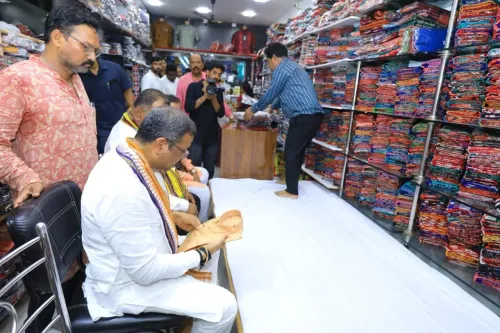
Sambalpur, a major city in western Odisha, is already a recognised regional cultural hub, home to the famous Sambalpuri weave and a vibrant performing arts scene. Locating such an institution here would extend quality arts education infrastructure beyond the state capital, into a tier-2 city with genuine cultural roots and student demand.
NEP 2020's multidisciplinary push meets classical tradition
Pradhan's proposal sits squarely within the framework of the National Education Policy 2020, which explicitly calls for multidisciplinary higher education that integrates arts, performing arts, literature, and digital skills. The vision articulated in his post — blending classical dance and Sanskrit-rooted literary tradition with modern digital art — is precisely the kind of synthesis NEP 2020 envisions for India's next generation of institutions.
The proposal also continues a broader pattern of efforts to establish named cultural-educational institutions in Odisha that link classical and regional traditions with contemporary forms, moving arts education from the margins of policy to a named priority.
What needs to happen next
A social media call, however high-profile, is a starting gun — not a sanction. The proposed college would require formal approval, land allocation, and funding commitments from either the state government, the central government, or both. Pradhan's framing of 'collective effort' signals that he sees this as a shared responsibility, not a unilateral central announcement.
The eyes of Odisha's arts community — students, practitioners, and educators — will now be on whether this exchange between a senior minister and the Prime Minister translates into a budget line and a foundation stone.
Point of View
Lending it ministerial weight without yet committing government resources. It fits a recognisable BJP pattern of invoking classical Indian figures to frame new institutions as cultural restoration rather than mere infrastructure. The NEP 2020 alignment gives the proposal bureaucratic legitimacy, but the real test is whether it moves from a tweet to a tender. For Odisha's arts ecosystem, the proposal's visibility matters as much as its eventual fate.
NationPress
23 Sept 2026
Frequently Asked Questions
What arts college has Dharmendra Pradhan proposed in Sambalpur?
Pradhan has called for establishing an arts college in Sambalpur, Odisha, named after classical Sanskrit playwright Murari Mishra, covering dance, literature, performing arts, and digital art.
Who was Murari Mishra?
Murari Mishra was a classical Sanskrit playwright and dramatist, best known as the author of Anargharaghava , a celebrated work in India's ancient dramatic tradition.
Has the Sambalpur arts college been approved or funded?
No formal approval, funding, or land allocation has been announced. Pradhan's call on X is a public proposal urging collective effort, not an official government sanction.
How does this proposal relate to NEP 2020?
The National Education Policy 2020 emphasises multidisciplinary higher education integrating arts, performing arts, literature, and digital skills — the exact mix Pradhan envisions for the proposed Sambalpur institution.
Why was Sambalpur chosen for this proposed arts college?
Sambalpur is a major cultural hub in western Odisha with deep roots in performing arts and regional traditions, and locating the college there would extend quality arts education infrastructure beyond the state capital to a tier-2 city.