Nanomedicine to power precision medicine future, says Dr Jitendra Singh at World Congress 2026
Synopsis
At the World Congress on Nanomedicine 2026 in New Delhi, Science Minister Dr Jitendra Singh positioned nanomedicine as the next frontier of precision healthcare — but with a striking caveat: AI and nanotech must complement doctors, not replace them. With over 2,000 global participants gathered at University of Delhi, India is signalling serious intent to lead this emerging field.
Key Takeaways
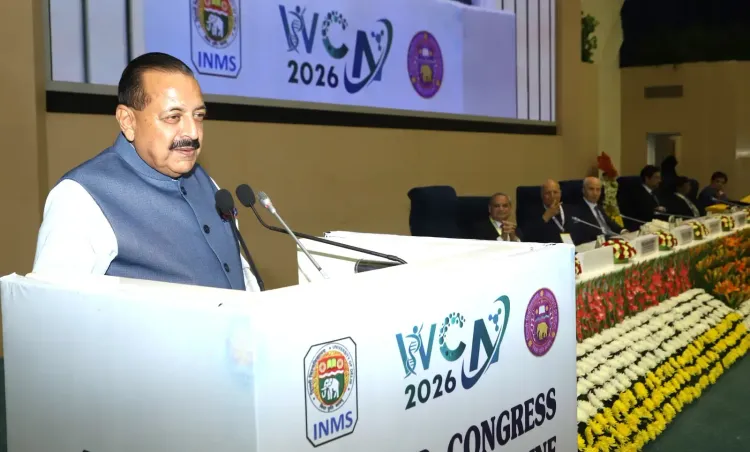
Dr Jitendra Singh inaugurated the World Congress on Nanomedicine 2026 in New Delhi on 27 September 2026 .
He described nanomedicine as one of the most transformative developments in modern medical science, enabling interventions at the cellular and molecular level .
The congress, hosted by the Institute of Nano Medical Sciences (INMS) at the University of Delhi , drew more than 2,000 participants from across the world.
Dr Singh said nanomedicine will improve both healthcare outcomes and the economics of healthcare delivery .
The minister cautioned against over-reliance on technology, stressing that AI and nanotechnology must complement — not replace — doctors' clinical judgement.
He called for medical education reforms to preserve core clinical skills alongside technological integration.
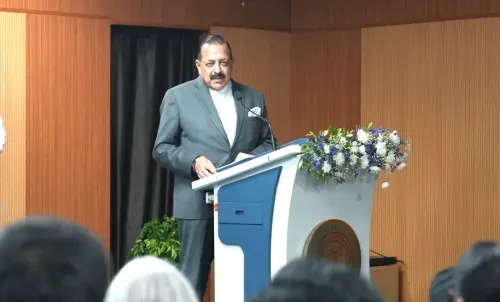
Union Minister of State (Independent Charge) for Science and Technology and Earth Sciences Dr Jitendra Singh on Sunday, 27 September 2026, declared that nanomedicine will be a defining force in the evolution of precision medicine and personalised healthcare, addressing scientists at the inauguration of the World Congress on Nanomedicine 2026 in New Delhi. The minister called it one of the most transformative developments in modern medical science.
What Nanomedicine Promises
Dr Singh explained that nanomedicine applies nanotechnology in medicine through structures and materials operating at the scale of one-billionth of a metre — enabling interventions at the cellular and molecular levels. He said healthcare is rapidly shifting toward personalised treatment, where therapies are tailored to an individual's genetic profile, lifestyle, dietary habits, and environmental factors. Nanotechnology, he argued, offers unprecedented tools to achieve exactly that level of precision.
Notably, the minister pointed out that patients suffering from the same disease may increasingly require different treatment strategies based on their unique biological and environmental characteristics — a departure from the one-size-fits-all model that has dominated medicine for decades.
Economic Impact on Healthcare Delivery
Beyond clinical outcomes, Dr Singh said nanomedicine's influence is expected to extend to the economics of healthcare delivery, improving efficiency and reducing costs. He described the growing global interest in nanomedicine as a reflection of the immense opportunities emerging in the sector — a signal, he suggested, that India should position itself at the forefront of this field.
A Caution on Technology Overdependence
While celebrating innovation, Dr Singh also sounded a note of caution. He stressed that technologies such as Artificial Intelligence and nanotechnology must complement — not replace — the clinical judgement and lived experience of doctors. He said the central challenge is integrating advanced technologies with the irreducibly human aspects of healthcare.
Calling for reforms in medical education, the minister underscored the need to preserve core clinical skills even as healthcare becomes more technology-driven. He emphasised that traditional methods of patient diagnosis through observation and physical examination remain relevant despite rapid technological advances.
About the World Congress on Nanomedicine 2026
The World Congress on Nanomedicine 2026 is hosted by the Institute of Nano Medical Sciences (INMS), Faculty of Medical Sciences, University of Delhi. The event has brought together more than 2,000 participants — including leading scientists, researchers, industry experts, and students from across the world — to discuss emerging developments and applications in nanomedicine. The congress represents one of the largest global gatherings dedicated to the field.
As nanomedicine research accelerates worldwide, India's participation at this scale signals an ambition to translate laboratory advances into real-world healthcare outcomes — a transition that experts say could take five to ten years to reach widespread clinical deployment.
Point of View
Yet its public health system still struggles with basic diagnostic infrastructure in tier-2 and tier-3 cities. A minister championing cellular-level interventions while simultaneously warning against over-reliance on technology reflects that contradiction rather than resolving it. Nanomedicine's commercial and clinical promise is real, but the gap between a 2,000-person global congress and affordable last-mile healthcare delivery in India remains vast. The more pressing policy question — how nanomedicine innovations will be made accessible beyond elite urban hospitals — was not addressed.
NationPress
27 Sept 2026
Frequently Asked Questions
What is nanomedicine and why does it matter for healthcare?
Nanomedicine is the application of nanotechnology in medicine, using structures and materials operating at the scale of one-billionth of a metre to intervene at the cellular and molecular level. It matters because it enables precision treatment tailored to an individual's genetic profile, lifestyle, and environmental factors — moving beyond the traditional one-size-fits-all approach to disease management.
What is the World Congress on Nanomedicine 2026?
The World Congress on Nanomedicine 2026 is a major international scientific gathering hosted by the Institute of Nano Medical Sciences (INMS), Faculty of Medical Sciences, University of Delhi, in New Delhi. It has brought together more than 2,000 participants including scientists, researchers, industry experts, and students from across the world to discuss emerging developments in nanomedicine.
What did Dr Jitendra Singh say about AI and nanotechnology in medicine?
Dr Singh cautioned that while AI and nanotechnology are opening new frontiers in medicine, they must complement — not replace — the clinical judgement and experience of doctors. He stressed that the challenge lies in integrating advanced technologies with the human dimensions of healthcare, and called for medical education reforms to preserve core clinical skills.
How will nanomedicine affect the cost of healthcare?
According to Dr Singh, nanomedicine's impact is expected to extend beyond clinical outcomes to the economics of healthcare delivery, improving efficiency and cost-effectiveness. He described growing global interest in the sector as a sign of immense emerging opportunities, though specific cost projections were not detailed at the congress.
Who organised the World Congress on Nanomedicine 2026 and where was it held?
The congress was organised by the Institute of Nano Medical Sciences (INMS) under the Faculty of Medical Sciences, University of Delhi, and was held in New Delhi on 27 September 2026. The event was inaugurated by Union Minister Dr Jitendra Singh.