Is AI a Game Changer for Diagnostics and Drug Discovery in Healthcare?
Synopsis
Discover how Artificial Intelligence (AI) is transforming healthcare as Union Minister Dr. Jitendra Singh discusses its vital role in diagnostics and drug discovery. Learn about India's advancements in biotechnology and gene therapy, and how collaboration between the government and private sector is paving the way for innovative healthcare solutions.
Key Takeaways
AI is essential in diagnostics and drug discovery.
Judicious use of technology can benefit healthcare.
Collaboration between government and private sectors is vital.
AI can reduce diagnostics time significantly.
India is transitioning to become a healthcare exporter.
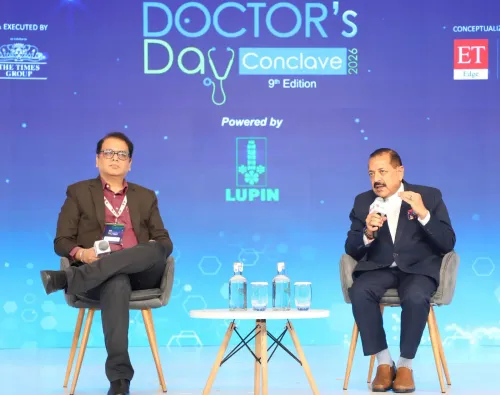
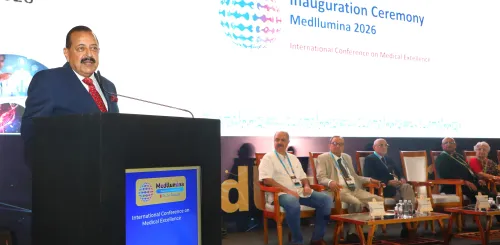
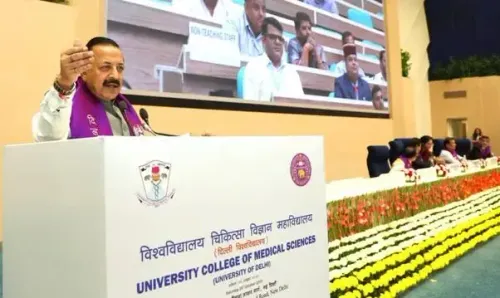
New Delhi, Dec 12 (NationPress) According to Dr. Jitendra Singh, the Union Minister of State (Independent Charge) for Science & Technology, Artificial Intelligence (AI) has become an indispensable asset in diagnostics and drug discovery. The prudent application of this technology can significantly enhance the healthcare and pharmaceutical industries.
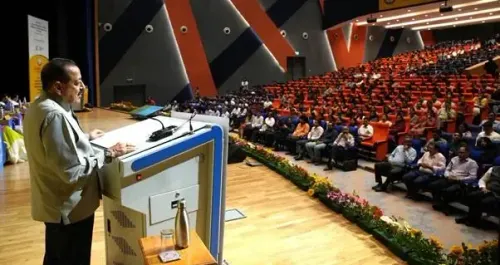
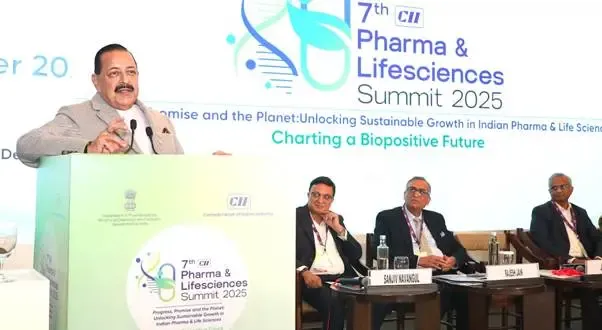
Speaking at the Confederation of Indian Industry (CII) Pharma & Life Sciences Summit 2025, Singh emphasized the government's robust collaboration with the private sector in the fields of emerging biotechnology and gene therapy.
He remarked that the most significant change under Prime Minister Narendra Modi's leadership is the government's proactive engagement with industry, showcasing a true whole-of-government and whole-of-industry approach.
According to Singh, “AI is now a necessity rather than an option in diagnostics, drug discovery, and healthcare delivery,” highlighting the importance of a human-centric approach in its application.
“The primary challenge lies in how well we can integrate AI within a hybrid model that harmonizes technology with human compassion,”
he stated.
He provided examples illustrating healthcare innovations, stating, “AI-driven diagnostic models can now cut the time for culture testing from days to mere minutes, while telemedicine initiatives powered by AI are bringing medical services to remote areas in local languages, which significantly boosts patient confidence and outcomes.”
Singh also pointed out India’s expanding scientific and industrial capabilities.
The government is actively collaborating with the private sector in pioneering areas such as gene therapy, biotechnology, and vaccine production.
He highlighted that numerous initiatives from the Department of Biotechnology (DBT) are now working alongside prominent private companies to create indigenous solutions in areas like synthetic antibiotics, DNA and HPV vaccines, and biomanufacturing.
Furthermore, Singh praised India’s evolution from being a net importer of curative healthcare to becoming an exporter of preventive healthcare, noting the country’s increasing global presence in vaccines, biosimilars, and affordable medical technologies.
“We are now manufacturing high-quality, cost-effective health technologies that are gaining traction in international markets,”
he concluded.
Point of View
I recognize the pivotal role that AI is playing in shaping the future of healthcare. The collaboration between the government and private sector is crucial for fostering innovation in biotechnology and gene therapy. This concerted effort will not only boost India's healthcare capabilities but also enhance its position on the global stage. The focus on a human-centric approach to technology is commendable and essential for the future of healthcare delivery.
NationPress
29 Sept 2026
Frequently Asked Questions
What is the role of AI in healthcare?
AI plays a crucial role in diagnostics and drug discovery, reducing testing times and improving healthcare delivery.
How is India collaborating with private sectors in biotechnology?
The Indian government is actively partnering with private firms to advance initiatives in gene therapy, biotechnology, and vaccine development.
What are some examples of AI applications in healthcare?
AI applications include diagnostic models that expedite testing and telemedicine services that reach remote areas in local dialects.