Is Pollution in Kolkata's Maidan Area Reaching Alarming Levels?
Click to start listening
Synopsis
Environmentalists are sounding the alarm regarding rising pollution levels in Kolkata's Maidan area. As air quality reaches hazardous levels, urgent measures are being called for to protect public health. Discover the alarming statistics and potential solutions outlined by leading environmentalist Somendra Mohan Ghosh.
Key Takeaways
- Air quality in Kolkata’s Maidan area is critically poor.
- Victoria Memorial is facing severe pollution due to nearby construction.
- Biomass burning and vehicle emissions are major contributors.
- Immediate actions are needed to protect public health.
- High levels of PM2.5 and PM10 pose serious health risks.
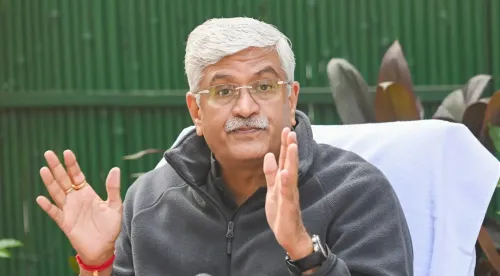
Kolkata, Dec 13 (NationPress) Environmentalist Somendra Mohan Ghosh has expressed serious concern regarding the increasing air pollution in Kolkata, particularly affecting the historic Victoria Memorial and the environmentally sensitive Maidan area.
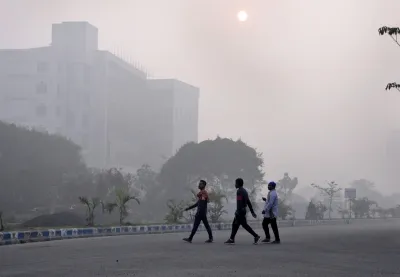
In a letter addressed to the Union Ministry of Environment, Forest, and Climate Change and the West Bengal Environment Department, Ghosh highlighted that the Maidan, often described as the lungs of Kolkata, is currently grappling with significant air quality issues, worsened by the ongoing Metro Rail project near Victoria Memorial. The air quality in this vital heritage site has plummeted to alarming levels, exceeding that of Delhi, as evidenced by an Air Quality Index (AQI) reading of 342, categorizing it as very poor to hazardous.
As per the environmentalist, the primary factors leading to this pollution surge include biomass burning in and around Maidan, the ongoing metro construction lacking eco-friendly methods, emissions from vehicles, and the use of coal and firewood by roadside eateries near the Esplanade bus stand.
"Implementing regular water sprinkling around Victoria Memorial to curb dust, embracing eco-friendly methods in metro construction, and limiting older diesel vehicles on the Maa flyover near Victoria Memorial are essential measures to address the rising air pollution. It is imperative that authorities act swiftly to alleviate this pollution and safeguard public health," Ghosh stated in his correspondence.
On Friday night, the AQI remained above 300 in multiple regions of Kolkata. Specifically, at Victoria Memorial, the AQI recorded was 355 at 10 p.m., while the Javadpur locality reported an AQI of 311, categorizing it as very poor to hazardous. Throughout the day, the AQI also surpassed the 300 threshold in Ballygunge and Fort William.
On December 11, the AQI peaked at 385 and was recorded at 378 on December 12.
In an interview with IANS on Saturday, Ghosh explained: "The ongoing metro projects significantly contribute to air pollution during construction due to dust from excavation, the transport of uncovered soil in open trucks, traffic diversions causing congestion, and overall construction debris, resulting in spikes in PM2.5/PM10 levels, thus impacting local air quality."
He added, "General construction activities, along with ongoing problems like trash burning, significantly degrade air quality. High concentrations of PM2.5 and PM10 pose serious respiratory and cancer risks, with healthcare professionals reporting a rise in lung-related issues."
Point of View
Our commitment is to present unbiased and factual reporting. The concerns raised by environmentalist Somendra Mohan Ghosh regarding air quality in Kolkata are significant and warrant immediate attention from both the authorities and the public. It is essential to prioritize environmental health for the well-being of the community.
NationPress
13/12/2025
Frequently Asked Questions
What is the current AQI level in Kolkata's Maidan area?
The current AQI level in Kolkata's Maidan area has reached alarming figures, with readings as high as 342, categorizing it as 'very poor' to 'hazardous'.
What are the main causes of pollution in Kolkata's Maidan?
The primary contributors to pollution in Kolkata's Maidan include biomass burning, ongoing metro construction without eco-friendly practices, vehicle emissions, and the use of coal and firewood by roadside food stalls.
What measures can be taken to reduce pollution levels?
Suggested measures include regular water sprinkling to control dust, adopting eco-friendly construction practices, and restricting older diesel vehicles in critical areas.
Why is air quality a concern for public health?
Poor air quality poses severe health risks, including respiratory issues and increased cancer risk, particularly from high levels of PM2.5 and PM10.
How does the construction of the metro contribute to pollution?
Metro construction contributes to pollution through excavation dust, uncovered soil transport, traffic diversions, and general construction debris, which lead to spikes in harmful particulate matter.