Dr. Jitendra Singh Champions Precision Medicine at Doctors Day Conclave
Synopsis
Union Science and Technology Minister Dr. Jitendra Singh on 28 June 2026 called India's genetic diversity a scientific superpower, cited Genome India's sequencing of over 10,000 individuals, and urged AI-driven precision medicine as the future of healthcare — linking domestic R&D to PM Modi's Vishwabandhu Bharat vision.
Key Takeaways
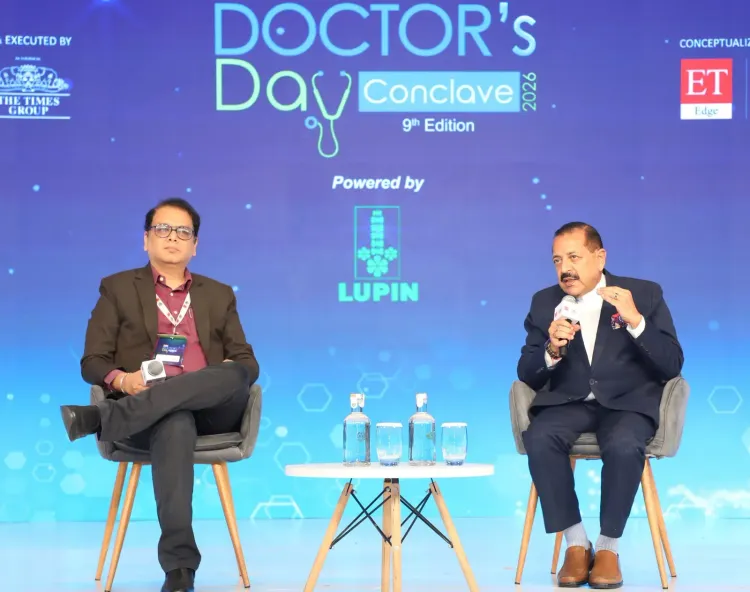
Jitendra Singh presented Awards of Excellence to medical professionals and spoke at a Doctors Day Fireside Chat on the eve of National Doctors Day (1 July) .
The Genome India Mission has completed genome sequencing of over 10,000 individuals and is building one of the world's largest genomic databases.
The minister called for 'Indian data for Indian treatment for Indian patients,' citing India's heterogeneous genetic and disease profile as a competitive advantage.
AI is being positioned as a tool to reduce analysis time and improve clinical decision-making quality within the science ministry's healthcare strategy.
India's genomic diversity was framed as an asset not only for domestic healthcare but for developing affordable solutions for lower-income countries globally.
The initiative was explicitly linked to PM Narendra Modi's Vishwabandhu Bharat concept, connecting domestic biomedical R&D to India's global diplomatic identity.
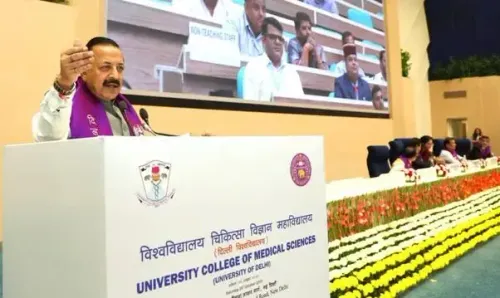
Union Science and Technology Minister Dr. Jitendra Singh on Saturday, 28 June 2026 presented Awards of Excellence to distinguished medical professionals and delivered a keynote address at a Doctors Day Fireside Chat, outlining India's strategic vision for precision medicine, genomics, and AI-driven healthcare ahead of National Doctors Day on 1 July.
Context
Speaking at the conclave, Dr. Singh articulated a sweeping case for India-specific medical data, stating: 'India's vast genetic diversity, heterogeneous disease profile and rapidly expanding scientific capabilities offer an unprecedented opportunity to develop Indian data for Indian treatment for Indian patients, while contributing affordable and globally relevant healthcare solutions for the rest of the world as well.' The remarks position India not merely as a consumer of global biomedical research but as an originator of solutions suited to its own population — and exportable to others.
The minister framed precision medicine as the defining shift in modern healthcare: 'Precision Medicine and personalised healthcare will redefine the future of medical practice by enabling more accurate diagnosis, targeted therapies and improved patient outcomes.' He added that treatment would increasingly be 'tailored to an individual's genetic profile, lifestyle and environmental factors.'
Policy Backdrop
At the centre of Dr. Singh's address was the Genome India Mission, a Department of Biotechnology initiative formally launched in 2020 to build a national genomic reference database. The minister stated the programme 'has already completed genome sequencing of over 10,000 individuals and is progressing towards building one of the world's largest genomic databases.' The project was conceived to capture the extraordinary ethnic and regional genetic variation across the subcontinent — a diversity that homogeneous populations cannot replicate.
The National Digital Health Mission, also unveiled in 2020, had already laid the groundwork for integrating genomic data into the Ayushman Bharat Digital Mission, signalling that the current push is part of a multi-year architecture rather than a standalone announcement. The National Biotechnology Development Strategy similarly underpins the Science and Technology Ministry's parallel drive to deploy AI tools for clinical decision support and variant interpretation.
Dr. Singh highlighted artificial intelligence as a critical accelerant: 'AI is significantly reducing the time required to analyse complex medical data while enhancing the quality of clinical decision-making,' he said, linking faster data analysis directly to better patient outcomes.
Stakeholders and Impact
For Indian patients, the promise is treatment protocols calibrated to their specific genetic makeup rather than protocols derived from data collected predominantly in Western populations. For biomedical researchers, a large-scale, diverse national genomic database opens avenues for discovering disease associations that are invisible in smaller or less diverse datasets.
Dr. Singh underscored India's comparative advantage: 'Unlike countries with relatively homogeneous populations, India presents an extraordinary range of genetic variations and disease patterns across different regions, creating immense opportunities for biomedical research.' He argued this 'unique advantage enables India not only to address its own healthcare challenges but also to develop solutions that can benefit the global community.'
The minister explicitly tied these ambitions to Prime Minister Narendra Modi's diplomatic framing, invoking the concept of Vishwabandhu Bharat — India as a friend to the world — to argue that domestic R&D breakthroughs in affordable healthcare carry soft-power implications beyond the subcontinent.
What's Next
The Department of Biotechnology is expected to release its next progress report on the Genome India database scale-up, with attention focused on whether sequencing targets will be expanded beyond the current phase. Regulatory pathways for AI-enabled diagnostics remain an active area of policy development within the ministry. National Doctors Day on 1 July is likely to see further government communication reinforcing the precision medicine agenda as a tribute to the medical community. India's ability to translate its genomic database into actionable clinical protocols — and to share those findings affordably with lower-income countries — will be the real measure of whether the Vishwabandhu Bharat vision in healthcare moves from rhetoric to results.
Point of View
The minister consciously grafts domestic R&D ambitions onto India's broader foreign-policy identity, framing affordable healthcare exports as soft power. The Genome India Mission's 10,000-genome milestone, while significant, is a stepping stone — the credibility of this vision will hinge on whether the database scales rapidly and whether regulatory frameworks for AI diagnostics keep pace. The repeated emphasis on India's uniqueness as a data source also signals a quiet pushback against the dominance of Western genomic datasets in global clinical guidelines.
NationPress
26 Sept 2026
Frequently Asked Questions
What is the Genome India Mission and how many genomes has it sequenced?
The Genome India Mission is a Department of Biotechnology initiative launched in 2020 to build a national genomic reference database. Dr. Jitendra Singh stated on 28 June 2026 that it has completed sequencing of over 10,000 individuals and is progressing towards one of the world's largest genomic databases.
What is precision medicine and why is India focusing on it?
Precision medicine tailors treatment to an individual's genetic profile, lifestyle, and environmental factors rather than using one-size-fits-all protocols. India is focusing on it because its vast genetic diversity across regions offers unique data that can improve diagnosis and therapies for its own population and potentially for the global community.
What is Vishwabandhu Bharat in the context of healthcare?
Vishwabandhu Bharat, a phrase associated with Prime Minister Narendra Modi, means 'India as a friend to the world.' In healthcare, Dr. Jitendra Singh used it to describe India's goal of developing affordable, globally relevant medical solutions from its domestic biomedical research, particularly genomics.
How is AI being used in India's healthcare system?
According to Dr. Jitendra Singh, AI is significantly reducing the time needed to analyse complex medical data and is enhancing the quality of clinical decision-making, forming a key part of the Science and Technology Ministry's push for modern healthcare infrastructure.
When is National Doctors Day in India?
National Doctors Day in India is observed on 1 July every year, a tradition instituted in 1991. The date honours the birth and death anniversary of physician and former West Bengal Chief Minister Dr. Bidhan Chandra Roy.