Dr. Jitendra Singh warns against over-reliance on tech in medicine

Synopsis
At the Aarogya Shikhar Samman awards in Jammu, Union Science and Technology Minister Dr. Jitendra Singh warned that excessive tech dependence risks undermining clinical judgment, while highlighting India's biotech momentum and frontier research into oral Nano-Insulin.
Key Takeaways
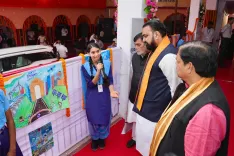
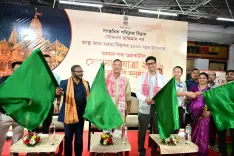
Jitendra Singh addressed the Aarogya Shikhar Samman awards in Jammu on 26 September 2026 , felicitating distinguished medical teachers and professionals.
He cautioned that excessive dependence on technology could erode a doctor's clinical sense and must not displace clinical judgement in patient care.
The Minister described India as 'poised to globally lead the next generation of medical practices,' citing rapid biotech breakthroughs since 2014 .
He highlighted oral Nano-Insulin as one of several frontier areas being actively explored by Indian researchers.
The event spotlighted healthcare capacity-building in Jammu and Kashmir , with medical educators at the centre of the recognition.
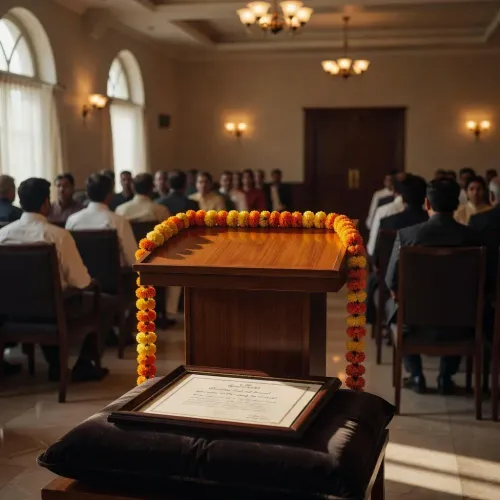
At a time when artificial intelligence and digital diagnostics are reshaping hospitals worldwide, Union Science and Technology Minister Dr. Jitendra Singh drew a sharp line in the sand at the 'Aarogya Shikhar Samman' awards function in Jammu on Saturday, 26 September 2026 — celebrating distinguished medical teachers and professionals while issuing a pointed caution: technology must serve the doctor, never replace the doctor's judgment.
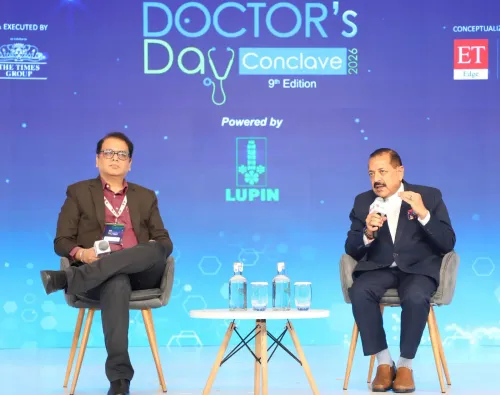
Addressing the felicitation ceremony, Dr. Singh framed the moment as a turning point for Indian medicine. 'The world is entering an exciting phase of medicine with emergence of new technologies and new possibilities in health care,' he said, 'and India is poised to globally lead the next generation of medical practices.' But the optimism came paired with a warning that cut through the applause.
The core caution: when too much technology becomes a liability
'Excessive dependence on technology could undermine the clinical sense of a doctor,' Dr. Singh told the gathering, in one of the evening's sharpest formulations. His argument was precise: while technology-enabled options must remain available, clinical judgement must stay an essential, non-negotiable component of patient care. The challenge, as he put it, is achieving 'an optimum synergy between technology-driven practices and clinically determined practices' — a balance easier to state than to engineer.
The concern is not abstract. As AI-assisted diagnostics, algorithmic prescription support, and remote monitoring platforms proliferate across Indian hospitals, the medical profession faces a genuine risk: that younger clinicians, trained in data-rich environments, may over-delegate the act of diagnosis to a machine. Dr. Singh's remarks place that risk on the national policy agenda, arriving at a moment when regulators and medical councils are still debating frameworks for AI in clinical settings.
India's biotech surge and the Nano-Insulin frontier
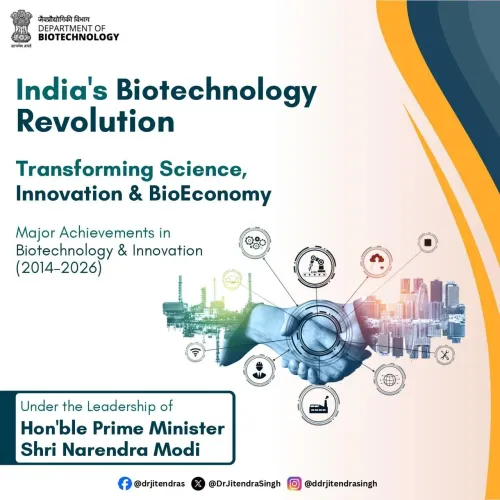
The Minister pointed to a pattern of accelerating breakthroughs in life sciences since Prime Minister Narendra Modi took office in 2014, describing 'a rapid succession of India's bio-technology breakthroughs and a growing support for life-sciences research.' The Department of Biotechnology's National Biotechnology Development Strategy, launched to strengthen industry-academia linkages and indigenous innovation, forms part of that lineage.
One example Dr. Singh singled out as emblematic of the new frontier: Nano-Insulin for oral use. Traditional insulin requires injection; an oral nano-formulation — if clinically validated — would represent a transformational shift for the hundreds of millions of diabetics who rely on daily injections globally. Dr. Singh flagged it as one of several 'interesting new areas being explored,' signalling that Indian researchers and institutions are in the mix at the cutting edge of nanomedicine.
Jammu as a platform, medical teachers as the message
The choice of Jammu — the winter capital of Jammu and Kashmir — as the venue for the 'Aarogya Shikhar Samman' function carried its own significance. Honouring medical teachers and professionals in the region underscores a deliberate effort to spotlight healthcare capacity-building beyond metropolitan centres. The award function itself placed the human, mentoring dimension of medicine — the teacher–student relationship, the transmission of clinical wisdom — at the centre of an evening that easily could have been dominated by technology talk.
That framing was almost certainly intentional. In a speech that championed biotech breakthroughs, the loudest applause line may well have been the one that insisted no algorithm replaces the hands and eyes and trained instinct of a good clinician. India's ambitions in next-generation medicine, Dr. Singh made clear, run on both tracks simultaneously — and neither can afford to crowd out the other.
The question regulators, medical councils, and NITI Aayog will now have to answer: what does 'optimum synergy' actually look like in policy — and who enforces it at the bedside?
Point of View
Not replacement — mirrors language in the National Health Policy 2017 and positions the Science Ministry as a moderating voice against both technophobia and techno-determinism. As AI diagnostics move into tier-two and tier-three hospitals, this ministerial framing could quietly shape how ICMR and the National Medical Commission approach clinical AI guidelines.
NationPress
26 Sept 2026
Frequently Asked Questions
What is the Aarogya Shikhar Samman award?
The Aarogya Shikhar Samman is an awards function that felicitates distinguished medical teachers and healthcare professionals; the 2026 edition was held in Jammu and addressed by Union Minister Dr. Jitendra Singh.
What did Dr. Jitendra Singh say about technology in medicine?
Dr. Singh cautioned that excessive dependence on technology could undermine the clinical sense of a doctor, and insisted that clinical judgement must remain an essential component of patient care even as technology-enabled options are made available.
What is oral Nano-Insulin and why is India researching it?
Oral Nano-Insulin is an experimental nano-formulation that would allow insulin to be taken by mouth rather than injected, potentially transforming diabetes management; Dr. Singh cited it as one of the frontier areas being explored by Indian researchers.
What is India's biotechnology track record under PM Modi?
Since 2014, the Department of Biotechnology has expanded funding and strategic focus through measures like the National Biotechnology Development Strategy, supporting life-sciences research, biosimilars, genomics, and vaccine manufacturing capacity.
How should AI and clinical judgment be balanced in Indian hospitals?
Dr. Singh's position is that the two must achieve 'optimum synergy' — AI and digital tools should remain available but must augment rather than replace the trained clinical judgement of doctors, a standard regulators and medical councils are still working to codify.