Jitendra Singh: DBT funds 200+ nanomedicine projects worth ₹174 cr
Synopsis
At the World Congress on Nanomedicine 2026 in New Delhi, Dr. Jitendra Singh disclosed that India's Department of Biotechnology is backing over 200 nanomedicine R&D projects worth ₹174 crore, covering cancer nanobots, Nano Oral Insulin, and precision drug delivery — positioning nanotechnology as the spine of India's next healthcare revolution.
Key Takeaways
The Department of Biotechnology is funding over 200 nanomedicine R&D projects with an outlay of ₹174 crore .
Project areas include targeted drug delivery, cancer nanomedicine, infectious-disease nanomedicine, vaccine delivery, and nano-diagnostics .
Flagship projects include Nano Oral Insulin and nanobots for breast cancer treatment.
Jitendra Singh described nanomedicine as the driver of 'the next generation of precision medicine and personalised healthcare.' India's nanotechnology push traces back to the National Mission on Nano Science and Technology launched in 2007 .
The World Congress on Nanomedicine 2026 was held at Vigyan Bhawan, New Delhi on 27 September 2026 .
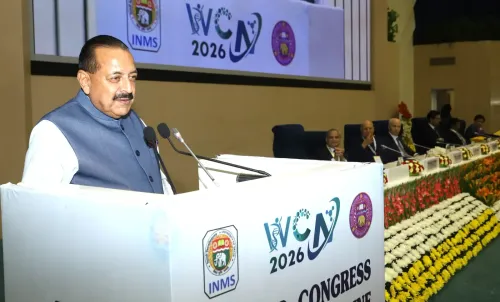
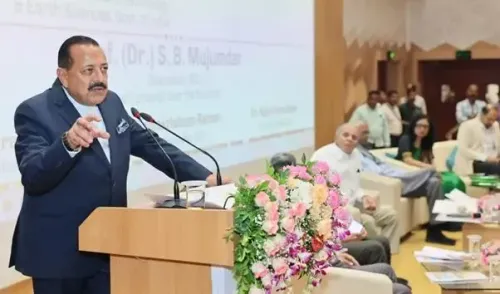
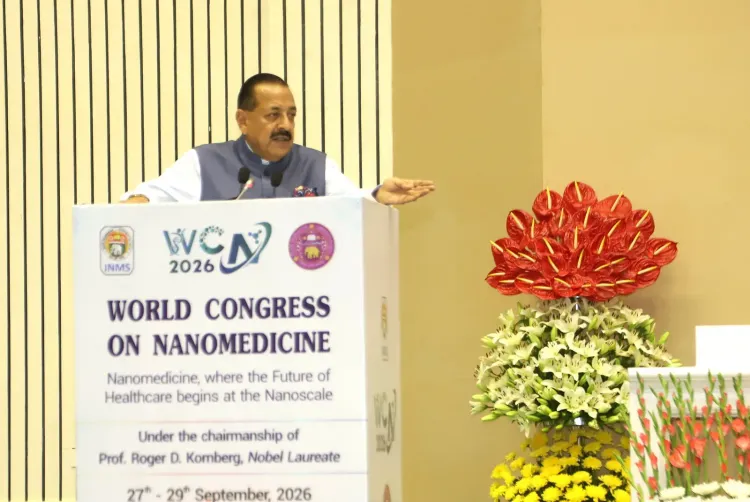
India's next medical frontier is measured in billionths of a metre — and the government is betting big on it. Union Science and Technology Minister Dr. Jitendra Singh addressed the World Congress on Nanomedicine 2026 at Vigyan Bhawan, New Delhi on Sunday, 27 September 2026, laying out a sweeping vision for how nanotechnology will reshape medicine from the cellular level up.
₹174 crore and 200-plus projects: DBT's nanomedicine wager
The headline number from the Congress is striking: the Department of Biotechnology (DBT), under the Ministry of Science and Technology, is currently supporting over 200 R&D projects in nanomedicine with a combined financial outlay of ₹174 crore. That is not a single flagship scheme but a sprawling portfolio — targeted drug delivery, cancer nanomedicine, infectious-disease applications, vaccine delivery platforms, and nano-diagnostics all fall under the umbrella.
Two projects in particular signal how specific — and how ambitious — the research agenda has become: a programme on Nano Oral Insulin that could eventually spare diabetic patients the needle, and the development of nanobots for breast cancer treatment, a technology that would navigate the body at the cellular scale to attack tumours with precision that conventional chemotherapy cannot match.
Why 'one-billionth of a metre' is the new unit of medical progress
Dr. Jitendra Singh framed nanomedicine not as a niche research curiosity but as the engine of the next medical paradigm. 'Nanomedicine involves the application of nanotechnology in medicine, working with structures at the scale of one-billionth of a metre,' he said, adding that it is 'one of the most transformative recent developments in medical practice.'
The minister drew a direct line from nanotechnology to personalised healthcare: 'The future of medicine will increasingly involve individualised treatment based on a patient's genetic profile, lifestyle, dietary habits and environmental factors, with nanotechnology offering new possibilities for precision at the cellular level.' In short, nanomedicine is the infrastructure layer on which precision medicine will be built.
A policy lineage stretching back to 2007
India's commitment to nanotechnology in healthcare did not begin with this Congress. The Department of Science and Technology launched the National Mission on Nano Science and Technology in 2007, seeding an ecosystem of research that DBT has since expanded into clinical applications. The 2026 Congress at Vigyan Bhawan — a venue that has hosted some of India's most consequential scientific summits — marks a checkpoint in that nearly two-decade arc, one at which the country can point to a funded, structured project pipeline rather than aspirational blueprints.
The broader pattern is consistent: successive governments have scaled R&D support in frontier life-science areas, and nanomedicine has benefited from that institutional momentum. Biotech researchers, oncologists, pharma companies developing next-generation therapeutics, and — most consequentially — cancer and diabetes patients stand to be shaped by the outcomes of those 200-plus funded projects.
What follows the Congress
The immediate question is whether the 2026 gathering produces binding commitments: publication timelines for DBT project outcomes, follow-on funding announcements, or international collaborations forged on the Vigyan Bhawan floor. The Minister's public articulation of the vision at a global platform raises the stakes for delivery — India has now told the world what it intends to build, one nanometre at a time.
Point of View
Using a ₹174 crore DBT portfolio as proof of institutional seriousness. The emphasis on Nano Oral Insulin and cancer nanobots is politically astute — both map directly onto mass-scale health burdens that resonate beyond research labs. Framing nanotechnology as the backbone of personalised medicine also aligns the Science Ministry's agenda with the broader government push toward indigenised, high-tech healthcare solutions. The real test, however, is whether the 200-plus projects graduate from R&D to clinical deployment — a gap India's biotech ecosystem has historically struggled to close at speed.
NationPress
27 Sept 2026
Frequently Asked Questions
What is the World Congress on Nanomedicine 2026?
It is an international scientific conference on nanomedicine applications held at Vigyan Bhawan, New Delhi on 27 September 2026, where senior Indian government officials and researchers presented the country's nanotechnology-in-healthcare agenda.
How much is India spending on nanomedicine research?
The Department of Biotechnology is supporting over 200 R&D projects in nanomedicine with a combined financial outlay of ₹174 crore, covering areas from targeted drug delivery to cancer nanobots.
What is Nano Oral Insulin and why does it matter?
Nano Oral Insulin is a DBT-funded research project aiming to deliver insulin through an oral route using nanotechnology, potentially eliminating the need for daily injections in diabetic patients.
What are nanobots for breast cancer?
These are nano-scale robotic or particle systems under development in India that aim to navigate the body at the cellular level to target and treat breast cancer tumours with greater precision than conventional chemotherapy.
What is India's history with nanotechnology policy?
India launched the National Mission on Nano Science and Technology in 2007 under the Department of Science and Technology, and has since expanded funding through the Department of Biotechnology into clinical and therapeutic nanotechnology applications.