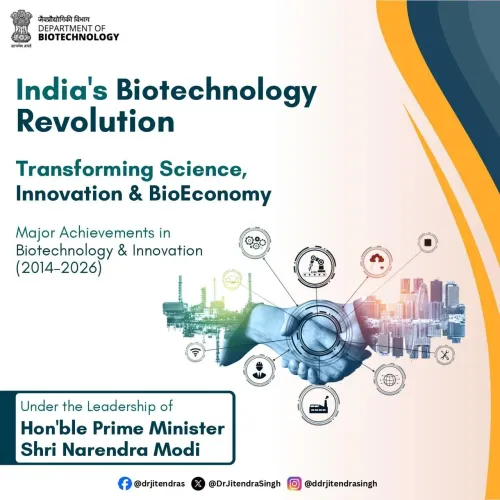
India's bioeconomy hits $190 billion, up from $10 billion in 2014: Dr Jitendra Singh
Synopsis
India's bioeconomy has surged nearly twenty-fold in just over a decade — from $10 billion in 2014 to over $190 billion in 2026 — and the government has now set its sights on $300 billion by 2030. From affordable CAR-T cell therapy to a lunar south pole landing and steel slag roads, Minister Dr Jitendra Singh's data points paint a picture of science moving from lab benches to national infrastructure.
Key Takeaways
India's bioeconomy grew from approximately $10 billion in 2014 to over $190 billion in 2026 — a near twenty-fold expansion.
The government targets a $300 billion bioeconomy by 2030 .
Growth has been driven by innovations in genomics , diagnostics , biopharmaceuticals , and the BioE3 policy framework .
India has developed affordable CAR-T cell therapy and advances in next-generation antibiotics and precision medicine .
Steel slag road technology is cited as a flagship example of applied innovation converting industrial waste into durable infrastructure.
Indigenous science and technology now powers nearly all major government flagship programmes, according to Dr Jitendra Singh .
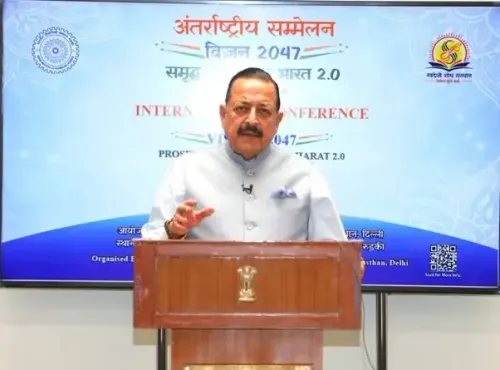
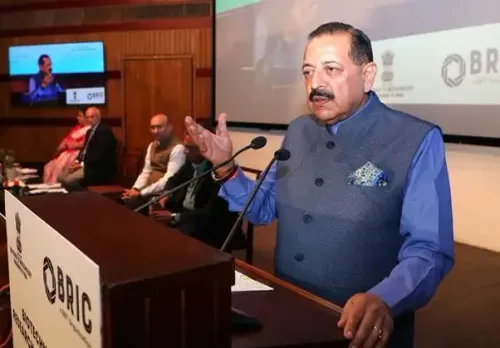
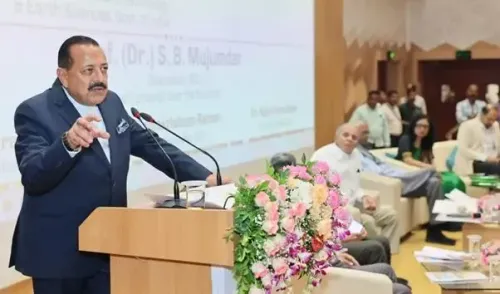
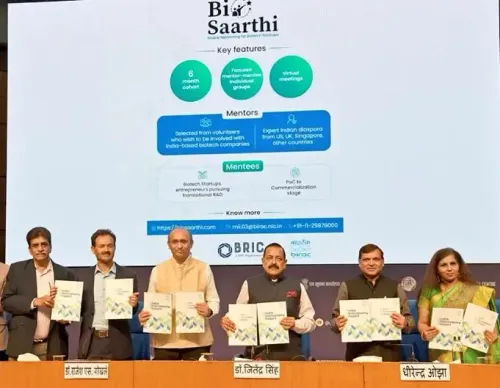
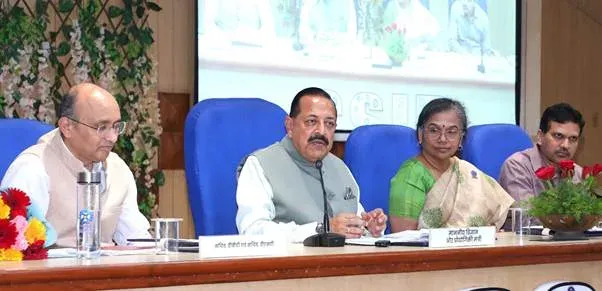
India's bioeconomy has expanded nearly twenty-fold — from approximately $10 billion in 2014 to over $190 billion in 2026 — marking one of the sharpest growth trajectories in the country's scientific history, Union Minister of State for Science and Technology and Earth Sciences Dr Jitendra Singh said on Monday, 15 June. Speaking at a press conference in New Delhi themed '12 Years of Transformative Growth in Science, Technology and Innovation', Singh described the expansion as an unprecedented shift in India's innovation landscape.
Bioeconomy Target and Key Drivers
India has set an ambitious target of reaching $300 billion in bioeconomy value by 2030, Singh said. The country has positioned itself as a global biotechnology hub, driven by indigenous breakthroughs in healthcare, genomics, diagnostics, and biopharmaceuticals. Progressive policy frameworks — notably the BioE3 framework — have been instrumental in accelerating this growth, according to the minister.
Healthcare and Advanced Technology Breakthroughs
Singh highlighted India's strides in advanced medical technologies, citing developments in next-generation antibiotics, affordable CAR-T cell therapy, and precision medicine. He noted that Indian researchers are increasingly developing solutions for diseases and disorders of global significance, reinforcing the country's standing in the international scientific community. This comes amid growing global demand for cost-effective healthcare innovations, an area where India's generic pharmaceutical ecosystem provides a structural advantage.
Space, Weather and Strategic Sectors
Beyond biotech, Singh pointed to India's historic Moon landing near the lunar south pole, the rapid expansion of the space startup ecosystem, and revolutionary improvements in weather forecasting as evidence of broader scientific progress. He said indigenous technologies now underpin nearly all major government flagship programmes, reflecting what he described as a successful 'whole-of-government' approach to science and innovation.
Science Reaching Ordinary Citizens
The minister cited steel slag road technology as a concrete example of applied innovation — converting industrial waste into durable road material with lower maintenance costs. He said roads built using this technology have demonstrated superior performance and are seeing wider adoption across India. Singh argued that growing public interest in scientific achievements itself signals how deeply science and technology have penetrated everyday life over the past decade.
What Comes Next
With the $300 billion bioeconomy target set for 2030, the government's emphasis on private-sector engagement and global competitiveness will be critical. Industry observers note that sustaining this growth rate will require continued investment in research infrastructure, talent pipelines, and regulatory frameworks that keep pace with fast-evolving sectors like genomics and synthetic biology.
Point of View
But the $190 billion figure aggregates a wide range of sectors — and the methodology behind it deserves scrutiny. India's CAR-T cell therapy and genomics advances are genuine and internationally recognised, but the leap from $10 billion to $190 billion in twelve years outpaces even the most optimistic sectoral estimates, suggesting the definition of 'bioeconomy' may have been broadened over time. The $300 billion target by 2030 is achievable only if private investment, regulatory speed, and talent retention all accelerate simultaneously — none of which are guaranteed. What is clear is that science policy has moved closer to the political centre in India, which is itself a structural shift worth watching.
NationPress
27 Sept 2026
Frequently Asked Questions
How much has India's bioeconomy grown in the last 12 years?
India's bioeconomy has expanded nearly twenty-fold, from approximately $10 billion in 2014 to over $190 billion in 2026, according to Union Minister of State Dr Jitendra Singh. The growth has been driven by advances in healthcare, genomics, diagnostics, and biopharmaceuticals.
What is India's bioeconomy target for 2030?
India has set a target of reaching $300 billion in bioeconomy value by 2030. The government aims to sustain growth through private-sector engagement, the BioE3 policy framework, and continued investment in biotechnology and life sciences.
What is the BioE3 framework?
The BioE3 framework is a government policy initiative designed to accelerate India's biotechnology sector by promoting innovation, industry participation, and global competitiveness. It has been cited as a key enabler of India's emergence as a global biotech hub.
What healthcare breakthroughs did India achieve in this period?
India developed affordable CAR-T cell therapy, advances in next-generation antibiotics, and capabilities in precision medicine and genomics. These innovations are aimed at addressing diseases and disorders of both domestic and global significance.
What is steel slag road technology and why is it significant?
Steel slag road technology converts industrial waste — slag from steel production — into durable road-building material. Roads built using this method reportedly show superior durability and lower maintenance costs, and the technology is seeing wider adoption across India as an example of applied scientific innovation.