Is India Embracing a Futuristic Healthcare Era with Genome Sequencing and Personalized Medicine?

Synopsis
India is witnessing a transformative shift in healthcare, with a focus on molecular diagnostics and personalized medicine. Union Minister Jitendra Singh emphasizes the importance of genomics in addressing complex health challenges. This article explores the nation's advancements in healthcare and the initiatives shaping the future of treatment.
Key Takeaways
India is advancing towards a future centered on personalized medicine .
Genomics and biotechnology are key in addressing complex health challenges.
Institutional support is vital for translating research into practice.
The National Policy for Rare Diseases marks a significant shift in governmental focus.
Integration of traditional and modern health practices offers comprehensive care.
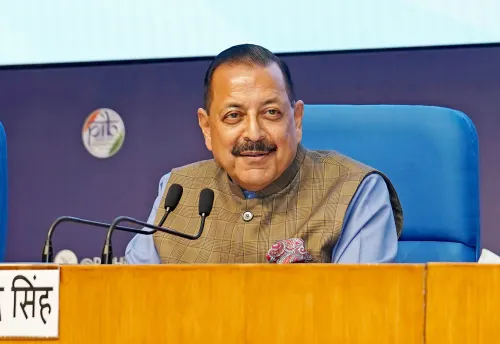
New Delhi, Jan 10 (NationPress) - India has embarked on an advanced healthcare journey characterized by molecular diagnostics, genome sequencing, and personalized medicine, according to Jitendra Singh, the Union Minister of State (Independent Charge) for Science & Technology.
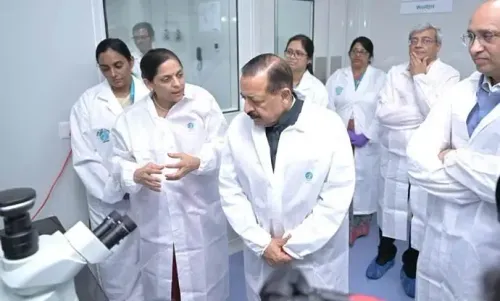
During his visit to the DBT-BRIC Centre for DNA Fingerprinting and Diagnostics (CDFD) in Hyderabad, Singh emphasized that India is now equipped both scientifically and economically to tackle intricate health challenges through the realms of genomics, biotechnology, and preventive healthcare.
“In contrast to previous decades, where the primary focus was on infectious diseases, India has now transitioned into a forward-thinking phase where molecular diagnostics, genome sequencing, and personalized medicine are pivotal to healthcare delivery,” stated the Minister.
Singh also inaugurated the National Skill Development Centre, SAMARTH, and the iDeA-NA BRIC-CDFD Technology Incubator, highlighting the significance of institutions like CDFD in connecting laboratory research with practical clinical results.
“India is experiencing swift advancements in genomics-driven initiatives, which include extensive genome sequencing, pediatric genetic disease programs, and groundbreaking work in conditions such as hemophilia,” he added, noting that these initiatives are equipping the healthcare framework for “a future centered on personalized treatment, where patients with comparable ailments may require distinct therapeutic strategies.”
Touching upon rare diseases, the Minister remarked that the launch of India’s inaugural National Policy for Rare Diseases in 2021 represented a significant shift in governmental policy, demonstrating a willingness to embrace scientific insights. He stressed that mere detection is insufficient; sustained and affordable treatment must be accessible to affected families.
Singh also discussed the integrated healthcare model championed by the government, which includes institutionalizing traditional systems through the Ministry of Ayush and the worldwide acknowledgment of yoga as a preventive health strategy.
“The evidence-based synergy of wellness practices with contemporary medicine has yielded positive outcomes in the management of lifestyle and metabolic disorders,” Singh asserted.
Furthermore, he underscored India's leading role in vaccines and preventive healthcare, asserting that indigenous innovations are being utilized nationally while also being shared globally, thereby strengthening the country’s position in global health security.
“With nearly 70 percent of India’s populace under the age of 40, prioritizing health through early diagnosis and prevention is a national necessity,” concluded Singh.
Point of View
I view India's advancements in genomic medicine and personalized healthcare as pivotal steps towards a more responsive and effective health system. The government's commitment to integrating traditional practices with modern science shows a holistic approach that prioritizes patient care and innovative solutions. This initiative not only positions India as a leader in health technology but also reflects a broader commitment to global health security.
NationPress
25 Sept 2026
Frequently Asked Questions
What is the significance of genome sequencing in healthcare?
Genome sequencing allows for personalized medicine, enabling tailored treatments based on individual genetic profiles, which can lead to more effective healthcare outcomes.
How is India preparing to tackle rare diseases?
Through the National Policy for Rare Diseases established in 2021, India aims to provide affordable treatment options and enhance detection methods for rare conditions.
What role do institutions like CDFD play in healthcare?
Institutions like CDFD are crucial for translating laboratory research into clinical applications, bridging the gap between scientific discovery and patient care.
How does the government integrate traditional medicine with modern healthcare?
The government promotes traditional systems through the Ministry of Ayush, recognizing practices like yoga as effective preventive health tools that complement modern medicine.
Why is early diagnosis important for India's youth?
With a large portion of India's population under 40, early diagnosis and preventive measures are vital for ensuring a healthier future and reducing the burden of chronic diseases.