Rajnath Singh: India a Civilisational Power, Not Status Quoist
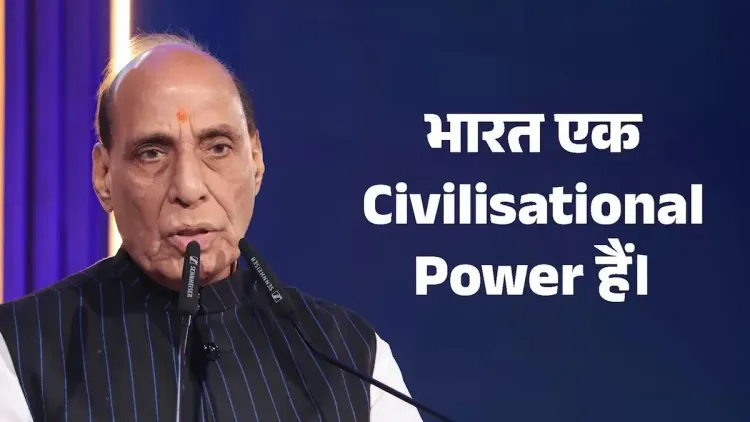
Synopsis
Defence Minister Rajnath Singh on September 27, 2026 declared India a 'Civilisational Power' — rejecting both status-quoist and revisionist labels — and reaffirmed that India will not compromise on national interest or strategic autonomy while believing in peace and global cooperation.
Key Takeaways
Union Defence Minister Rajnath Singh posted on September 27, 2026 that India is neither a status-quoist nor a revisionist power, but a Civilisational Power .
He stated India believes in peace and global cooperation but will make no compromise on national interest and strategic autonomy .
India's doctrine of strategic autonomy traces back to the Non-Aligned Movement of 1961 , and has evolved into a policy of multi-alignment under successive governments.
The 'Civilisational Power' framing deliberately sidesteps the status-quoist vs. revisionist binary dominant in Western strategic discourse, particularly regarding US-China rivalry .
Singh has served as Union Home Minister and Chief Minister of Uttar Pradesh before heading the Defence Ministry , lending political weight to the formulation.
The statement arrives ahead of key multilateral forums including the UN General Assembly and the SCO summit , signalling an international audience.
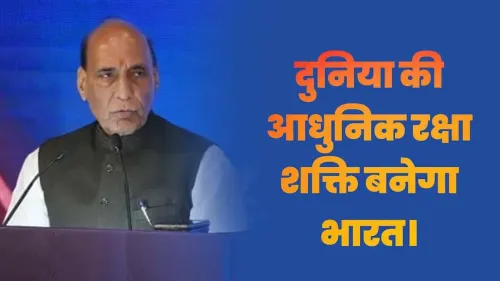
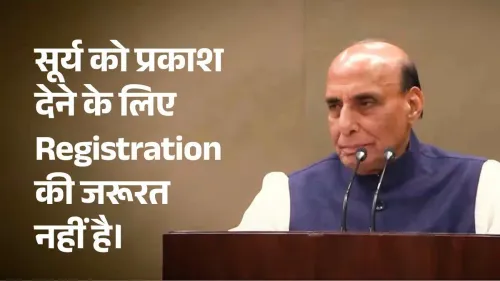
A three-word reframe — and it lands like a foreign-policy manifesto. Union Defence Minister Rajnath Singh drew a sharp line on Sunday, September 27, 2026, declaring that India belongs to neither of the two categories that dominate Western strategic discourse: it is not a status-quoist power content with the existing world order, nor a revisionist power seeking to overturn it. India, he said, is something else entirely — a Civilisational Power.
Posting in Hindi on X, Singh stated: 'Bharat na Status Quoist Power hai, na Revisionist Power, balki Bharat ek Civilisational Power hai.' ('India is neither a Status Quoist Power nor a Revisionist Power; rather, India is a Civilisational Power.') He added that while India believes in peace and global cooperation, it will make no compromise on national interest and strategic autonomy — and that this, he said, is India's 'clear policy.'
Rejecting the Binary That Defines Great-Power Rivalry
The status-quoist versus revisionist framework is the lens through which Western strategists most commonly read today's geopolitical contest — particularly the rivalry between the United States and China. Singh's post is a deliberate refusal to let India be slotted into either column. The 'Civilisational Power' framing instead positions India as a sui generis actor: ancient enough in historical depth to claim its own grammar for world affairs, confident enough to articulate it publicly. This is not a new idea, but its crisp, social-media formulation by a senior Cabinet minister carries weight. Indian leaders have used the 'civilisational state' descriptor at multilateral forums since the mid-2010s, but Singh's framing makes the contrast explicit and combative in a way that signals intent rather than mere identity.Strategic Autonomy: From Non-Alignment to Multi-Alignment
The doctrine Singh invokes has deep roots. India's insistence on strategic autonomy traces back to the Non-Aligned Movement of 1961, co-founded by India precisely to avoid subordination to either Cold War bloc. What has evolved is the operational meaning: today's India does not abstain from engagements — it engages simultaneously with Washington, Moscow, Tehran, and Riyadh, calibrating each relationship against a sovereign calculus rather than an alliance obligation. Singh, who has served as both Union Home Minister and Chief Minister of Uttar Pradesh before taking charge of the defence portfolio, brings credibility to the formulation. As Defence Minister he has overseen significant acceleration in indigenisation of defence production and has met counterparts across NATO capitals as well as in Russia — the living embodiment of multi-alignment in practice.Why This Framing Matters Right Now
Global pressure on India to 'choose sides' has intensified across several theatres — the Russia-Ukraine conflict, Indo-Pacific security architecture, and technology-supply-chain decoupling debates. Singh's statement, issued on a Sunday afternoon with the cadence of a policy declaration rather than a casual post, pushes back against that pressure with doctrinal clarity. The timing — with multilateral calendars heavy in the autumn season, including forums such as the UN General Assembly and the SCO summit — suggests the message is calibrated for an international audience reading Indian signals as much as for a domestic one. India has carved a lane that is genuinely its own. The question, as always, is whether the world's power centres will respect the lane or keep trying to merge into it.Point of View
Not casual social-media commentary — a Cabinet minister with his portfolio does not use terms like 'Civilisational Power' casually. The framing directly challenges the Western analytical habit of forcing every major state into a status-quoist or revisionist box, a habit that has grown more insistent since the Russia-Ukraine conflict began. By asserting a third, historically grounded category, India signals that external pressure to 'choose sides' will be met not with hedging but with a confident counter-narrative. This is strategic autonomy in rhetorical form: the refusal to accept someone else's vocabulary as the terms of debate.
NationPress
27 Sept 2026
Frequently Asked Questions
What did Rajnath Singh mean by calling India a Civilisational Power?
Rajnath Singh used the term 'Civilisational Power' to argue that India does not fit the Western strategic categories of 'status-quoist' (a power satisfied with the existing world order) or 'revisionist' (a power seeking to overturn it). Instead, India claims a distinct identity rooted in its ancient civilisational heritage, belief in global cooperation, and an independent foreign policy guided by national interest.
What is India's doctrine of strategic autonomy?
Strategic autonomy is India's longstanding policy of preserving freedom of action in foreign policy — engaging multiple power centres without formal alliance commitments. It originated in the Non-Aligned Movement of 1961 and has evolved into today's multi-alignment approach, where India maintains active ties with the United States, Russia, Gulf states, and others simultaneously.
What is the difference between a status-quoist power and a revisionist power?
In international relations theory, a status-quoist power is one that broadly accepts and seeks to preserve the existing global order, while a revisionist power actively seeks to change or overturn that order. India, under this framing by Rajnath Singh, rejects both labels.
Why is Rajnath Singh talking about foreign policy? Is that not the External Affairs Ministry's job?
While the External Affairs Ministry leads Indian diplomacy, senior Cabinet ministers — especially the Defence Minister, who engages with foreign military and strategic counterparts — frequently articulate India's strategic positioning. Rajnath Singh's post reflects that broader governmental ownership of foreign-policy doctrine.
What multilateral forums could see India repeat this Civilisational Power framing?
Analysts are watching forums such as the UN General Assembly and the SCO summit, both of which fall in the autumn diplomatic season, as likely platforms where this framing could be elaborated in formal speeches.