Rajnath Singh slams Rahul Gandhi over remarks on PM Modi, foreign policy
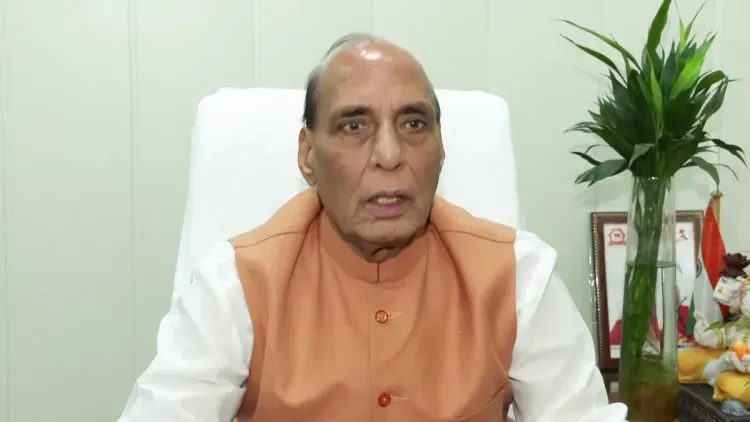
Synopsis
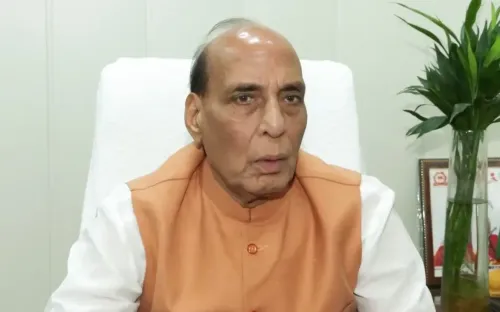
Union Defence Minister Rajnath Singh publicly rebuked Leader of Opposition Rahul Gandhi on 14 August 2026, calling his comments on PM Modi and India's foreign policy 'extremely low-grade and condemnable,' and arguing they violated the institutional dignity of both the Prime Minister's office and the post of Leader of Opposition.
Key Takeaways
Rajnath Singh called Rahul Gandhi's remarks on PM Modi and India's foreign policy 'extremely low-grade, condemnable, and personally painful.' Singh invoked past Leaders of Opposition — including Sushma Swaraj, Manmohan Singh, and Sonia Gandhi — as examples of restrained conduct that Gandhi has failed to match.
He charged Gandhi with simultaneously insulting PM Modi, damaging India's international reputation, and degrading the dignity of the Leader of Opposition post.
Singh posed a pointed question to the Congress: whether it can still claim the legacy of figures from Lal-Bal-Pal to Pranab Mukherjee after such conduct.
The rebuke was posted on the eve of Independence Day — 14 August 2026 — amplifying its symbolic weight around national image and unity.
The specific remarks by Rahul Gandhi that triggered the response had not been publicly clarified in Singh's post; a Congress response is awaited.
A sharp rebuke landed in Indian political discourse on Friday, 14 August 2026, the eve of Independence Day, when Union Defence Minister Rajnath Singh publicly condemned Leader of Opposition Rahul Gandhi for comments directed at Prime Minister Narendra Modi and India's foreign policy — calling them not merely unworthy of the office Gandhi holds, but personally painful to witness.
What Rajnath Singh said — and why the timing stings
In a lengthy post in Hindi, Singh described Gandhi's remarks as 'atyanth nimna-stariya aur nindajanak' — 'extremely low-grade and condemnable' — and went further, saying the conduct 'tears apart the dignity of democracy and the post of Leader of Opposition.' The Defence Minister invoked a roll-call of towering figures from both sides of the aisle — Sushma Swaraj, Arun Jaitley, Atal Bihari Vajpayee, L.K. Advani, Dr. Manmohan Singh, and Sonia Gandhi — arguing that none of them, even in the sharpest moments of opposition, descended to such conduct.
The post lands on the eve of Independence Day — a moment when cross-party solidarity around national image is an unwritten convention. That choice of timing, whether deliberate or coincidental, amplifies the charge Singh is making: that Gandhi's remarks were not just politically sharp, but nationally embarrassing.
The parliamentary norm Singh is defending
Singh's argument rests on a specific institutional tradition. During the Vajpayee governments (1998–2004), Leaders of Opposition from the Congress — including Dr. Manmohan Singh in the Rajya Sabha and Sonia Gandhi in the Lok Sabha — criticised foreign policy vigorously but, by the conventions of that era, stopped short of language that could be read as undermining the Prime Minister's international standing. Singh is invoking that norm to argue that what Gandhi said crosses a line those predecessors never did.
He also poses a pointed rhetorical question to the Congress party: after such conduct, can it still claim the legacy of figures ranging from Bal Gangadhar Tilak, Lala Lajpat Rai, Bipin Chandra Pal — the 'Lal-Bal-Pal' trinity — to Mahatma Gandhi, Jawaharlal Nehru, Sardar Patel, Subhas Chandra Bose, Rajendra Prasad, Lal Bahadur Shastri, P.V. Narasimha Rao, and Pranab Mukherjee? It is a list designed to make one point: the Congress's own history sets a standard its current leadership is failing.
The three charges Singh levels at Gandhi
Singh is precise about what he believes Gandhi's remarks have done. First, they insulted Prime Minister Modi personally. Second, they damaged India's international reputation — a particularly loaded charge given that foreign policy credibility is built over years and can be undercut by domestic political noise. Third, they degraded the constitutional dignity of the Leader of Opposition post itself, an office restored to formal recognition only in 2024 after a decade-long gap.
Singh closes with a line that is as much personal as political: 'I cannot even imagine that someone with the word Gandhi before their name could give such a shameful statement.' The invocation of the Gandhi surname — distinct from the Mahatma but inextricably linked to him in public memory — is deliberate. It raises the moral stakes beyond party politics.
The Congress has not yet responded publicly. When it does, the framing of that response — whether it defends the substance of Gandhi's original remarks or contests Singh's characterisation of them — will set the terms of a debate that is almost certain to echo into the next parliamentary session.
Point of View
Not a routine party broadside. By anchoring his criticism in institutional norms and bipartisan historical precedent rather than ideology, he frames Gandhi's remarks as a threat to democratic culture itself — a harder charge to deflect than a purely partisan attack. The Independence Day timing transforms what might have been a political spat into a question of national propriety. If Congress responds by defending the substance of Gandhi's original comments, it risks validating Singh's framing; if it contests his characterisation without releasing the original remarks in full context, it cedes the narrative. Either way, the BJP has successfully shifted the debate from the content of India's foreign policy to the conduct of its critics.
NationPress
29 Sept 2026
Frequently Asked Questions
What did Rajnath Singh say about Rahul Gandhi?
Rajnath Singh called Rahul Gandhi's remarks on PM Modi and India's foreign policy 'extremely low-grade and condemnable,' saying they insulted the Prime Minister, damaged India's international reputation, and degraded the dignity of the Leader of Opposition post.
What did Rahul Gandhi say about PM Modi's foreign policy?
The specific content of Rahul Gandhi's remarks is not detailed in Rajnath Singh's post. Singh described them as 'indecent' and 'shameful' without quoting them directly; Gandhi's original statement has not been independently verified in this context.
Which past leaders did Rajnath Singh compare Rahul Gandhi to?
Singh cited Sushma Swaraj, Arun Jaitley, Atal Bihari Vajpayee, L.K. Advani, Dr. Manmohan Singh, and Sonia Gandhi as examples of Leaders of Opposition who maintained dignity even in sharp political disagreements.
Why did Rajnath Singh mention the Gandhi surname specifically?
Singh said he 'cannot even imagine' that someone bearing the Gandhi name could make such a statement — invoking the moral weight of the Mahatma Gandhi association to heighten the criticism of Rahul Gandhi's conduct.
What is the significance of this controversy on Independence Day eve?
The post was made on 14 August 2026, the eve of Independence Day — a moment when cross-party solidarity around national image is an unwritten convention, making the timing of Singh's rebuke particularly pointed.