Rajnath Singh defends RSS, calls it a 'Civilisational Force'
Synopsis
Union Defence Minister Rajnath Singh on 17 July 2026 defended the RSS as a 'Civilisational Force' requiring no registration or certification, invoking Article 19 of the Constitution in response to a senior Congress leader's query about the RSS's unregistered status.
Key Takeaways
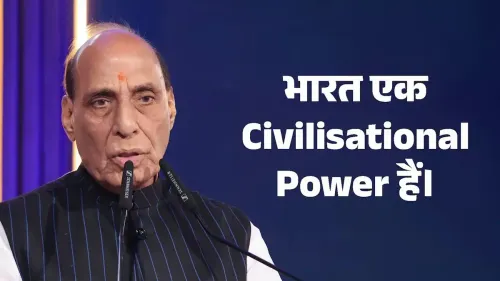
Rajnath Singh called the RSS a 'Civilisational Force' that needs no registration, certification, or governmental validation.
His remarks were a direct response to a senior Congress leader's public question about why the RSS is not a registered organisation.
He cited Article 19 of the Constitution of India , which guarantees every citizen the right to form associations.
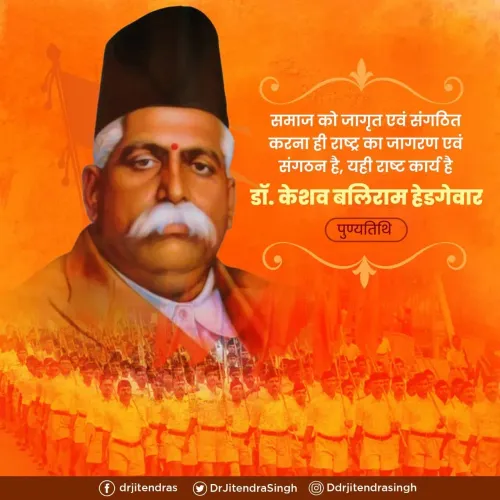
The RSS was founded in 1925 by K.B.
Hedgewar and has never registered under the Societies Registration Act.
Rajnath Singh quoted the Sanskrit principle 'Seva Dharmah, Paramah Shreyah' — 'Service is the highest duty' — to describe the RSS's guiding ethos.
The post signals that BJP leaders will continue defending the RSS's unregistered status ahead of potential legislative debates on voluntary organisation norms.
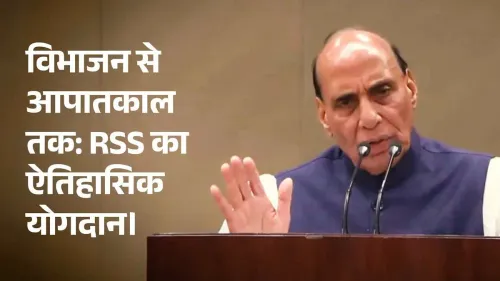
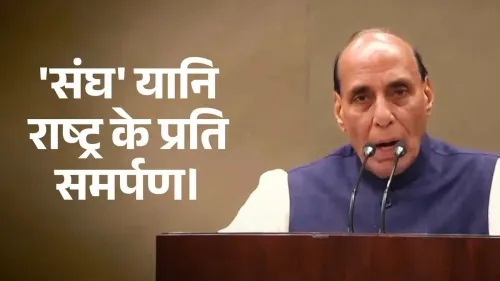
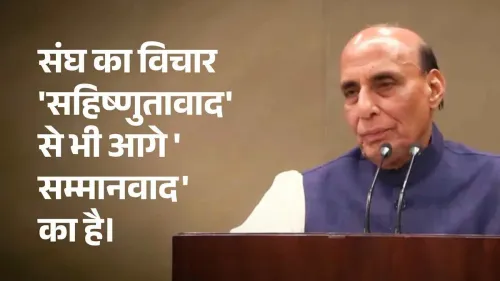
Union Defence Minister Rajnath Singh on Friday, 17 July 2026, took to X to mount a robust defence of the Rashtriya Swayamsevak Sangh (RSS), calling it a 'Civilisational Force' that needs no registration, certification, or governmental validation. His remarks came in direct response to a question raised by a senior Indian National Congress leader over why the RSS has not registered itself as a formal organisation.
Context
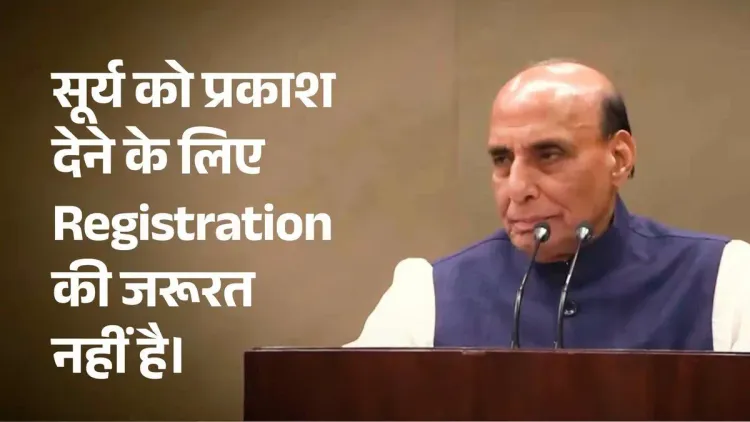
Posting in Hindi, Rajnath Singh invoked a series of natural and spiritual analogies to make his argument. 'Maa ke prem ka koi licence nahi hota' (A mother's love requires no licence), he wrote, adding that a guru's values are not dependent on a government seal, the Ganga needs no permit to flow, and the sun needs no registration to give light. He concluded: 'In the same way, RSS is a Civilisational Force that needs no Certification or Validation.'
The minister also quoted the Sanskrit phrase 'Seva Dharmah, Paramah Shreyah' — meaning 'Service is the highest duty' — to describe the RSS's founding ethos, asserting that the organisation has always operated with the spirit of 'Nation First, Always First.'
Policy Backdrop
The RSS was founded in 1925 by K.B. Hedgewar as a volunteer-based organisation aimed at character-building and national service. It has never registered itself under the Societies Registration Act and does not accept foreign contributions, which has historically insulated it from certain regulatory frameworks that apply to formal non-governmental organisations.
Article 19 of the Constitution of India (1950) guarantees every citizen the fundamental right to form associations or unions. Rajnath Singh explicitly cited this provision, stating that the Constitution gives every citizen the right to form an organisation and that such questions therefore do not warrant a detailed response.
Stakeholders and Impact
The statement is significant for the RSS's approximately 60,000 daily shakhas and millions of swayamsevaks (volunteers) across India, for whom the defence by a senior Union Cabinet minister carries symbolic weight. For the Congress and other opposition parties, the question of RSS registration has periodically resurfaced as a transparency and accountability concern, particularly in debates around large voluntary organisations and their funding.
Senior BJP leaders have consistently defended the RSS's unregistered status as a reflection of its organic, civilisational character rather than an institutional or legal gap. Rajnath Singh's post reinforces that long-standing party position ahead of what observers expect to be a renewed legislative debate on the Societies Registration Act and FCRA norms for large volunteer bodies.
What's Next
The exchange is unlikely to be the last word on the subject. Parliamentary and civil society discussions around proposed changes to the Societies Registration Act and Foreign Contribution (Regulation) Act norms could bring the question of large, unregistered voluntary organisations back into focus. How the Congress and other opposition parties respond to Rajnath Singh's framing — particularly his constitutional argument under Article 19 — will shape the next round of this ongoing political debate.
Point of View
Using constitutional language and cultural metaphors simultaneously to pre-empt any legal framing of the RSS registration debate. By anchoring his defence in Article 19, he shifts the argument from institutional accountability to fundamental rights — a terrain far more favourable to the BJP. The timing suggests the party anticipates this issue gaining traction, possibly in a forthcoming parliamentary session or amid renewed scrutiny of large voluntary organisations under proposed regulatory reforms. The RSS-BJP relationship means such a defence from a senior Cabinet minister carries both political and organisational significance beyond a routine social media post.
NationPress
16 Oct 2026
Frequently Asked Questions
Why is the RSS not registered as an organisation in India?
The RSS has chosen not to register under the Societies Registration Act since its founding in 1925, operating instead as a voluntary cultural organisation. Article 19 of the Constitution of India guarantees every citizen the right to form associations without mandating formal registration.
What did Rajnath Singh say about the RSS on 17 July 2026?
Rajnath Singh called the RSS a 'Civilisational Force' that needs no registration, certification, or validation, responding to a Congress leader's query. He used analogies of a mother's love, the Ganga, and sunlight to argue that some forces are inherently legitimate without formal recognition.
What is Article 19 of the Indian Constitution and how does it relate to the RSS?
Article 19 of the Constitution of India (1950) guarantees every citizen the fundamental right to form associations or unions. Rajnath Singh cited this provision to argue that no citizen or group is legally compelled to register an organisation.
What does 'Seva Dharmah Paramah Shreyah' mean?
'Seva Dharmah, Paramah Shreyah' is a Sanskrit phrase meaning 'Service is the highest duty' or 'Service to others is the greatest good.' Rajnath Singh quoted it to describe the founding and continuing ethos of the RSS .
Has Congress raised the issue of RSS registration before?
Yes, opposition parties including the Indian National Congress have periodically questioned the RSS's unregistered status, framing it as a transparency and accountability concern. Senior BJP leaders have consistently defended the RSS's status as consistent with constitutional rights and its civilisational character.