Rajnath Singh: RSS judges by national devotion, not religion
Synopsis
Union Defence Minister Rajnath Singh on 17 July 2026 invoked the classical ideals of 'Vasudhaiva Kutumbakam' and 'Atmavat Sarvabhuteshu' to argue that the RSS measures individuals by their dedication to the nation, not their religion, framing its vision as essential oneness rather than enforced uniformity.
Key Takeaways
Rajnath Singh posted on 17 July 2026 that the RSS judges individuals by national dedication, not religious identity.
He distinguished between ekarupata (uniformity) and ekatmata (essential oneness), positioning the RSS as favouring the latter.
The post invokes two Sanskrit ideals: 'Atmavat Sarvabhuteshu' (treat all beings as oneself) and 'Vasudhaiva Kutumbakam' (the world is one family).
The RSS was founded in 1925 on the principle of national service transcending caste and creed; the BJP 's 'Ek Bharat Shreshtha Bharat' programme has carried a similar integration message since 2014 .
The statement continues a pattern of RSS-BJP messaging that frames cultural nationalism as inclusive, typically deployed during periods of communal debate or electoral mobilisation.
Reactions from opposition parties and minority organisations are expected to shape the broader public discourse around the post.
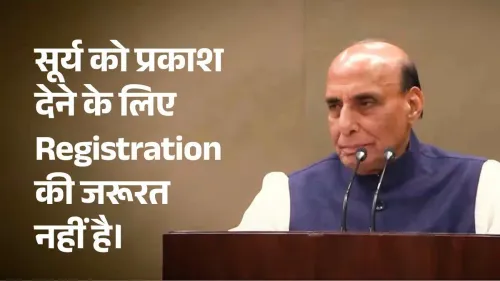
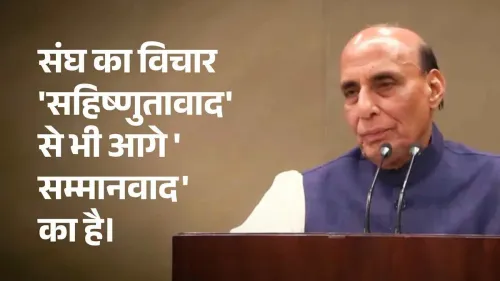
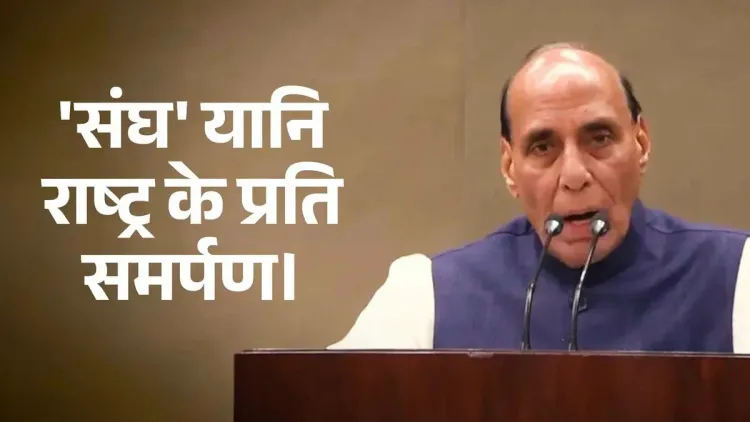
Union Defence Minister Rajnath Singh on Friday, 17 July 2026 invoked two classical Sanskrit ideals to articulate the Rashtriya Swayamsevak Sangh's foundational philosophy, asserting that the organisation evaluates individuals by their dedication to the nation rather than by their religion. Posting on X, the senior BJP leader framed the RSS's vision as one of unity-in-essence rather than enforced uniformity.
In his post, Rajnath Singh wrote: 'संघ व्यक्ति का मूल्यांकन उसके Religion से नहीं, बल्कि राष्ट्र के प्रति उसके समर्पण से करता है।' ('The Sangh does not judge a person by their religion, but by their dedication to the nation.') He added that the RSS's thought is not of uniformity (ekarupata) but of essential oneness (ekatmata), and that this spirit strengthens harmony, goodwill, and national unity in consonance with the ideals of 'Atmavat Sarvabhuteshu' — treating all beings as one treats oneself — and 'Vasudhaiva Kutumbakam' — the world is one family.
Context
The two Sanskrit phrases carry deep roots in Indian philosophical tradition. 'Atmavat Sarvabhuteshu' originates in ancient Dharmashastra literature and is associated with universal empathy, while 'Vasudhaiva Kutumbakam', drawn from the Maha Upanishad, has been a recurring motif in India's foreign-policy and cultural-diplomacy messaging, prominently displayed during India's G20 presidency in 2023. By pairing both in a domestic governance context, Rajnath Singh links civilisational heritage to contemporary national-integration discourse.
Policy Backdrop
The RSS, founded in 1925 by K. B. Hedgewar, has long maintained that its volunteer organisation transcends caste and creed, with national service as the unifying principle. The BJP's 'Ek Bharat Shreshtha Bharat' programme, promoted since 2014, has carried a similar thrust — advocating national integration through shared cultural values rather than homogenisation. Rajnath Singh, who has served as Union Home Minister, Chief Minister of Uttar Pradesh, and BJP national president, is among the party's most senior voices on ideological positioning and has repeatedly articulated the RSS-BJP framework of cultural nationalism as inclusive rather than exclusionary.
Stakeholders and Impact
The statement is directed at a broad audience: RSS volunteers and sympathisers, religious minority communities, and the wider Indian public engaged in ongoing debates around national identity and communal harmony. Critics of the RSS-BJP ideological combine have historically questioned whether the 'national devotion' standard is applied evenhandedly across communities, and opposition parties are likely to scrutinise the framing. For minority organisations, the emphasis on ekatmata over ekarupata — oneness over sameness — will be the key distinction to watch.
What's Next
Reactions from opposition parties and minority civil-society groups will indicate how the message lands beyond the BJP-RSS base. Any follow-up references in parliamentary proceedings on communal harmony, or coordination between the government and RSS ahead of upcoming state assembly elections, will determine whether this post marks the beginning of a broader messaging campaign. The invocation of universalist Sanskrit ideals alongside RSS philosophy signals an effort to project the organisation's nationalism as civilisationally grounded and constitutionally compatible — a narrative likely to recur in official forums through the remainder of 2026.
Point of View
Aimed at rebutting the persistent charge that RSS-rooted nationalism is exclusionary. By anchoring the argument in universalist Sanskrit philosophy rather than electoral rhetoric, Rajnath Singh attempts to shift the debate from identity to civic commitment — a framing that has gained traction in official cultural diplomacy since 2014. The choice of 'Vasudhaiva Kutumbakam', a phrase now associated with India's global leadership ambitions, alongside a domestic integration argument, suggests a conscious effort to align the RSS's self-image with India's aspirational international brand. How opposition parties and minority organisations respond will test whether this philosophical register can hold ground outside the BJP-RSS ecosystem.
NationPress
16 Oct 2026
Frequently Asked Questions
What did Rajnath Singh say about the RSS and religion?
Rajnath Singh stated that the RSS does not judge a person by their religion but by their dedication to the nation, and that its vision is one of essential oneness rather than uniformity.
What does 'Vasudhaiva Kutumbakam' mean and why did Rajnath Singh use it?
'Vasudhaiva Kutumbakam' is a Sanskrit phrase meaning 'the world is one family', drawn from the Maha Upanishad. Rajnath Singh used it to link the RSS's national-unity philosophy to a broader civilisational and universalist tradition.
What is the difference between ekatmata and ekarupata in the RSS context?
Ekarupata means uniformity or sameness, while ekatmata means essential oneness or unity-in-spirit. Rajnath Singh argued the RSS pursues ekatmata — a deeper unity that respects diversity — rather than imposing ekarupata.
What is 'Atmavat Sarvabhuteshu'?
'Atmavat Sarvabhuteshu' is a classical Sanskrit principle meaning 'treat all beings as you would treat yourself', associated with universal empathy in ancient Dharmashastra literature.
Why is Rajnath Singh's statement on the RSS significant?
As a former BJP national president, former Home Minister, and current Defence Minister, Rajnath Singh is among the party's most senior ideological voices. His articulation of RSS philosophy carries institutional weight and is likely to inform official messaging on communal harmony and national integration.