Rajnath Singh defends RSS ideology on its centenary
Synopsis
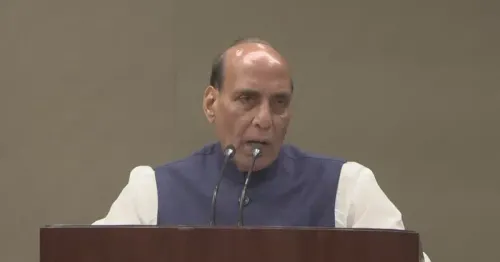
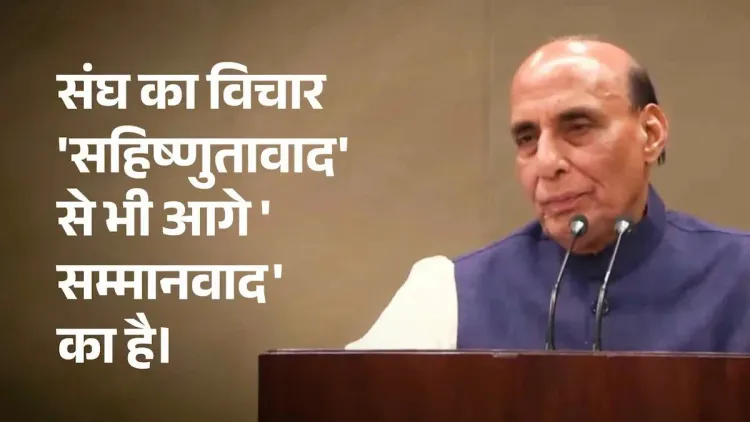
Union Defence Minister Rajnath Singh on 17 July 2026 defended the RSS on its centenary, saying myths have been spread about the organisation and that its ideology stands for 'Sammanvad' — mutual respect — rather than discrimination, going beyond mere tolerance to genuine cultural unity.
Key Takeaways
Union Defence Minister Rajnath Singh posted on 17 July 2026 defending the RSS against what he called 'myths' spread over its 100-year history.
Singh stated the RSS's ideology is based on 'Sanskritik Ekatmata' (cultural unity) and 'Rashtriya Ekta' (national unity), not discrimination.
He introduced the concept of 'Sammanvad' (mutual respect/honour) as the RSS's philosophy, which he described as a step beyond 'Sahishnutavad' (tolerationism).
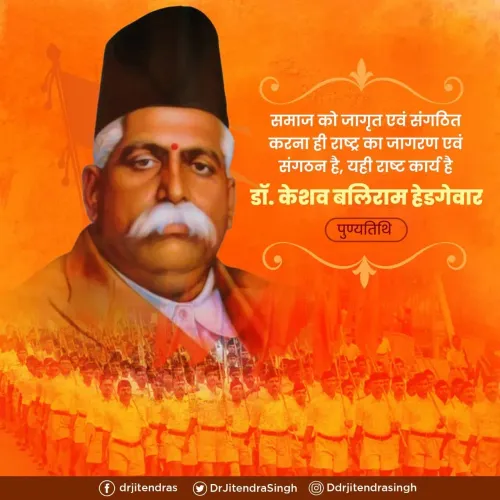
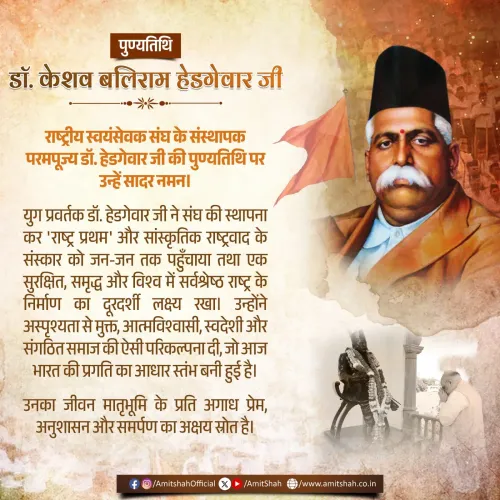
The RSS was founded on 27 September 1925 by Dr K.B.
Hedgewar in Nagpur , making 2025–26 its centenary period.
The RSS has faced bans in 1948 and 1975 and has been a recurring subject of scrutiny over its relationship with constitutional secularism.
Singh's statement places the weight of a sitting Cabinet minister behind an ideological defence of the RSS during its centenary commemorations.
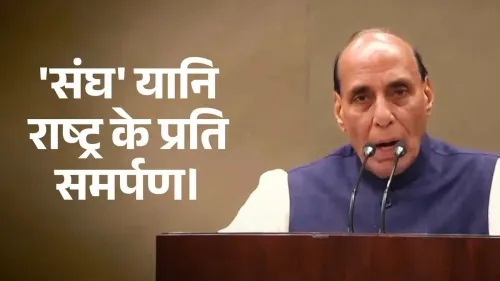
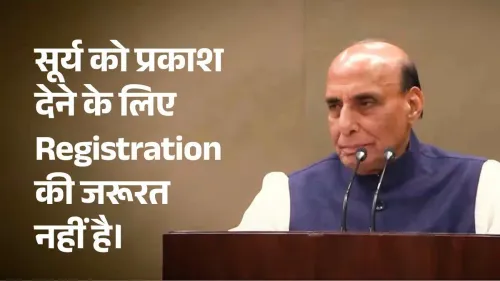
Union Defence Minister Rajnath Singh on Friday, 17 July 2026 publicly defended the Rashtriya Swayamsevak Sangh (RSS), asserting that the organisation's ideology is rooted in cultural unity and national integration rather than discrimination, and argued that the RSS stands for 'Sammanvad' — a philosophy of mutual respect — which he described as a step beyond mere tolerance.
Posting in Hindi on X, Singh wrote: '100 वर्षों से राष्ट्र और समाज की सेवा में समर्पित राष्ट्रीय स्वयंसेवक संघ के बारे में अनेक मिथक फैलाए गए।' ('Many myths have been spread about the Rashtriya Swayamsevak Sangh, which has been devoted to the service of the nation and society for 100 years.') He added that the truth is that the RSS's ideology is based not on discrimination but on cultural unity ('Sanskritik Ekatmata') and national unity ('Rashtriya Ekta'), and that the organisation's philosophy goes beyond 'Sahishnutavad' (tolerationism) to 'Sammanvad' (respectism or the doctrine of mutual honour).
Context
The RSS was founded on 27 September 1925 by Dr Keshav Baliram Hedgewar in Nagpur, making 2025–26 its centenary period. The organisation has grown into one of the world's largest volunteer bodies, operating through daily 'shakhas' (local branches) focused on character-building, physical training, and Hindu cultural consolidation. Singh's post arrives in the broader context of centenary commemorations that have drawn renewed public attention to the RSS's founding ideals and contemporary role.
The RSS has faced periodic bans — in 1948 following the assassination of Mahatma Gandhi, and again during the Emergency of 1975 — and has been a recurring subject of parliamentary and judicial scrutiny regarding its relationship with constitutional secularism. Senior BJP leaders have consistently maintained that the RSS promotes social harmony rather than exclusion.
Policy Backdrop
Rajnath Singh is among the most senior BJP figures with deep organisational roots in the RSS ecosystem. As Union Home Minister (2014–2019) and earlier as Chief Minister of Uttar Pradesh (2000–2002), he has repeatedly engaged with questions of cultural nationalism and national integration. His framing of 'Sammanvad' versus 'Sahishnutavad' reflects a long-standing ideological argument within BJP-RSS circles: that mere tolerance of diversity is an insufficient standard, and that genuine mutual respect ('Samman') is the organisation's actual aspiration.
This distinction has been articulated by RSS ideologues for several years, particularly in response to critics who argue that the organisation's Hindu-centric worldview is incompatible with India's pluralist constitutional framework. Singh's post brings this internal ideological vocabulary into mainstream political discourse at a high-visibility moment.
Stakeholders and Impact
The post is directed at multiple audiences simultaneously. For RSS volunteers and BJP supporters, it serves as an affirmation of organisational pride during the centenary year. For critics and Opposition parties, it is a rebuttal of longstanding charges that the RSS promotes majoritarian politics. For the broader Indian public, it frames the centenary milestone as an occasion to reassess what Singh calls 'myths' about the organisation.
The intervention by a sitting Cabinet minister — rather than an RSS functionary — is significant: it places the government's institutional weight behind the ideological defence, signalling that the BJP intends to use the centenary period to actively reshape public perception of the RSS.
What's Next
With the RSS centenary year continuing through 2025–26, further high-profile statements, events, and possibly parliamentary references to the organisation's legacy are expected. The concept of 'Sammanvad' articulated by Singh may be taken up more formally in RSS publications, BJP campaign messaging, or cultural policy documents. Opposition parties are likely to respond by renewing scrutiny of the RSS's historical record and its relationship with the ruling dispensation, setting the stage for a sustained ideological debate in the months ahead.
Point of View
Using the vocabulary of 'Sammanvad' to reframe a century-old organisation in terms that appeal to constitutional sensibilities while affirming Hindu cultural nationalism. By choosing the word 'respect' over 'tolerance', Singh signals that the BJP-RSS ecosystem views tolerance as a concession rather than a value — a subtle but pointed distinction in India's ongoing debate over pluralism. The move also elevates an internal RSS ideological argument into mainstream political discourse, suggesting the centenary will be used as a platform for a broader narrative offensive. For the Opposition, this sets up a predictable but necessary counter-mobilisation around questions of secularism and the RSS's historical record.
NationPress
16 Oct 2026
Frequently Asked Questions
Why is Rajnath Singh talking about RSS in July 2026?
Rajnath Singh posted on 17 July 2026 to defend the RSS during its centenary period, arguing that myths have been spread about the organisation and that its ideology is based on cultural unity and mutual respect, not discrimination.
What is 'Sammanvad' that Rajnath Singh mentioned?
'Sammanvad' is a Hindi term meaning the doctrine of mutual respect or honour. Singh used it to describe the RSS's philosophy, arguing it goes beyond 'Sahishnutavad' (mere tolerance) to a deeper principle of genuinely respecting all people.
What is the RSS centenary?
The Rashtriya Swayamsevak Sangh was founded on 27 September 1925 by Dr K.B. Hedgewar in Nagpur, making 2025–26 its 100th anniversary, referred to as the centenary year.
Has the RSS ever been banned in India?
Yes, the RSS was banned twice — in 1948 following the assassination of Mahatma Gandhi, and again during the Emergency period of 1975. Both bans were subsequently lifted.
What is Rajnath Singh's connection to the RSS?
Rajnath Singh is a senior BJP leader with deep organisational roots in the RSS ecosystem. He has served as Union Home Minister (2014–2019) and Chief Minister of Uttar Pradesh (2000–2002), and has consistently articulated positions aligned with the RSS's cultural nationalist ideology.