Dharma Productions Marks World Tourism Day With KHNH, Wake Up Sid
Synopsis
On World Tourism Day 2026, Dharma Productions celebrated cinema's power to immortalise places by spotlighting Kal Ho Naa Ho and Wake Up Sid — two films that turned New York and Mumbai into unforgettable destinations for generations of Indian audiences.
Key Takeaways
Dharma Productions marked World Tourism Day, 27 September 2026 , with a post on X spotlighting two of its films.
The two films referenced are Kal Ho Naa Ho (2003) and Wake Up Sid (2009).
Kal Ho Naa Ho is celebrated for its vivid depiction of New York City ; Wake Up Sid for its iconic portrayal of monsoon Mumbai .
World Tourism Day is observed annually on 27 September to highlight tourism's cultural, social, and economic significance.
Dharma Productions, founded by Yash Johar and led by Karan Johar , has a long history of films that double as destination showcases.
Travel is not a checklist — it is a feeling you carry home. On World Tourism Day, Sunday, 27 September 2026, Dharma Productions leaned into that sentiment by invoking two of its most beloved films as cinematic love letters to the act of going somewhere new.
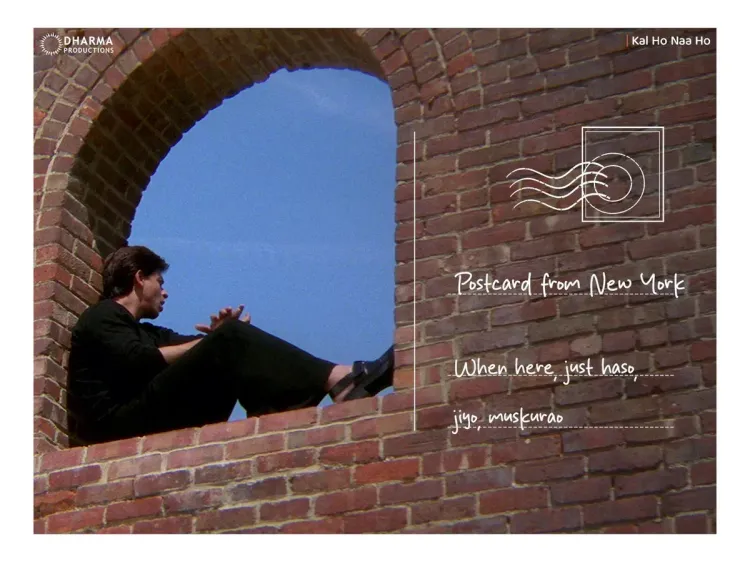
The studio posted on X with the caption: 'Because you don't just visit places, you bring back memories 🫶 Happy #WorldTourismDay,' tagging Kal Ho Naa Ho and Wake Up Sid — two films separated by years but united by an unmistakable sense of place.
'Kal Ho Naa Ho' and the City That Never Sleeps
Kal Ho Naa Ho (2003), produced by Dharma Productions and directed by Nikkhil Advani, made New York City feel like a character in its own right. The brownstones, the skyline, the park benches — the film burned a particular image of Manhattan into the imagination of an entire generation of Indian audiences. It was one of the earliest mainstream Hindi films to frame an international city not as an exotic backdrop but as a lived-in home.
'Wake Up Sid' and the Love Affair With Mumbai's Monsoon
Wake Up Sid (2009), directed by Ayan Mukerji and produced by Dharma Productions and UTV Motion Pictures, did something equally powerful closer to home. It made Mumbai — rain-soaked, chaotic, impossibly alive — look like the most romantic destination on earth. The film's visual language turned the city's familiar streets into discovery.
Bollywood as Tourism's Unofficial Ambassador
Indian film studios have long understood that a well-shot location can move as many tourists as a government campaign. Dharma Productions, founded by the late Yash Johar and now led by Karan Johar, has built a catalogue rich with cities and landscapes that audiences remember not just as settings but as destinations they want to inhabit. Marking World Tourism Day — a global observance held every 27 September to spotlight tourism's social, cultural, and economic value — with these two titles is a neat, deliberate reminder of that soft power.
The broader pattern is well-established: studios tie anniversaries, international days, and cultural moments to their back-catalogue to keep beloved films in the conversation. Here, the framing is sharper than a standard throwback — it is an argument that cinema and travel are, at their core, the same instinct: the desire to be somewhere that changes you.
Point of View
Studios are finding that tying classic titles to real-world moments drives streaming spikes. For Dharma specifically, whose brand identity is inseparable from emotional, location-rich storytelling, the alignment is almost effortless. The real question is whether this kind of soft-IP activation eventually evolves into formal co-branding with tourism boards — a space Indian cinema has only scratched the surface of.
NationPress
27 Sept 2026
Frequently Asked Questions
Why did Dharma Productions post about World Tourism Day?
Dharma Productions marked World Tourism Day on 27 September 2026 by sharing clips from Kal Ho Naa Ho and Wake Up Sid , two of its films celebrated for their evocative portrayal of New York City and Mumbai respectively, connecting the theme of travel to cinematic memory.
What is World Tourism Day and when is it celebrated?
World Tourism Day is a global observance held every year on 27 September , established to raise awareness of tourism's social, cultural, political, and economic importance around the world.
Which Dharma Productions film is famous for its New York setting?
Kal Ho Naa Ho (2003), directed by Nikkhil Advani and produced by Dharma Productions, is widely celebrated for making New York City an iconic backdrop in Hindi cinema.
Which city is featured in Wake Up Sid?
Wake Up Sid (2009), directed by Ayan Mukerji, is set in Mumbai and is beloved for its monsoon-soaked, romantically charged depiction of the city's streets and spirit.
Who heads Dharma Productions?
Dharma Productions was founded by Yash Johar and is currently headed by his son, producer-director Karan Johar .