Amit Shah flags off India's first dual-fuel LNG train in Ahmedabad
Synopsis
Union Minister Amit Shah flagged off India's claimed first dual-fuel LNG train at Ahmedabad's Sabarmati station on 27 September 2026, with Gujarat CM Bhupendra Patel present. The Driving Power Car uses up to 40% LNG, cutting diesel consumption and emissions, part of Indian Railways' push toward net-zero by 2030.
Key Takeaways
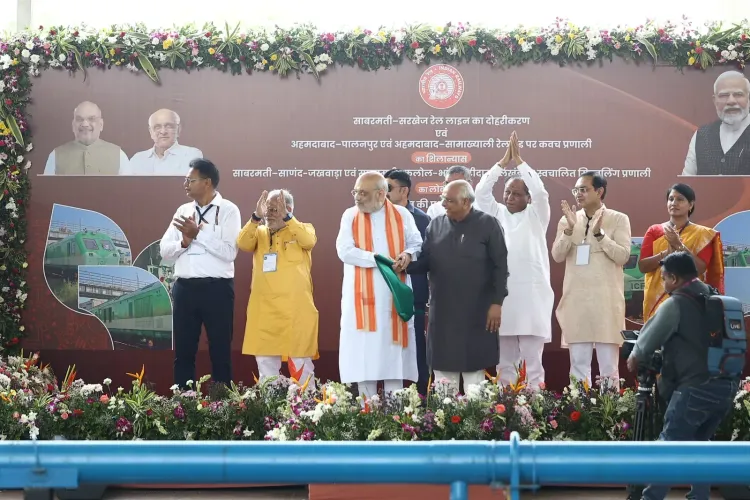
Union Minister Amit Shah flagged off the dual-fuel LNG train and a WAG-12 electric locomotive at Sabarmati Railway Station, Ahmedabad on 27 September 2026 .
The train's Driving Power Car (DPC) is configured to use up to 40 per cent LNG , reducing diesel dependence and exhaust emissions.
The CMO Gujarat described this as India's first dual-fuel LNG train , framing it as a revolutionary step toward environmental protection and clean energy.
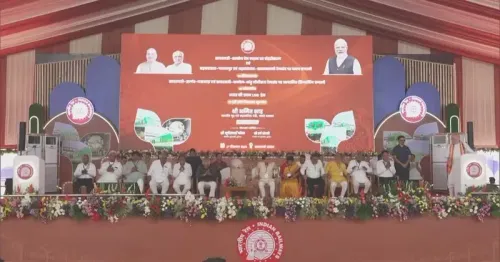
Gujarat Chief Minister Bhupendra Patel and other dignitaries were present at the flagging-off ceremony.
The initiative is linked to Indian Railways' commitment to net-zero carbon emissions by 2030 , under PM Narendra Modi's leadership.
The simultaneous launch of the WAG-12 electric locomotive underscores a dual-track modernisation strategy across electrified and non-electrified rail sections.
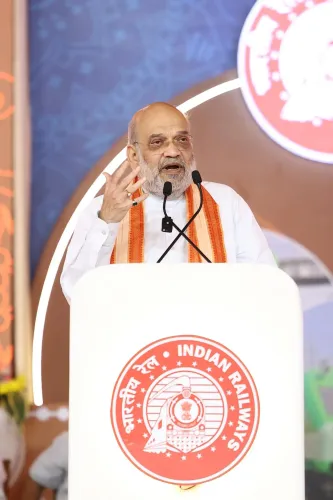
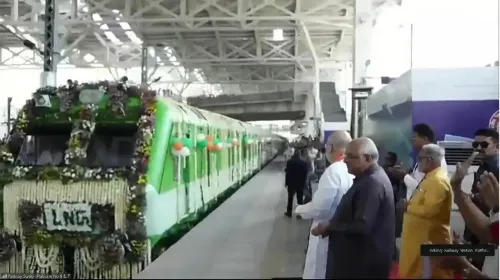
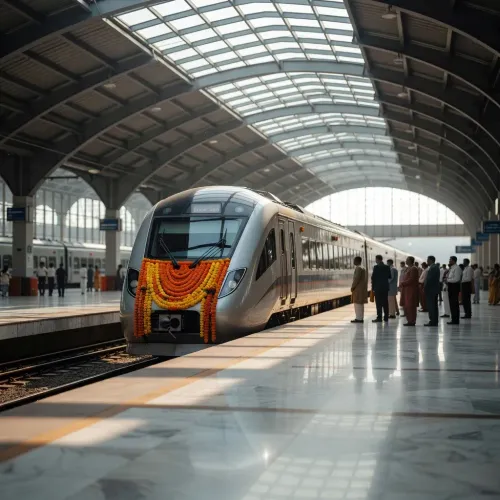
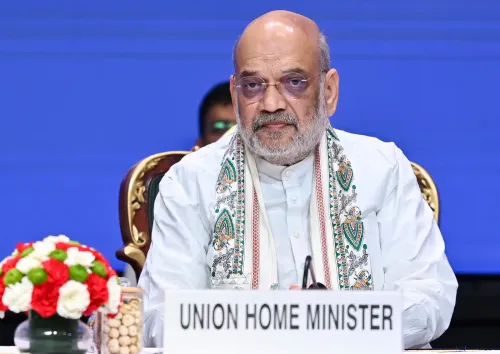
A locomotive running on a blend of diesel and liquefied natural gas pulled out of Sabarmati Railway Station in Ahmedabad on Sunday, 27 September 2026 — and with it, Indian Railways marked a quietly historic moment in its long march toward cleaner traction. Union Home and Cooperation Minister Amit Shah flagged off what the Chief Minister's Office of Gujarat described as India's first dual-fuel LNG train, alongside the high-powered WAG-12 electric locomotive, in the presence of Gujarat Chief Minister Bhupendra Patel and other dignitaries.
What makes this dual-fuel LNG train different
The train's Driving Power Car, or DPC, is configured to use up to 40 per cent LNG in place of diesel — a substitution that the state government says delivers significant savings on fuel costs while cutting exhaust emissions. LNG burns more cleanly than conventional diesel, producing lower particulate matter and fewer greenhouse gases for the same energy output. The WAG-12 electric locomotive flagged off alongside it represents the other pillar of Indian Railways' fleet modernisation: high-power electric traction that eliminates on-board combustion entirely on electrified stretches.
Railways' net-zero road and where this fits
Indian Railways committed to achieving net-zero carbon emissions by 2030 — an extraordinarily ambitious target for an organisation that moves roughly 14 billion passengers a year. The strategy has two tracks: accelerate full electrification across the route network, and fill the remaining diesel-dependent gaps with alternative fuels like LNG, hydrogen, and biofuels. Pilot projects for LNG-capable locomotives were initiated in earlier years precisely to test dual-fuel viability on non-electrified or mixed-traction sections where overhead wires have not yet reached. Sunday's flagging-off signals that one of those pilots is graduating to operational deployment.
The CMO Gujarat post frames the initiative as a realisation of karbon utsarjan ghatavani katibadhdhata — India's commitment to reducing carbon emissions — under Prime Minister Narendra Modi's leadership. The pairing of an LNG train with the WAG-12, one of the most powerful freight electric locomotives in the country's fleet, on the same occasion underlines that the Railways is pursuing both strategies simultaneously rather than betting on a single technology.
Sabarmati as a launch pad
The choice of Sabarmati is itself a statement. Ahmedabad's Sabarmati station sits at the heart of one of India's fastest-growing urban corridors and is a major interchange node for both passenger and freight movements across Gujarat and Rajasthan. Launching a national first from here gives the initiative immediate visibility and political symbolism in a state where industrial energy transition has been a recurring policy theme.
The next test will be operational data: how consistently does the 40 per cent LNG blend perform across varied loads, temperatures, and gradient profiles? And how quickly can Indian Railways scale the DPC configuration to other routes? Those numbers, when they arrive, will determine whether today's green flag translates into a fleet-wide revolution — or remains a well-photographed proof of concept.
Point of View
The BJP signals that clean-rail milestones are now part of its competitive federalism narrative. The simultaneous flagging-off of the WAG-12 electric locomotive is strategically astute — it avoids over-indexing on LNG, which is still a fossil fuel, while projecting technological breadth. Whether the 40 per cent LNG substitution rate can be replicated at scale across diverse route conditions will be the real policy test in the months ahead.
NationPress
27 Sept 2026
Frequently Asked Questions
What is India's first dual-fuel LNG train?
It is a train whose Driving Power Car (DPC) can use up to 40 per cent liquefied natural gas (LNG) alongside diesel, reducing fuel costs and emissions. It was flagged off at Sabarmati Railway Station in Ahmedabad on 27 September 2026 by Union Minister Amit Shah.
Where was the LNG train flagged off from?
The dual-fuel LNG train was flagged off from Sabarmati Railway Station in Ahmedabad, Gujarat.
Who flagged off the dual-fuel LNG train in Ahmedabad?
Union Home and Cooperation Minister Amit Shah flagged off the train, in the presence of Gujarat Chief Minister Bhupendra Patel and other dignitaries.
What is the WAG-12 locomotive launched alongside the LNG train?
The WAG-12 is one of India's most powerful electric freight locomotives. It was flagged off at the same event as part of Indian Railways' parallel strategy to expand high-power electric traction on electrified sections of the rail network.
What is Indian Railways' carbon emission target?
Indian Railways has committed to achieving net-zero carbon emissions by 2030, using a combination of full electrification across its route network and alternative fuels like LNG on non-electrified sections.