CM Yogi Honours Ram Janmabhoomi Struggle's Many Faces
Synopsis
CM Yogi Adityanath invokes the decades-long Ram Janmabhoomi movement, honouring saints, Naga ascetics, Sikh warriors, youth and women who risked their lives for the Ayodhya cause — now a completed temple and a continuing state project.
Key Takeaways
CM Yogi Adityanath posted on September 27, 2026 invoking the multi-community sacrifice behind the Ram Janmabhoomi movement.
The post names Naga Sadhus, Sikh warriors, saints, youth and women as participants in the struggle, using the idiom of 'tying a shroud to one's head.' The Vishva Hindu Parishad launched organised agitation for the Ayodhya site in the 1980s , culminating in a Supreme Court verdict in November 2019 .
The verdict awarded the disputed land to a trust for construction of the Ram Temple in Ayodhya .
The Yogi Adityanath government continues to develop Ayodhya as a pilgrimage and heritage tourism hub with ongoing infrastructure projects.
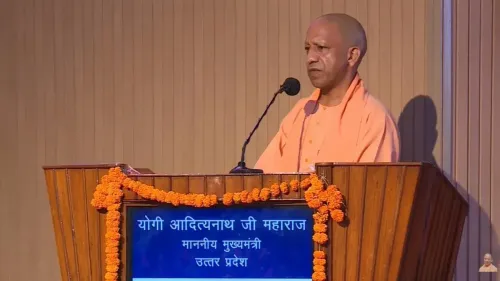
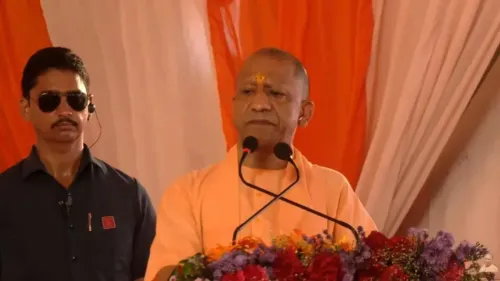
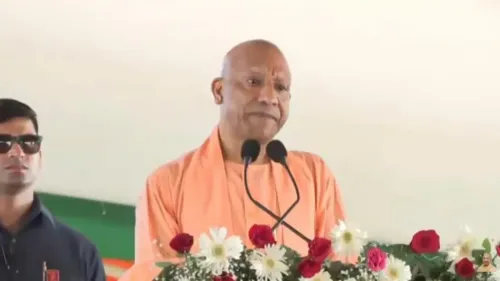
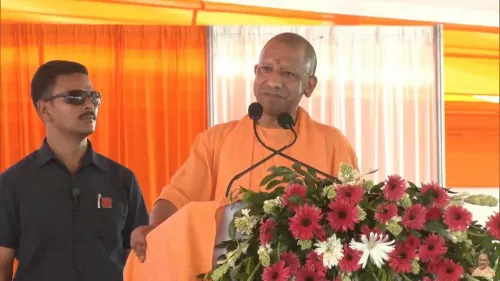
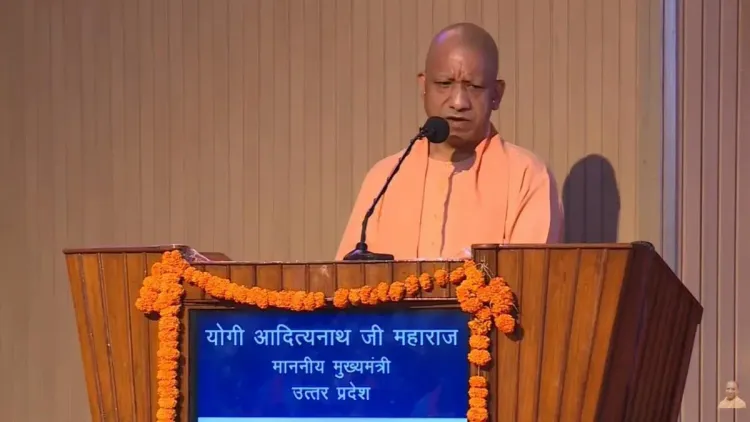
From bare-chested Naga ascetics to turbaned Sikh warriors, from young men to women — every section of Indian society, Uttar Pradesh Chief Minister Yogi Adityanath wrote on Sunday, September 27, 2026, once rose with a shroud tied to their heads, ready to give everything for the liberation of Shri Ram Janmabhoomi.
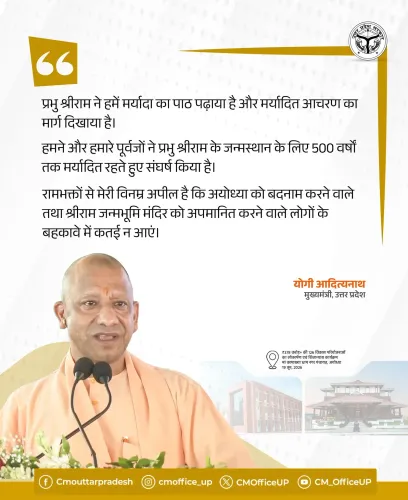
In Hindi, CM Yogi wrote: 'जब भी अवसर मिला, भारत के संतों, नागाओं, सिख वीरों, युवाओं और नारियों से लेकर हर एक व्यक्ति सिर पर कफन बांधकर श्री राम जन्मभूमि की मुक्ति के लिए टूट पड़ा...' — ('Whenever the moment came, from India's saints, Nagas, Sikh warriors, youth and women — every single person tied a shroud to their head and threw themselves into the struggle for the liberation of Shri Ram Janmabhoomi...'). The post was accompanied by a video.
A Movement That Spanned Decades and Communities
The phrase 'sowing a shroud on one's head' — kafan bandh kar — is a classical Hindi idiom for facing near-certain death without fear. By invoking it alongside Naga Sadhus, Sikh warriors, saints, youth and women together, the Chief Minister frames the Ram Janmabhoomi movement not as a single-community cause but as a broad civilisational upsurge. The Vishva Hindu Parishad first ignited organised agitation around the Ayodhya site in the 1980s, and the movement grew over four subsequent decades through processions, legal battles, and periodic mass mobilisations.
The 2019 Verdict and Ayodhya's Ongoing Transformation
The long-running title dispute over the Shri Ram Janmabhoomi site reached its constitutional end when the Supreme Court of India delivered a unanimous verdict in November 2019, awarding the disputed land to a trust for temple construction. The temple that generations of movement participants had sought with 'kafan on their heads' is now a physical reality in Ayodhya, Uttar Pradesh. Under CM Yogi's administration, the city has simultaneously been developed as a large-scale pilgrimage and heritage tourism destination, with new roads, an international airport, and riverfront infrastructure under active development.
Why This Framing Matters Now
CM Yogi's consistent retelling of the Ram Janmabhoomi struggle — emphasising sacrifice across caste, community, and gender lines — is central to the BJP's cultural-nationalist political project in Uttar Pradesh. The narrative positions the completed temple not merely as a religious milestone but as the culmination of what is framed as a multi-generational, cross-community act of popular will. The further phases of the temple complex's construction and the surrounding heritage corridor remain active projects, giving the Chief Minister recurring occasions to reinvoke this foundational story.
The shroud, in this telling, has become a crown — and Ayodhya is still being built.
Point of View
The framing explicitly counters any reading of the movement as exclusionary. For the BJP in Uttar Pradesh, Ayodhya functions as both a cultural landmark and a living political narrative — one that the Chief Minister revisits frequently to anchor state identity. With the temple complex still under phased construction, each such invocation also serves as a forward-looking signal that the project remains a priority of governance, not just history.
NationPress
27 Sept 2026
Frequently Asked Questions
What did CM Yogi Adityanath say about Ram Janmabhoomi?
CM Yogi said that whenever the opportunity arose, India's saints, Naga ascetics, Sikh warriors, youth and women all rose with shrouds tied to their heads, ready to sacrifice their lives for the liberation of Shri Ram Janmabhoomi in Ayodhya.
What is the Ram Janmabhoomi movement?
The Ram Janmabhoomi movement is a decades-long campaign, organised prominently from the 1980s, to build a Hindu temple at the believed birthplace of Lord Rama in Ayodhya. It culminated in a Supreme Court verdict in November 2019 that awarded the disputed site to a trust for temple construction.
Who are Naga Sadhus and what is their connection to the Ayodhya movement?
Naga Sadhus are Hindu ascetic warrior orders who have historically participated in major religious processions and causes. They were a prominent presence in the Ram Janmabhoomi agitation and are frequently invoked as symbols of selfless sacrifice for the movement.
When did the Supreme Court rule on the Ayodhya Ram temple dispute?
The Supreme Court of India delivered its unanimous verdict on the Ram Janmabhoomi title dispute in November 2019, awarding the disputed land to a trust for the construction of a Ram Temple.
What is the current status of the Ayodhya temple and development projects?
The Ram Temple in Ayodhya is a reality following the 2019 verdict, with further phases of the temple complex still under construction. The Uttar Pradesh government under CM Yogi is simultaneously developing Ayodhya as a major pilgrimage hub with new infrastructure including roads and an international airport.