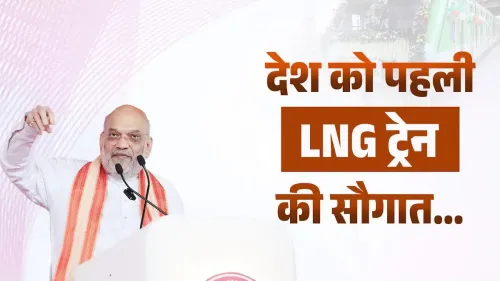
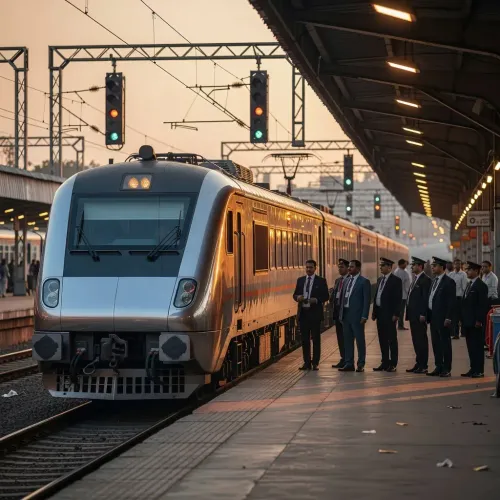
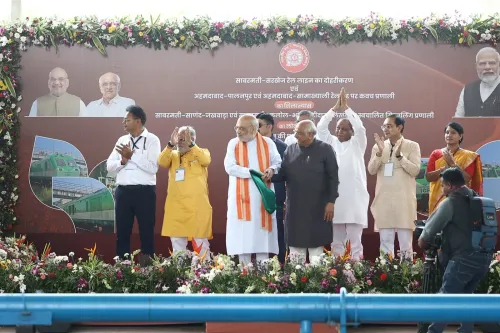
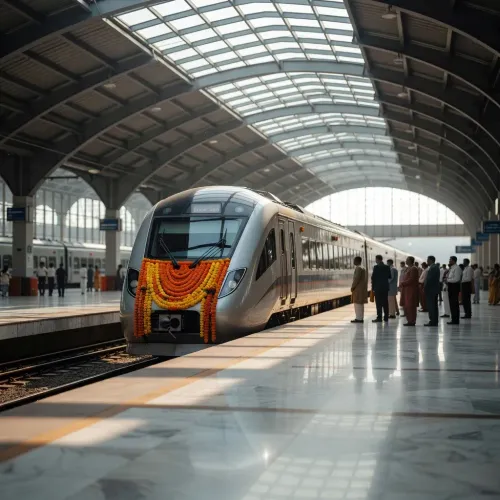
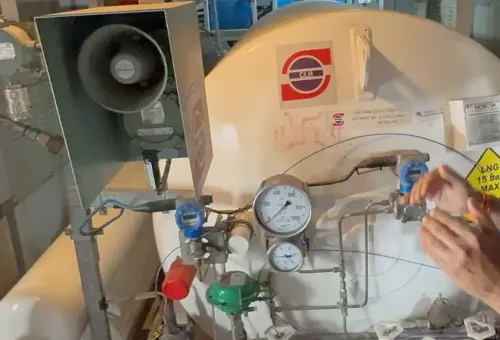
Gujarat CM, Amit Shah flag off India's first LNG train
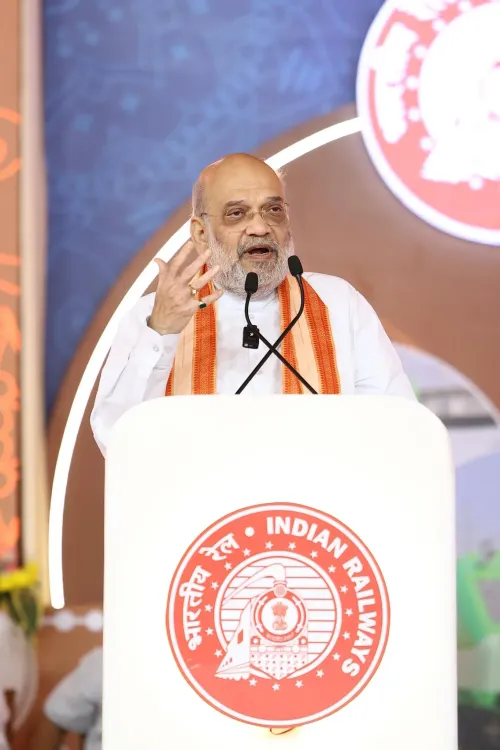
Synopsis
India's first LNG-powered train was flagged off in Gujarat on September 27, 2026, with Union Minister Amit Shah and the Gujarat CM present. The event also covered new railway facility inaugurations and highlighted rising railway budgets and the Amrit Bharat Station modernisation drive.
Key Takeaways
India's first LNG train was launched on September 27, 2026 , framed as a green and clean energy milestone for Indian Railways.
Union Home Minister Amit Shah highlighted continuous growth in railway budgets under PM Narendra Modi since 2014 as the engine of the sector's transformation.
The Amrit Bharat Railway Station scheme was cited as proof of nationwide station modernisation benefiting passengers across India.
Gujarat's Chief Minister linked the launches to improved ease of living for citizens and reaffirmed commitment to both development and environmental protection.
The event combined lokarpan (inaugurations) and khatmuhurt (groundbreakings), signalling both completed and upcoming railway projects in the state.
India's railways crossed a quiet but consequential milestone on Sunday, September 27, 2026, when the country's first liquefied natural gas (LNG)-powered train was flagged off — a moment the Chief Minister's Office of Gujarat described as a 'concrete step in the direction of green and clean energy.' Union Home and Cooperation Minister Amit Shah and Gujarat Chief Minister were both present at the event, which also saw the inauguration and groundbreaking of several new railway facilities.
Amit Shah on rising railway budgets and Atmanirbhar Bharat
Amit Shah told the gathering that the railway facilities inaugurated and launched that day would prove 'highly useful for passengers in the coming times.' He credited Prime Minister Narendra Modi's leadership for a continuous rise in railway budgets since 2014, which he said had powered a comprehensive transformation — kāyākalp (metamorphosis) — of Indian Railways. He also reaffirmed the government's resolve to accelerate the Make in India vision and build a self-reliant nation.
India's first LNG train: what the launch signals
The LNG train launch is the headline development from Sunday's event. Liquefied natural gas produces significantly lower particulate emissions than diesel traction and is being explored globally as a bridge fuel for freight and passenger corridors not yet electrified. The Chief Minister called it proof that development and environmental protection can advance together — pointing to a dual commitment by both the central and state governments. He also outlined how schemes such as the Amrit Bharat Railway Station programme are modernising station infrastructure nationwide.
Amrit Bharat stations and the larger modernisation arc
The Amrit Bharat Railway Station scheme — a central government initiative — is redeveloping hundreds of stations across India with upgraded passenger amenities, better accessibility, and contemporary design. Sunday's event situated Gujarat within that broader national canvas. The Chief Minister noted that PM Modi had made power a vehicle of service, ensuring the benefits of development reach the last person in the last mile — improving citizens' ease of living across infrastructure, health, and education.
Taken together, the LNG train trial, fresh station inaugurations, and groundbreaking ceremonies sketched a single arc: India's railways moving from legacy diesel operations toward cleaner traction, while simultaneously upgrading the physical stations passengers pass through every day. Whether the LNG pilot expands into regular scheduled service — and how quickly Amrit Bharat station redevelopments reach smaller towns — will determine how quickly that arc translates into everyday change for commuters.
Point of View
The centre and state governments jointly claim credit for a nationally significant rail first, reinforcing Gujarat's role as a showcase state for the Modi government's development model. The Amrit Bharat Station scheme invocation adds institutional depth, connecting a local inauguration to a programme visible in hundreds of constituencies. The real test, however, lies in whether the LNG pilot scales or remains a headline experiment.
NationPress
27 Sept 2026
Frequently Asked Questions
What is India's first LNG train?
India's first LNG (liquefied natural gas) powered train was launched on September 27, 2026, during a railway event in Gujarat attended by Union Minister Amit Shah and the Gujarat Chief Minister. LNG produces lower emissions than conventional diesel traction and is positioned as a cleaner fuel option for Indian Railways.
What is the Amrit Bharat Railway Station scheme?
The Amrit Bharat Railway Station scheme is a central government programme to redevelop and modernise railway stations across India with upgraded passenger amenities, improved accessibility, and contemporary infrastructure. It was highlighted at the Gujarat event as part of broader national railway modernisation.
What did Amit Shah say at the Gujarat railway event?
Amit Shah said the newly inaugurated railway facilities would prove highly useful for passengers and credited PM Modi's leadership for a continuous rise in railway budgets since 2014. He also reaffirmed the government's commitment to the Make in India vision and building an Atmanirbhar (self-reliant) India.
Why is an LNG train significant for Indian Railways?
An LNG-powered train marks a shift toward greener traction technology for corridors not yet fully electrified. Liquefied natural gas emits fewer particulates than diesel, making it a bridge fuel option as India works to reduce the carbon footprint of its vast rail network.
What railway projects were inaugurated in Gujarat on September 27, 2026?
The event involved both inaugurations (lokarpan) and groundbreakings (khatmuhurt) of railway facilities in Gujarat, including the launch of India's first LNG train. Specific project names and locations were not confirmed in official communications reviewed for this report.