Rajasthan CMO marks World Tourism Day with heritage cleanliness pledge
Synopsis
On World Tourism Day, 27 September 2026, Rajasthan's CMO called citizens to pledge cleanliness at the state's forts, palaces and folk-art sites, linking heritage pride to the Swachh Bharat framework and the national Incredible India campaign.
Key Takeaways
Rajasthan's Chief Minister's Office posted a World Tourism Day message on 27 September 2026 calling for a public cleanliness pledge at heritage and tourist sites.
The post identifies ancient architecture, folk arts and grand monuments as the foundation of Rajasthan's tourism economy.
The message aligns with the Swachh Bharat Mission (launched 2014) , which included monument-cleanliness components targeting states like Rajasthan.
Hashtags #ChaloRajasthan and #IncredibleIndia connect the state's initiative to India's national tourism marketing campaign.
World Tourism Day is observed annually on 27 September under the UN World Tourism Organization.
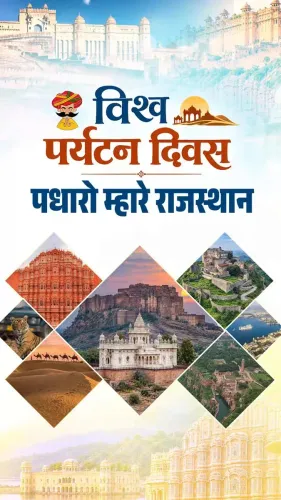
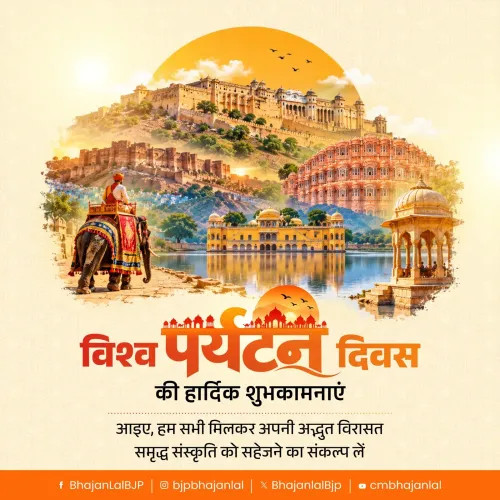
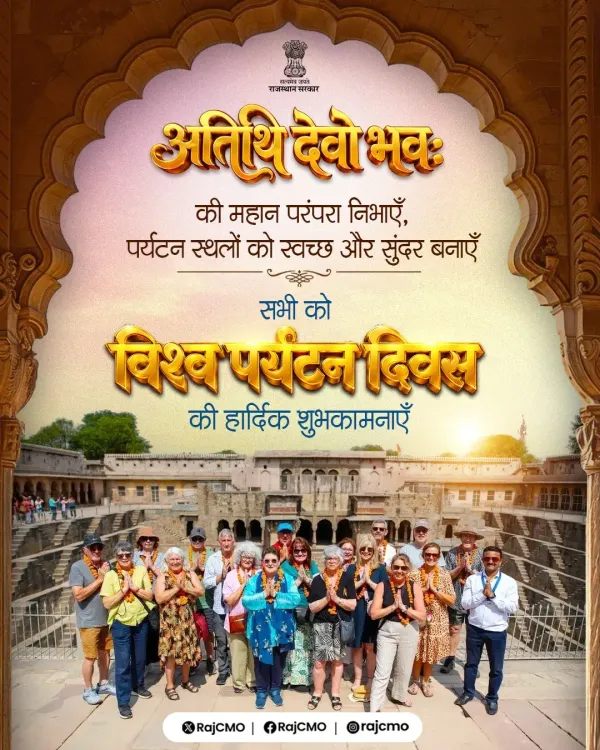
On the one day each year when the world pauses to celebrate the power of travel, Rajasthan's Chief Minister's Office turned the spotlight inward — urging every resident to treat the state's storied forts, palaces and folk-art traditions as a living trust, not just a backdrop. The CMO's post on World Tourism Day, 27 September 2026, carried a pledge that cut through ceremonial greetings: keep every heritage and tourist site spotless, so that each visitor carries home a beautiful image of Rajasthan.
The post, written in Hindi, opened with a declaration of identity: 'प्राचीन वास्तुकला, समृद्ध लोक-कलाएँ और भव्य स्मारक, राजस्थान के पर्यटन का मुख्य आधार हैं' — 'Ancient architecture, rich folk arts and grand monuments are the very foundation of Rajasthan's tourism.' It then called on citizens to take a collective resolution to maintain cleanliness at these sites, closing with greetings tagged to #WorldTourismDay, #ChaloRajasthan and #IncredibleIndia.
Why 27 September carries weight for Rajasthan
World Tourism Day, observed annually on 27 September under the mandate of the UN World Tourism Organization, is designed precisely to highlight tourism's cultural and economic role. For Rajasthan — home to UNESCO-listed hill forts, the palace city of Jaipur, the sand dunes of Jaisalmer, and a folk-art tradition that spans ghoomar dance to block printing — the occasion is less a formality and more a statement of economic identity. Tourism is among the state's largest employment generators, and heritage sites form its primary draw for both domestic and international visitors.
Cleanliness pledge rooted in Swachh Bharat's monument push
The CMO's call to keep sites 'always clean' (हमेशा साफ-सुथरा) echoes a policy thread that runs back to the Swachh Bharat Mission, launched in 2014, which included specific components targeting cleanliness at monuments and tourist destinations across India. Rajasthan, with its dense concentration of protected monuments, has been a recurring focal state in that national sanitation framework. By pairing heritage pride with a cleanliness pledge on this particular date, the CMO's message consciously links cultural stewardship with a longer governance arc.
The Incredible India hashtag in the post also connects the state's tourism narrative to the Ministry of Tourism's flagship international marketing campaign, signalling that Rajasthan sees its own heritage promotion as inseparable from the national brand-building effort.
Rajasthan's forts and palaces do not market themselves — they need citizens who treat them as heirlooms. That, in essence, is the quiet argument the CMO made on Sunday morning.
Point of View
The Rajasthan government signals alignment with both central tourism and sanitation frameworks, a posture that has electoral and administrative value. The 'collective resolution' framing shifts responsibility to citizens rather than solely the state, a rhetorical device that softens accountability while broadening ownership. Such messaging is now standard practice for state governments seeking to amplify national scheme visibility through social media on symbolic dates.
NationPress
27 Sept 2026
Frequently Asked Questions
When is World Tourism Day celebrated?
World Tourism Day is celebrated every year on 27 September , a date set by the UN World Tourism Organization to highlight the cultural and economic importance of tourism globally.
What did Rajasthan CMO post on World Tourism Day 2026?
The Rajasthan Chief Minister's Office posted a message on 27 September 2026 calling citizens to pledge that they will keep the state's heritage and tourist sites clean, so every visitor carries home a beautiful image of Rajasthan.
What is the ChaloRajasthan campaign?
#ChaloRajasthan is a tourism promotion hashtag used by the Rajasthan government to encourage domestic travel to the state's forts, palaces, folk-art destinations and cultural sites.
How does Swachh Bharat Mission relate to Rajasthan's heritage sites?
The Swachh Bharat Mission, launched in 2014 , included specific cleanliness components for monuments and tourist destinations; Rajasthan, with its high density of protected monuments, has been a key state in that national sanitation framework.
What is the Incredible India campaign?
Incredible India is the national tourism promotion campaign run by India's Ministry of Tourism to market the country's cultural and heritage destinations to international audiences; Rajasthan is one of its flagship destinations.