Rajasthan CMO Calls State a Historic Heritage Asset
Synopsis
The Chief Minister's Office of Rajasthan on 9 July 2026 called the state an extremely important historical, cultural, and tourism heritage of India, tagging Union Minister Nitin Gadkari under the campaign hashtag 'Our Leading Rajasthan,' signalling a push for greater central support for heritage tourism infrastructure.
Key Takeaways
The Chief Minister's Office of Rajasthan posted on 9 July 2026 describing Rajasthan as a critical national heritage from historical, cultural, and tourism perspectives.
The post directly tagged Nitin Gadkari , Union Minister for Road Transport and Highways, indicating a pitch for improved connectivity to heritage sites.
The hashtag #आपणो_अग्रणी_राजस्थान ('Our Leading Rajasthan') suggests a coordinated state-level campaign to project Rajasthan as a leading heritage tourism destination.
Rajasthan's tourism policy since 2015 has emphasised heritage circuits and road infrastructure linkages with central ministries.
Key stakeholders include the tourism industry, heritage site managers, and the Archaeological Survey of India .
Further announcements on national highway corridors or tourism circuits connecting Rajasthan's forts and palaces are possible.
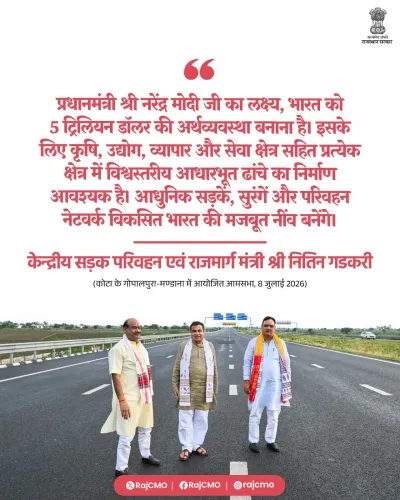
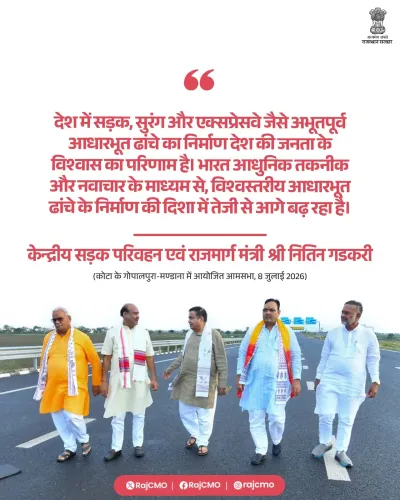
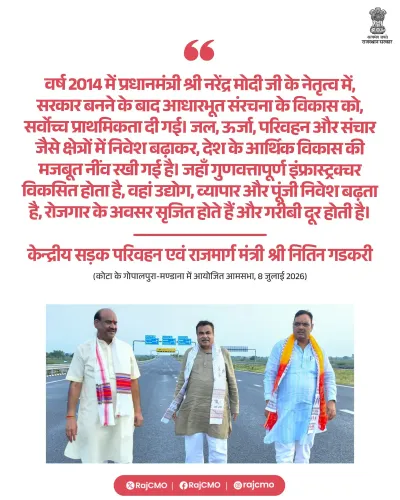
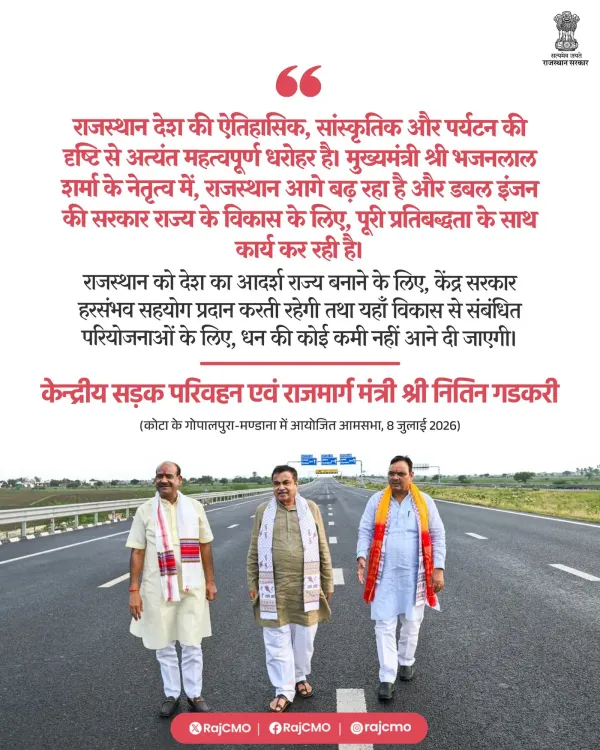
The Chief Minister's Office of Rajasthan on Thursday, 9 July 2026 described Rajasthan as an extraordinarily important heritage of the country from historical, cultural, and tourism perspectives, tagging Union Minister Nitin Gadkari in the post under the campaign hashtag #आपणो_अग्रणी_राजस्थान ('Our Leading Rajasthan').
Context
The post, shared from the official @RajCMO account, stated in Hindi: 'राजस्थान देश की ऐतिहासिक, सांस्कृतिक और पर्यटन की दृष्टि से अत्यंत महत्वपूर्ण धरोहर है' — translating to 'Rajasthan is an extremely important heritage of the country from the perspective of history, culture, and tourism.' The direct mention of Nitin Gadkari, the Union Minister for Road Transport and Highways, signals an intent to draw central attention to the state's tourism and connectivity needs.
The hashtag #आपणो_अग्रणी_राजस्थान, meaning 'Our Leading Rajasthan,' appears to be part of a broader state-level campaign projecting Rajasthan as a front-runner in heritage and cultural tourism among Indian states.
Policy Backdrop
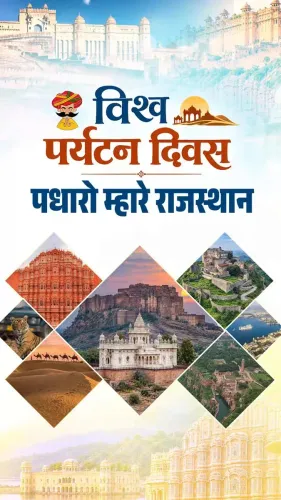
Rajasthan is home to some of India's most visited heritage destinations, including Jaipur's Amber Fort, the Mehrangarh Fort in Jodhpur, and the City Palace in Udaipur — several of which carry UNESCO World Heritage status or are under consideration. The state's tourism policy, updated in successive cycles since 2015, has consistently emphasised heritage circuits and the need for improved road and highway infrastructure to connect these sites.
State governments routinely engage Union ministers overseeing highways and transport when seeking better road connectivity to heritage destinations. Gadkari's ministry controls the National Highways Authority of India and has been a key driver of rural and tourist-corridor road projects across the country, making his tagging in this post strategically significant.
Stakeholders and Impact
The tourism industry in Rajasthan — spanning hoteliers, heritage property operators, tour operators, and local artisan communities — stands to benefit directly from any enhanced centre-state coordination on highway corridors and tourism infrastructure. Heritage site managers and the Archaeological Survey of India are also key stakeholders in decisions that affect visitor access and conservation funding.
Domestic tourism in Rajasthan has seen consistent growth, and improved national highway connectivity to fort towns and palace cities could further boost footfall, employment, and state revenue from tourism levies.
What's Next
The tagging of Gadkari and the campaign framing suggest that further announcements on highway corridors, tourism circuits, or centre-state project approvals connecting Rajasthan's forts and palaces may follow. Observers will watch for any formal response from the Union Ministry of Road Transport and Highways or a joint announcement on new infrastructure projects in the state.
The #आपणो_अग्रणी_राजस्थान campaign, if sustained, could serve as a platform for the state government to make a series of coordinated pitches to central ministries across sectors beyond tourism, reinforcing Rajasthan's positioning as a leading state in heritage-driven development.
Point of View
Not just promotion, as the primary lever for unlocking its heritage tourism potential. This fits a broader pattern of state governments using social media to publicly nudge central ministers into action, creating political accountability for infrastructure outcomes. The 'Our Leading Rajasthan' campaign framing also suggests the ruling dispensation is building a narrative of proactive governance ahead of any future electoral cycle. If Gadkari responds with a concrete project announcement, it would validate this centre-state coordination model as a replicable template for other heritage-rich states.
NationPress
7 Oct 2026
Frequently Asked Questions
What did the Rajasthan CMO post about on 9 July 2026?
The Chief Minister's Office of Rajasthan posted that Rajasthan is an extremely important heritage of the country from historical, cultural, and tourism perspectives, tagging Union Minister Nitin Gadkari under the campaign hashtag 'Our Leading Rajasthan.'
Why did Rajasthan CMO tag Nitin Gadkari in the post?
Nitin Gadkari is the Union Minister for Road Transport and Highways. Tagging him signals that Rajasthan is seeking improved highway and road connectivity to its heritage and tourism destinations, as better infrastructure is key to boosting visitor access.
What does the hashtag Aapno Agrni Rajasthan mean?
The hashtag #आपणो_अग्रणी_राजस्थान translates from Rajasthani/Hindi to 'Our Leading Rajasthan,' and appears to be part of a state government campaign positioning Rajasthan as a front-runner in heritage, culture, and tourism.
What are the major heritage sites in Rajasthan?
Rajasthan is home to several major heritage destinations including the Amber Fort in Jaipur, Mehrangarh Fort in Jodhpur, and the City Palace in Udaipur, several of which hold or are being considered for UNESCO World Heritage status.
What is Rajasthan's tourism policy focus?
Since 2015, Rajasthan's tourism policy has emphasised developing heritage circuits and improving road and highway infrastructure linkages in coordination with central government ministries to drive domestic and inbound tourism.