Pralhad Joshi visits IIM Bodh Gaya's Annamahotsava, pays via UPI

Synopsis
Union Consumer Affairs Minister Pralhad Joshi visited IIM Bodh Gaya's Annamahotsava student food festival, praised students' culinary and entrepreneurial skills, and made purchases via UPI to highlight digital payment adoption under the Digital India vision.
Key Takeaways
Union Consumer Affairs Minister Pralhad Joshi attended Annamahotsava , a student-run food festival at IIM Bodh Gaya .
Joshi praised students' creativity, culinary skills, and entrepreneurial spirit at the stalls.
He made payments at the festival using UPI , explicitly promoting digital transactions.
IIM Bodh Gaya was established in 2015 in Bodh Gaya, Bihar , making it one of India's newer IIMs.
UPI was launched in 2016 by NPCI as part of India's broader cashless economy push under the Digital India programme.
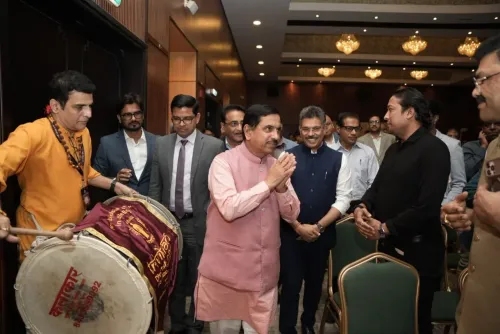
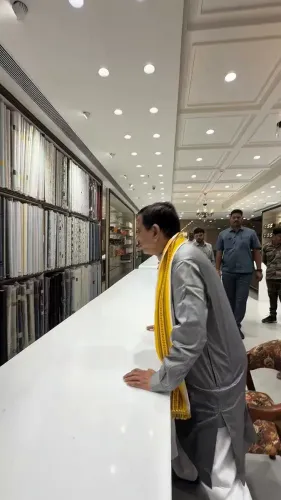
Food, culture, and a quiet policy nudge — Union Consumer Affairs Minister Pralhad Joshi walked the stalls of IIM Bodh Gaya's student food festival Annamahotsava and made his purchases the government's preferred way: a quick UPI scan.
Joshi visited the festival — where students had set up a bustling row of food stalls — sampling dishes he described as prepared 'with so much love and warmth,' and commending the creativity, culinary skills, and entrepreneurial spirit on display. The Kannada portion of his post read: 'ವಿದ್ಯಾರ್ಥಿಗಳು ಅತ್ಯಂತ ಪ್ರೀತಿ ಮತ್ತು ಆತ್ಮೀಯತೆಯಿಂದ ತಯಾರಿಸಿದ ಆಹಾರವನ್ನು ಸವಿದು ಆನಂದಿಸಿದೆನು' ('I savoured and enjoyed the food prepared by the students with immense love and warmth').
Annamahotsava: where campus culture meets the food stall
IIM Bodh Gaya, established in 2015 in Bodh Gaya, Bihar, is one of India's newer Indian Institutes of Management, still building its campus identity and traditions. Annamahotsava — the name roughly translates to 'the great festival of food' — is precisely the kind of student-run event that defines early institutional culture: entrepreneurial, informal, and community-driven.
Joshi noted that the festival 'brought together food, culture and campus camaraderie,' a moment he framed as evidence of the institution's vibrant student life. For the students running the stalls, a sitting Union Minister as a paying customer was a rare and visible vote of confidence.
A UPI scan at a student stall — the symbolism is deliberate
The minister did not simply attend; he paid digitally, flagging it explicitly in his post. UPI, launched in 2016 by the National Payments Corporation of India (NPCI), has become the backbone of India's cashless economy — processing billions of transactions monthly across street vendors, campuses, and corporate counters alike.
The gesture fits a well-worn but still meaningful template: central ministers using everyday public settings — a college food festival, a market visit — to normalise digital transactions among young Indians who are, statistically, already among UPI's heaviest users. The Digital India programme, launched in 2015, set the original ambition; a minister tapping his phone at a student stall is its most granular expression.
Point of View
Feel-good campus event to reinforce two simultaneous government narratives: the vitality of India's IIM ecosystem and the ubiquity of UPI as a daily habit. The choice to flag his UPI payment publicly, rather than just attend, signals that digital-transaction optics remain a live priority even at ceremonial engagements. For IIM Bodh Gaya, a relatively young institution still building prestige, a minister's visit carries institutional validation that money cannot buy. Taken together, the episode reflects how the government embeds policy messaging inside cultural moments — keeping the pitch warm without the formality of a press conference.
NationPress
22 Nov 2026
Frequently Asked Questions
What is Annamahotsava at IIM Bodh Gaya?
Annamahotsava is a student-run food festival at IIM Bodh Gaya where students set up food stalls, showcasing their culinary creativity and entrepreneurial skills on campus.
Why did Pralhad Joshi visit IIM Bodh Gaya?
Pralhad Joshi visited IIM Bodh Gaya to attend the Annamahotsava food festival, engage with student activities, and promote UPI-based digital payments as part of the Digital India vision.
What is IIM Bodh Gaya?
IIM Bodh Gaya is one of India's newer Indian Institutes of Management, established in 2015 in Bodh Gaya, Bihar, focused on management education.
How does UPI relate to Digital India?
UPI, launched in 2016 by the National Payments Corporation of India, is a core pillar of the Digital India programme, enabling instant, low-cost digital bank transfers widely used across India.
What portfolios does Pralhad Joshi hold?
Pralhad Joshi is the Union Minister of Consumer Affairs, Food and Public Distribution, and Minister of New and Renewable Energy, and is a senior BJP leader from Karnataka.