CM Yogi Marks World Tourism Day, Urges UP Site Conservation
Synopsis
On World Tourism Day 2026, Uttar Pradesh Chief Minister Yogi Adityanath called on residents and tourists to pledge cleanliness, conservation, and promotion of heritage sites, invoking the 'Atithi Devo Bhava' principle central to India's tourism identity.
Key Takeaways
CM Yogi Adityanath extended World Tourism Day greetings on 27 September 2026 to UP residents and travel enthusiasts.
He described tourism as a 'powerful medium' for showcasing India's cultural heritage and natural diversity on the global stage.
The message included a three-part civic pledge: cleanliness, conservation, and promotion of tourist sites.
The ancient principle 'Atithi Devo Bhava' (the guest is God) was invoked as the guiding spirit for hospitality.
Uttar Pradesh is home to major tourism hubs including Varanasi and Agra , making heritage upkeep a direct economic concern for the state.
Every year on 27 September, the world pauses to celebrate tourism — and Uttar Pradesh Chief Minister Yogi Adityanath used the occasion to call on residents and travel enthusiasts alike to recommit to protecting the sites that make India worth visiting.
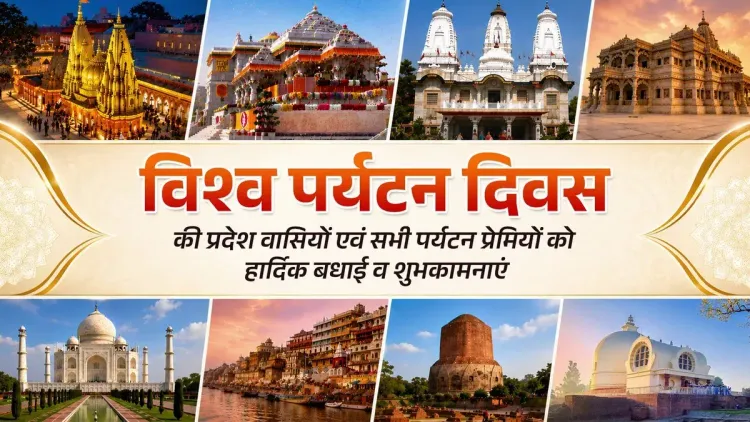
In a message posted on World Tourism Day 2026, the Chief Minister extended warm greetings — 'हार्दिक बधाई व शुभकामनाएं' (heartfelt congratulations and best wishes) — to the people of Uttar Pradesh and all lovers of travel. He described tourism as 'a powerful medium for placing our rich cultural heritage, natural treasures, and diverse identities on the world stage.'
The post ended with a pointed appeal: let everyone pledge to uphold the cleanliness, conservation, and promotion of tourist sites across Uttar Pradesh and the country, and to further strengthen the spirit of 'अतिथि देवो भवः' — the ancient Sanskrit principle that translates as 'the guest is God.'
'Atithi Devo Bhava' — from ancient ideal to state policy
The phrase 'Atithi Devo Bhava' is more than ceremonial shorthand. It has long served as the philosophical spine of India's official tourism brand, framing hospitality not as a service transaction but as a sacred duty. For a state that hosts pilgrimage cities such as Varanasi and globally recognised heritage monuments including the Agra complex, the principle carries direct economic weight.
Uttar Pradesh sits at the intersection of spiritual, historical, and cultural tourism, drawing pilgrims, heritage seekers, and international visitors in significant numbers. Keeping those sites clean and well-preserved is not just an aesthetic concern — it is the foundation on which repeat visits and word-of-mouth reputation are built.
Why the conservation call matters beyond the occasion
Chief ministers across India customarily issue World Tourism Day messages, but the explicit three-part pledge — cleanliness, conservation, and promotion — signals the specific challenges that heritage-heavy states face. Overcrowding, litter, and inadequate upkeep at high-footfall sites have been persistent concerns at many of UP's landmark destinations.
By framing the appeal as a collective civic responsibility rather than a government directive, Yogi Adityanath places the onus on citizens and visitors — a rhetorical choice that aligns with broader national campaigns urging public participation in site stewardship.
The message lands on a day when tourism ministries and state departments globally announce conservation drives, community pledges, and awareness events. Whether UP's tourism department follows up with concrete ground-level initiatives at its flagship sites will be the real measure of intent.
Point of View
A priority that has also carried electoral weight in pilgrimage-heavy constituencies. The invocation of 'Atithi Devo Bhava' is both culturally resonant and politically strategic, linking BJP's Hindu cultural heritage narrative to a mainstream development agenda. By framing site conservation as a citizen duty rather than a bureaucratic task, the Chief Minister nudges the accountability conversation toward collective ownership — which can also insulate the government from criticism when upkeep falls short. The real test, as always with such occasions, is whether the rhetoric translates into measurable action on the ground at UP's most-visited sites.
NationPress
27 Sept 2026
Frequently Asked Questions
When is World Tourism Day celebrated?
World Tourism Day is celebrated every year on 27 September , as designated by the United Nations World Tourism Organization.
What did CM Yogi Adityanath say on World Tourism Day 2026?
CM Yogi Adityanath greeted the people of Uttar Pradesh and all tourism lovers, calling tourism a powerful medium to showcase India's cultural heritage. He urged everyone to pledge cleanliness, conservation, and promotion of tourist sites, and to strengthen the 'Atithi Devo Bhava' spirit.
What does 'Atithi Devo Bhava' mean?
Atithi Devo Bhava is a Sanskrit phrase meaning 'the guest is God.' It is an ancient Indian hospitality principle that has also been adopted as the motto of India's official tourism promotion campaigns.
Which major tourism sites are in Uttar Pradesh?
Uttar Pradesh is home to globally significant tourism destinations including Varanasi , a major pilgrimage city on the Ganga , and Agra , site of the iconic Taj Mahal , among many other heritage and religious sites.
Why does UP focus on heritage site conservation?
Uttar Pradesh's economy benefits substantially from tourism at its heritage and pilgrimage sites. Maintaining cleanliness and conservation standards directly affects visitor experience, repeat footfall, and the state's reputation as a tourism destination on the world stage.