CM Yogi greets devotees on Chitragupta Puja 2026
Synopsis
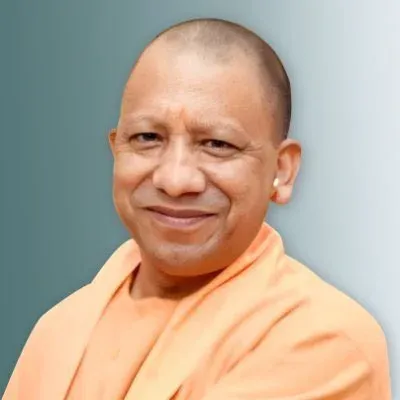
Uttar Pradesh Chief Minister Yogi Adityanath marked Chitragupta Puja on 11 November 2026 with greetings to devotees, invoking the Hindu deity of karma and scribes and praying for truth, justice, and dutiful living across the state.
Key Takeaways
CM Yogi Adityanath posted Chitragupta Puja greetings on 11 November 2026 .
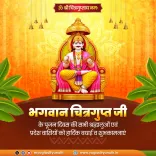
Bhagwan Chitragupta is revered in Hindu tradition as the divine keeper of every soul's karmic ledger and patron deity of writers, with special veneration in the Kayastha community .
Yogi described Chitragupta as 'an aspect of Jagatpita Brahma' and 'presiding deity of the pen and writing.' The CM prayed for truth, righteousness, justice, and a strengthened sense of duty ( kartavyanishtha ) in all lives.
The message is consistent with the BJP -led UP government's regular public engagement with the Hindu cultural and religious calendar.
On the auspicious occasion of Chitragupta Puja, Uttar Pradesh Chief Minister Yogi Adityanath extended warm greetings to devotees and residents of the state on Wednesday, 11 November 2026, invoking the divine recorder of karma and praying that truth, righteousness, and justice illuminate every life.
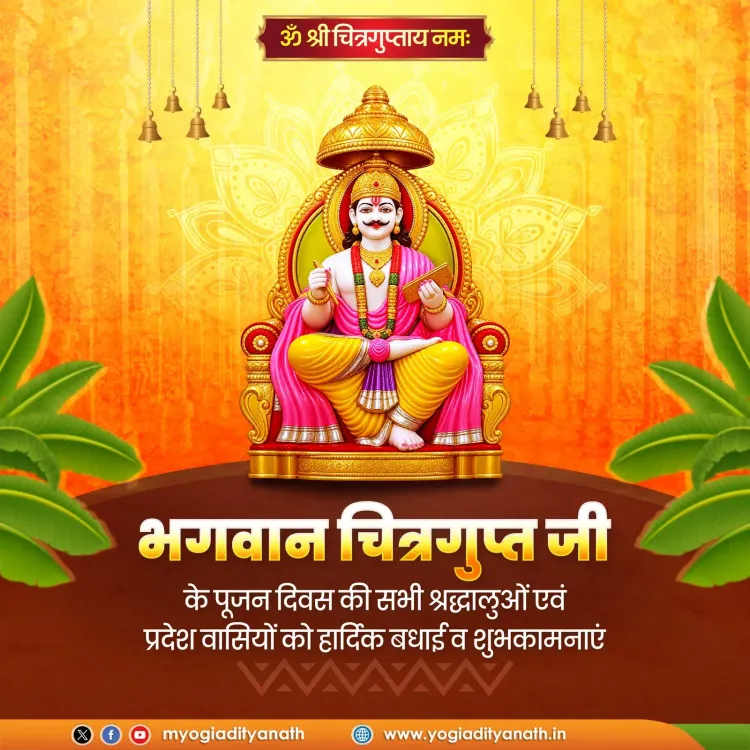
Posting on X in Hindi, CM Yogi described Bhagwan Chitragupta as 'an aspect of Jagatpita Brahma, the divine keeper of all beings' deeds, and the presiding deity of the pen and writing.' His message concluded with a prayer: 'Bhagwan Chitragupta ji ki kripa se sabke jeevan mein satya, sadachar aur nyay ka prakash bana rahe tatha kartavyanishtha ki bhavna sudridh ho' — 'May the grace of Bhagwan Chitragupta keep the light of truth, good conduct and justice burning in all lives, and may the spirit of duty grow ever stronger.'
Who is Bhagwan Chitragupta and why the day matters
In Hindu tradition, Bhagwan Chitragupta is the divine accountant of karma — the celestial scribe who, as a part-manifestation of Brahma, maintains the ledger of every soul's deeds and assists Yama, the god of death, in dispensing justice. The deity holds special reverence among the Kayastha community, which venerates Chitragupta as the patron god of writers, clerks, and all those who wield the pen in service of record and truth.
Chitragupta Puja is typically observed in the fortnight following Diwali, when devotees — particularly Kayasthas — perform elaborate rituals honouring the deity's ledger and pen, reflecting on the value of honest, dutiful work. The festival carries a philosophical charge: a reminder that every action is accounted for and that integrity in one's vocation is itself a form of worship.
Yogi Adityanath's pattern of festival outreach
CM Yogi Adityanath, who also heads the Gorakhnath Math in Gorakhpur, has consistently used social media to mark Hindu festivals and honour deities across traditions — a visible expression of the BJP-led Uttar Pradesh government's engagement with the state's religious and cultural calendar. The greetings reach not just one community but frame each occasion as a moment of shared civic virtue: today's message, for instance, frames Chitragupta's attributes — truth, righteousness, justice, and duty — as universal civic aspirations rather than purely sectarian ones.
Uttar Pradesh, home to one of India's largest Kayastha populations, sees Chitragupta Puja observed widely across cities such as Lucknow, Allahabad (Prayagraj), Kanpur, and Varanasi. For the state's chief minister to issue a public greeting underscores the festival's cultural weight in the region's public life.
When a nation's most powerful state keeps the pen — and the deity who wields it — at the centre of public discourse, the message is clear: in Uttar Pradesh, the politics of culture and the culture of governance are never far apart.
Point of View
Reaching Kayastha voters — a community historically associated with education, administration, and professional service. By framing Chitragupta's attributes — truth, justice, duty — as universally civic virtues rather than community-specific ones, the message is calibrated to broaden appeal beyond any single group. This pattern of festival messaging also serves a governance-branding function: associating the administration with values of accountability and righteous conduct. As UP heads into its next electoral cycle, such consistent cultural signalling is unlikely to be coincidental.
NationPress
11 Nov 2026
Frequently Asked Questions
What is Chitragupta Puja and when is it celebrated?
Chitragupta Puja is a Hindu festival honouring Bhagwan Chitragupta, the divine keeper of karma and patron of scribes. It is typically observed in the fortnight following Diwali, with particular devotion in the Kayastha community.
Who is Bhagwan Chitragupta in Hindu tradition?
Bhagwan Chitragupta is regarded in Hindu tradition as a part-manifestation of Brahma and the celestial accountant who records every soul's deeds, assisting Yama in dispensing justice. He is especially venerated as the deity of writing and scribes.
Why did CM Yogi Adityanath post Chitragupta Puja greetings?
CM Yogi Adityanath regularly issues public greetings on Hindu festivals as part of the BJP-led Uttar Pradesh government's engagement with the state's religious and cultural calendar. His 11 November 2026 message extended wishes to devotees and prayed for truth, justice, and duty in all lives.
Which community celebrates Chitragupta Puja most prominently?
The Kayastha community holds Chitragupta Puja as a central festival, venerating Bhagwan Chitragupta as their patron deity. The festival is widely observed in Uttar Pradesh cities such as Lucknow, Prayagraj, Kanpur, and Varanasi.
What did CM Yogi pray for on Chitragupta Puja 2026?
CM Yogi prayed that the grace of Bhagwan Chitragupta keep the light of truth, good conduct, and justice alive in all lives, and that the spirit of duty and dedication grow stronger among the people of Uttar Pradesh.