CM Yogi: Faith and Economy Advancing Together Under Modi
Synopsis
Uttar Pradesh CM Yogi Adityanath on 18 June 2026 credited PM Modi with advancing both religious faith and economic growth together, echoing the BJP's dual-track governance model built on pilgrimage infrastructure schemes and temple corridor projects since 2014.
Key Takeaways
CM Yogi Adityanath posted on 18 June 2026 crediting PM Modi with honouring faith while strengthening the economy.
The statement reflects the BJP's position that religious infrastructure investment and economic growth are complementary goals.
The PRASAD scheme and Swadesh Darshan scheme , both launched in 2014-15 , form the policy backbone of this approach.
The Kashi Vishwanath Corridor , inaugurated in 2021 , is the most prominent example of combining heritage development with local economic activity.
Uttar Pradesh has served as the primary state-level laboratory for this dual-track governance model under CM Yogi .
Tourism footfall data and new corridor announcements in the 2026-27 UP budget will be the next measurable indicators of this policy direction.
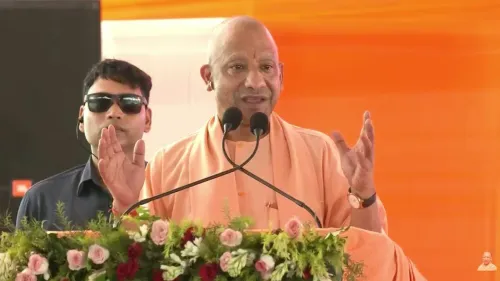
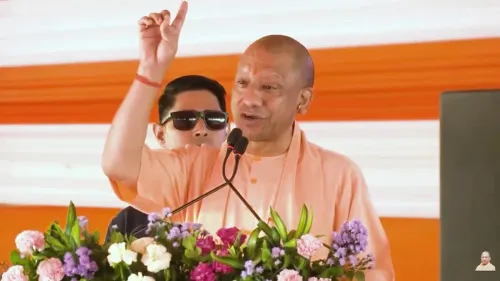
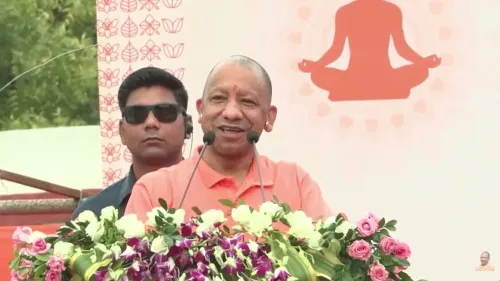
Uttar Pradesh Chief Minister Yogi Adityanath on Thursday, 18 June 2026, praised the leadership of Prime Minister Narendra Modi, asserting that under his governance both religious faith and economic growth are being advanced simultaneously. The post, shared on X, underscores the BJP's long-standing position that cultural priorities and macroeconomic development are complementary rather than competing goals.
Context
In his post, CM Yogi wrote: 'Aastha ka bhi samman ho raha hai aur arthvyavastha ko bhi mazbooti ke saath aage badhaya ja raha hai' — 'Faith is being honoured and the economy is also being advanced with strength.' The statement is framed as a tribute to Prime Minister Modi's dual-track governance model, which has been a recurring theme in BJP communication since 2014.
Yogi Adityanath, who has led Uttar Pradesh since March 2017, has positioned the state as the primary demonstration ground for this approach, overseeing major temple infrastructure projects alongside industrial investment drives.
Policy Backdrop
The sentiment expressed aligns with a series of central and state-level policy initiatives. The PRASAD scheme (Pilgrimage Rejuvenation and Spiritual Augmentation Drive), launched in 2014-15 by the Union Ministry of Tourism, was designed to develop amenities at major religious sites and integrate faith-based tourism into the broader economy. The Swadesh Darshan scheme, also introduced in 2014-15, created thematic circuits — including Krishna and Ramayana circuits — covering multiple sites across Uttar Pradesh.
The most visible symbol of this approach remains the Kashi Vishwanath Corridor in Varanasi, announced in 2018 and inaugurated in 2021. The project redeveloped the precinct around the Jyotirlinga shrine, expanding pilgrim access infrastructure while generating commercial activity for local traders and the hospitality sector.
Stakeholders and Impact
The primary beneficiaries of this policy convergence are pilgrims and devotees who gain improved access to religious sites, alongside the tourism and hospitality sector that services their visits. Local traders operating near redeveloped temple precincts in cities such as Varanasi, Ayodhya, and Mathura have been identified as direct economic stakeholders in this model.
The BJP has consistently presented this framework as evidence that religious and cultural investments generate measurable economic returns — through domestic tourism revenue, employment in services, and infrastructure-led local growth — rather than diverting resources from development priorities.
What's Next
Observers will watch for state-level tourism department data releases tracking footfall and revenue at redeveloped pilgrimage sites, which would provide empirical grounding for the claims being made. Any new corridor projects or PRASAD-linked announcements in the Uttar Pradesh 2026-27 budget cycle would represent the next concrete policy signal in this direction. CM Yogi's post, coming mid-year, may also be read as early positioning ahead of any such announcements.
Point of View
In fact, drivers of it. By attributing this to PM Modi's leadership, the statement also serves as an act of political alignment ahead of what may be a significant policy or project announcement. This dual-track framing — faith plus economy — has been the BJP's answer to critics who argue that temple projects crowd out welfare spending, and it has found its most elaborate expression in Uttar Pradesh. The post, brief as it is, signals that this narrative will continue to be a central plank of the party's communication through the remainder of the year.
NationPress
25 Sept 2026
Frequently Asked Questions
What did CM Yogi Adityanath say about PM Modi on 18 June 2026?
CM Yogi Adityanath posted on X on 18 June 2026 saying that under PM Modi's leadership, faith is being honoured and the economy is simultaneously being advanced with strength.
What is the PRASAD scheme mentioned in connection with religious tourism?
The PRASAD scheme — Pilgrimage Rejuvenation and Spiritual Augmentation Drive — was launched by the Union Ministry of Tourism in 2014-15 to develop infrastructure and amenities at major religious sites across India and promote faith-based tourism.
What is the Kashi Vishwanath Corridor and why is it significant?
The Kashi Vishwanath Corridor is a redevelopment project around the Jyotirlinga shrine in Varanasi, announced in 2018 and inaugurated in 2021. It is considered the flagship example of the BJP's approach to combining heritage conservation with economic activity for local traders and the hospitality sector.
How has Uttar Pradesh linked religious sites to economic growth?
Under CM Yogi Adityanath since 2017, Uttar Pradesh has pursued temple corridor projects, pilgrimage infrastructure upgrades under PRASAD, and thematic tourism circuits under Swadesh Darshan, all aimed at converting religious footfall into tourism revenue and local employment.
What should we watch for next on this policy front?
Key indicators to watch include tourism department data on pilgrim footfall and revenue at redeveloped sites, and any new corridor or PRASAD project announcements in the Uttar Pradesh 2026-27 budget.