Owaisi urges improvement notices before hotel licence suspensions
Synopsis
AIMIM president Asaduddin Owaisi met Commissioner Avinash Mohanty IPS with the Twin Cities Hotel Owners Association on 9 November 2026, urging that hotel owners receive formal Improvement Notices and adequate time to fix violations before licence suspensions are imposed.
Key Takeaways
AIMIM president Asaduddin Owaisi met Avinash Mohanty IPS , Commissioner at the @c_tgsafe office, on 9 November 2026 .
He was accompanied by a delegation from the Twin Cities Hotel Owners Association , representing hotels in Hyderabad and Secunderabad .
The central demand: issue an Improvement Notice and give hotel owners 'adequate time' to rectify shortcomings before suspending licences.
Owaisi argued that abrupt suspension without prior notice is procedurally unfair to operators.
Any subsequent circulars from the commissionerate on hotel inspection protocols will indicate whether the ask was acted upon.
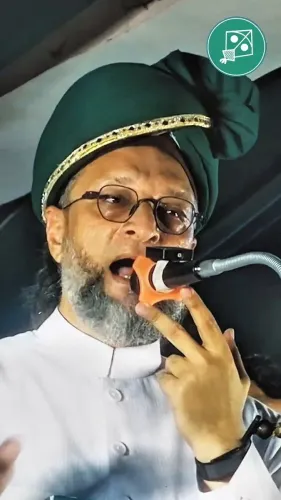
Before the hammer of a licence suspension falls on a hotel owner, give them a fair warning and a chance to fix the problem. AIMIM president Asaduddin Owaisi made exactly that case on Monday, 9 November 2026, when he accompanied a delegation from the Twin Cities Hotel Owners Association to meet Avinash Mohanty IPS, Commissioner at the office referenced under the handle @c_tgsafe, in Hyderabad.
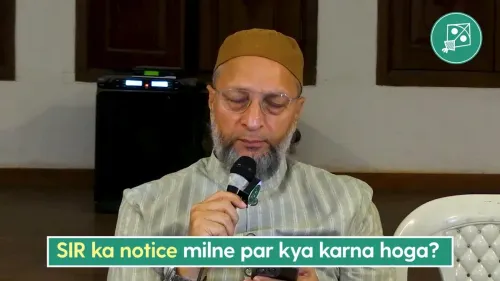
Owaisi's message, delivered in Hindustani, was pointed: 'Hotels ka licence suspend karne jaisi sakht karwai se pehle hotel owners ko Improvement Notice diya jaaye aur unhein apni khaamiyan door karne ke liye munasib waqt diya jaaye' — ('Before strict action such as suspending a hotel's licence, the hotel owner should be served an Improvement Notice and given adequate time to rectify their shortcomings.').
What the Twin Cities Association brought to the table
The Twin Cities Hotel Owners Association represents hospitality businesses spread across Hyderabad and Secunderabad — a twin-city belt that anchors one of India's fastest-growing urban economies. The delegation's core grievance: regulatory enforcement that moves straight to suspension without a structured show-cause or improvement stage, leaving businesses with little time or recourse to address compliance gaps.
The request for a formal Improvement Notice mechanism is a procedural safeguard standard in many licensing regimes — the idea being that the purpose of regulation is compliance, not closure. Skipping that step, business owners argue, disproportionately harms smaller establishments that may lack in-house legal or compliance teams.
Owaisi as Hyderabad's constituency voice
As the Lok Sabha MP from Hyderabad, Owaisi routinely interfaces between local trade and civic bodies. This meeting follows a familiar pattern: a business association escalates to its MP, the MP facilitates access to the relevant regulatory commissioner, and the ask is logged on record. Whether Commissioner Mohanty moves to formalise an improvement-notice-first protocol remains to be seen — but the meeting itself puts the demand officially on the regulator's table.
The hospitality sector in the twin cities has faced periodic inspection drives tied to safety and licensing compliance, making the procedural question — notice first, action second — a live and consequential one for hundreds of operators.
The next indicator to watch: any circular or order from the commissionerate codifying inspection and notice procedures for hotels. If one comes, it will bear the fingerprints of exactly this kind of constituency-level intervention.
Point of View
Making it harder for the administration to dismiss outright. If the commissionerate formalises such a protocol, it would mark a small but concrete win for due-process advocacy in Hyderabad's hospitality economy. The meeting also signals the Twin Cities hotel lobby's willingness to use parliamentary-constituency channels as a pressure route.
NationPress
9 Nov 2026
Frequently Asked Questions
Why is Asaduddin Owaisi involved in hotel licence issues in Hyderabad?
As the Lok Sabha MP from Hyderabad, Owaisi represents constituents who include hoteliers and business owners. He met the regulatory commissioner alongside the Twin Cities Hotel Owners Association to flag their concerns about abrupt licence suspensions.
What is an Improvement Notice in the context of hotel licences?
An Improvement Notice is a formal regulatory communication that identifies specific violations and gives the business owner a set period to correct them before stronger action — such as a licence suspension — is taken.
Who is Avinash Mohanty IPS and what is his role?
Avinash Mohanty IPS is the Commissioner associated with the official handle @c_tgsafe, whom Owaisi and the hotel owners' delegation met to present their case for procedural reform in licence enforcement.
Which cities does the Twin Cities Hotel Owners Association represent?
The association represents hotel and hospitality businesses operating across Hyderabad and Secunderabad, the twin-city belt in Telangana.
What outcome is expected from this meeting?
The key indicator will be whether the relevant commissionerate issues a circular or order requiring inspectors to serve Improvement Notices and allow a rectification window before proceeding with hotel licence suspensions.