Owaisi Submits Representation to Telangana CEO on SIR

Synopsis
AIMIM president Asaduddin Owaisi submitted a formal representation to Telangana's Chief Electoral Officer on June 13, 2026, raising concerns over the Special Intensive Revision of the state's electoral rolls — a process that determines voter eligibility ahead of future elections in a state with a large and politically significant minority population.
Key Takeaways
Asaduddin Owaisi , AIMIM president and Hyderabad MP, submitted a representation to the Chief Electoral Officer of Telangana on June 13, 2026 .
The representation concerns the Special Intensive Revision (SIR) of Telangana's electoral rolls, an ECI-mandated house-to-house voter verification exercise.
Telangana has seen recurring debates on voter list accuracy since its formation in 2014 , with opposition leaders questioning the revision process.
Minority communities in Hyderabad and across Telangana have a significant stake in the accuracy of electoral rolls given their electoral weight.
The CEO's response and the final publication of revised rolls are the key developments to watch following this submission.
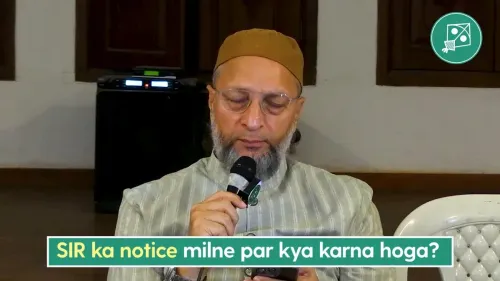
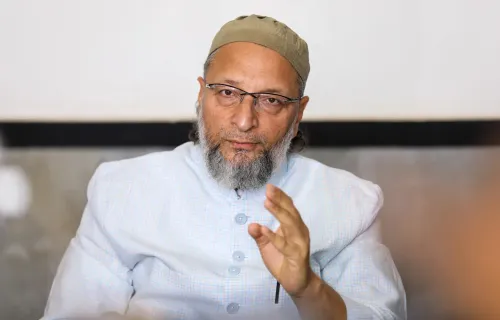
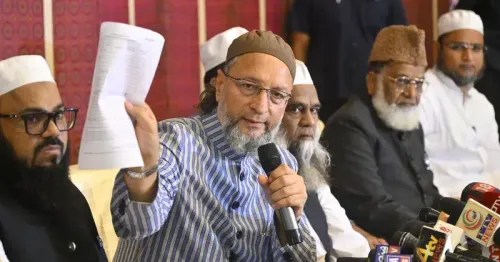
AIMIM president Asaduddin Owaisi submitted a formal representation to the Chief Electoral Officer (CEO) of Telangana on Saturday, June 13, 2026, raising concerns related to the state's ongoing Special Intensive Revision (SIR) of electoral rolls.
Context
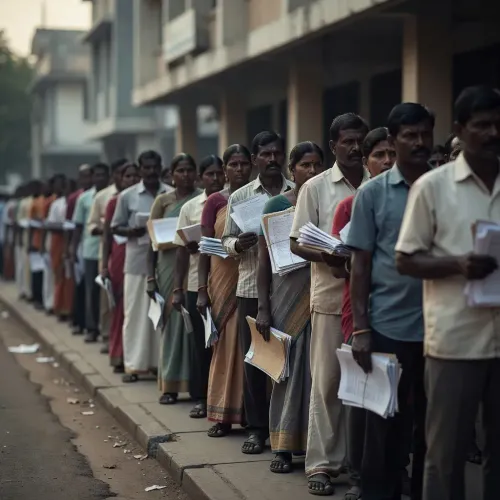
The Special Intensive Revision (SIR) is an Election Commission of India (ECI)-mandated exercise that involves house-to-house verification of voter lists, followed by a claims-and-objections window, before the rolls are finalised. Such exercises are typically conducted ahead of assembly or parliamentary elections to ensure the accuracy and completeness of the electoral register.
Owaisi, who represents Hyderabad in the Lok Sabha, has consistently flagged concerns over minority voter rights and the integrity of electoral processes in Telangana. His submission to the CEO follows a pattern seen across Indian political parties, which routinely engage with electoral authorities during revision exercises to highlight alleged exclusions or procedural irregularities.
Policy Backdrop
The Election Commission of India has conducted periodic Special Summary Revisions and Intensive Revisions of electoral rolls in Telangana since the state's formation in 2014. Previous exercises, including those notified ahead of the 2018 assembly elections, drew scrutiny from opposition leaders and civil society groups who questioned the transparency and completeness of the revision process.
Telangana has a significant urban Muslim population, particularly concentrated in and around Hyderabad, whose voting patterns carry considerable weight in state and national politics. Concerns about voter list accuracy in constituencies with large minority populations have recurred in the state's political discourse since its creation.
Stakeholders and Impact
The primary stakeholders in any SIR exercise are Telangana's registered and eligible voters, with minority communities having a particular stake in the outcome given historical debates over their representation on electoral rolls. Political parties across the spectrum — including AIMIM, which holds significant sway in Hyderabad's Old City constituencies — monitor the revision process closely, as errors or omissions in voter lists can directly affect electoral outcomes.
Formal representations submitted to the CEO are part of the legally recognised grievance mechanism under ECI guidelines. They can prompt re-verification drives, corrections to draft rolls, or, in contested cases, hearings before election authorities. The outcome of such representations can influence voter turnout and, potentially, legal challenges to the final published rolls.
What's Next
The immediate next step is the Chief Electoral Officer's response to Owaisi's representation, which could include acknowledgement, a directive for field-level re-verification, or a formal hearing. The final publication of the revised electoral rolls for Telangana will be the key milestone to watch, as it will determine whether the concerns raised are addressed before the rolls are locked in.
Any follow-up action by the Election Commission of India at the national level, or by state election authorities, will be closely tracked by political parties and voter-rights groups operating in Telangana. The episode underscores the continuing sensitivity around electoral roll accuracy in a state where competitive politics and a diverse demographic make every voter count.
Point of View
Particularly in states where minority voter representation is a live political issue. For AIMIM, whose core base lies in Hyderabad's urban constituencies, any perceived irregularity in the SIR process carries direct electoral consequences, making such representations as much a political signal as a procedural step. The move also reflects a broader trend of parties using formal grievance channels with the Election Commission to build a paper trail ahead of potential legal challenges. Whether the CEO's response substantively addresses the concerns raised will be a test of the ECI's responsiveness to minority-community electoral anxieties in Telangana.
NationPress
13 Sept 2026
Frequently Asked Questions
What is the Special Intensive Revision (SIR) of electoral rolls in Telangana?
The Special Intensive Revision (SIR) is an Election Commission of India-mandated exercise involving house-to-house verification of voter lists, followed by a claims-and-objections period, to ensure the accuracy of the electoral register before elections.
Why did Owaisi submit a representation to the Telangana Chief Electoral Officer?
Owaisi submitted the representation to raise concerns related to the ongoing Special Intensive Revision of Telangana's electoral rolls, consistent with his long-standing focus on minority voter rights and electoral integrity in the state.
Who is the Chief Electoral Officer of Telangana?
The Chief Electoral Officer (CEO) of Telangana is a senior state official appointed under the Election Commission of India, responsible for managing electoral rolls and overseeing election-related processes in the state.
How does an SIR affect voters in Telangana?
An SIR determines which citizens are included on the final electoral roll; errors or omissions can disenfranchise eligible voters, making the revision process critical especially for communities with historically contested voter-list representation.
What happens after a representation is submitted to the CEO during an SIR?
After a representation is submitted, the Chief Electoral Officer can acknowledge it, order field-level re-verification, or schedule a formal hearing; the outcome influences corrections made before the final electoral roll is published.