Telangana must issue PRCs to the poor now, says Owaisi
Synopsis
AIMIM chief Owaisi is sounding an alarm that the poor of Telangana — where 52% lack birth certificates — could be quietly erased from the voter rolls during the SIR process, and he is pointing the finger squarely at both the Congress state government and the BJP-led Centre for inaction on PRCs.
Key Takeaways
AIMIM President Asaduddin Owaisi on 6 July demanded the Telangana government immediately issue Permanent Residence Certificates (PRCs) to the poor.
He warned that undocumented residents risk exclusion from the voter list during the ongoing Special Intensive Revision (SIR) .
According to data cited by Owaisi, 52% of poor people lack birth certificates, 42% lack caste certificates, and 41% lack domicile certificates.
Owaisi noted that Karnataka , also governed by Congress, is already issuing PRCs and questioned why Telangana is not doing the same.
He criticised BRS for remaining silent despite ruling the state for 10 years without flagging the document gap to the Election Commission of India .
Owaisi proposed Aadhaar , ration cards, school records, and revenue records as the basis for issuing PRCs.
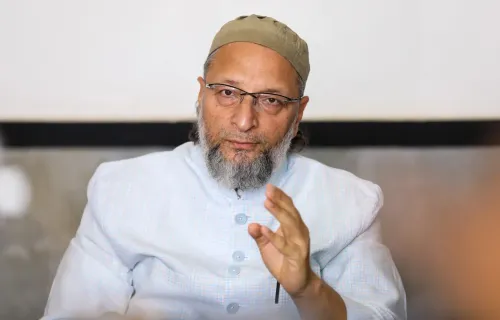
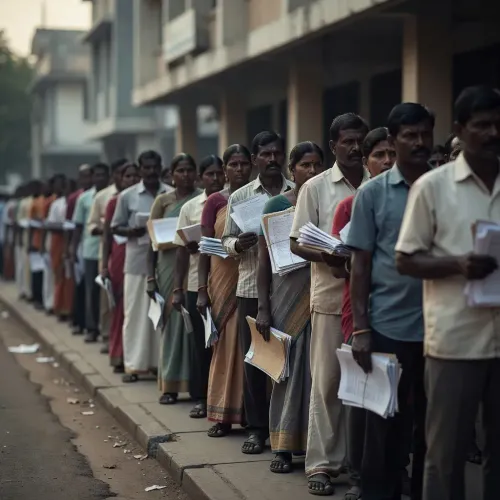
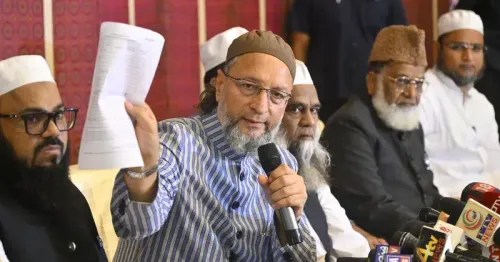
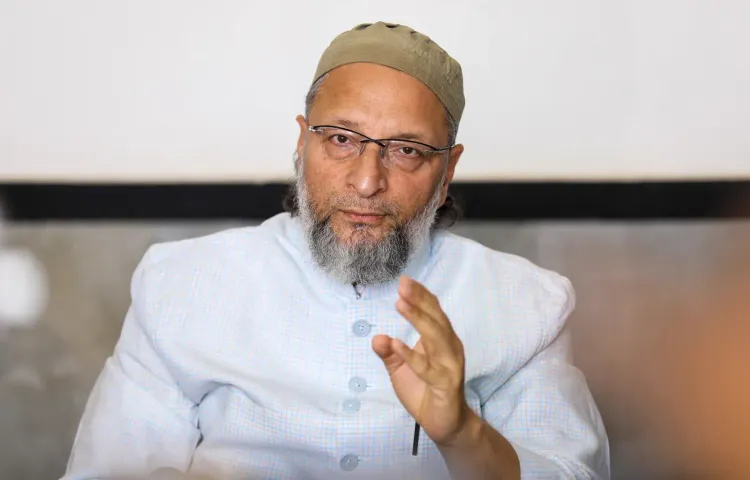
All India Majlis-e-Ittehadul Muslimeen (AIMIM) President and Hyderabad MP Asaduddin Owaisi on Monday, 6 July urged the Telangana government to immediately issue Permanent Residence Certificates (PRCs) for economically weaker sections, warning that thousands of poor residents risk being dropped from the voter list during the ongoing Special Intensive Revision (SIR) due to a lack of documentation.
The Core Demand
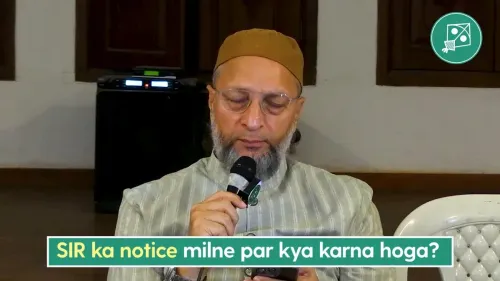
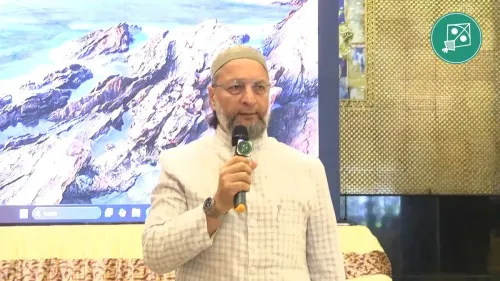
Owaisi, speaking at a workshop for volunteer lawyers being trained to help voters respond to SIR notices, asked what is stopping the state government from issuing PRCs. He argued that if the ruling party does not recognise that the poor of Telangana lack documents, 'it is totally cut off from reality.'
He urged the Indian National Congress (Congress) not to wait until the final voter list is published to 'console' affected residents and then cry conspiracy. 'If there is a conspiracy, find a solution — and the solution is PRCs,' he said.
The Karnataka Comparison
Owaisi pointed out that the Karnataka government is already issuing PRCs and questioned why the Congress, which also governs Karnataka, has not replicated the measure in Telangana. He said the party has so far only held meetings despite repeated demands from his side.
He also disclosed that he had already raised the matter with Deputy Chief Minister Mallu Bhatti Vikramarka and is seeking an appointment with Chief Minister Revanth Reddy, adding pointedly that the Chief Minister is 'very busy.'
Centre and BJP Also in the Crosshairs
Owaisi noted that two Bharatiya Janata Party (BJP) MPs from Telangana are ministers at the Centre and asked why they cannot push the Central government to accept PAN cards, driving licences, and food security cards as valid documents during SIR — documents that the poor are far more likely to possess.
He proposed that Aadhaar cards, ration cards, school records, and revenue records be made the basis for issuing PRCs. He also cited a Supreme Court ruling under which anyone who has studied in state educational institutions for four consecutive years becomes eligible for education and employment benefits in the state, arguing this should make them eligible for PRCs as well.
The Documentation Gap by Numbers
Owaisi cited data from five states to illustrate what he called a structural disparity. According to the data he presented, nearly 52% of poor people do not possess birth certificates, 42% lack caste certificates, and 41% do not have domicile certificates. By contrast, around 82.3% of children from affluent families hold birth certificates — a gap he described as a systemic inequality in access to documentation.
He stated that every poor person in India, regardless of religion, is effectively 'undocumented' today, and that those born after 2004 must produce three documents relating to themselves and their parents to establish eligibility.
BRS Also Criticised
Owaisi also trained his fire on the Bharat Rashtra Samithi (BRS), accusing it of staying silent on the SIR issue. Despite ruling Telangana for 10 years, he said, the BRS failed to submit a representation to the Election Commission of India (ECI) regarding the non-availability of three of the 12 listed indicative documents in the state.
With the SIR process ongoing and the final voter list publication approaching, the pressure on the Telangana government to act on PRCs is set to intensify.
Point of View
And the documentation gap he cites — 52% of the poor without birth certificates — is not a new finding. The Congress silence is notable: Karnataka has moved on PRCs, Telangana has not, and both are Congress-governed states. That inconsistency is hard to explain on administrative grounds alone. The BRS critique is also fair — a decade in power and no representation to the ECI on the document gap is a serious omission. The real question is whether the Telangana government acts before the final list is published, or waits and then blames a conspiracy it had the tools to prevent.
NationPress
5 Oct 2026
Frequently Asked Questions
What are Permanent Residence Certificates (PRCs) and why is Owaisi demanding them?
PRCs are official documents that certify a person's long-term residence in a state, which can be used as proof of domicile for various entitlements including voter registration. Owaisi is demanding their immediate issuance because thousands of poor residents in Telangana lack the documents required during the Special Intensive Revision (SIR) and risk being dropped from the voter list.
What is the Special Intensive Revision (SIR) and why does it matter?
The Special Intensive Revision (SIR) is an Election Commission of India process to update and verify voter rolls, requiring residents to submit specific documents to establish eligibility. Owaisi has warned that the poor, who disproportionately lack formal documentation, face exclusion from the final voter list if PRCs are not issued in time.
Why is Owaisi comparing Telangana to Karnataka on PRCs?
Owaisi pointed out that the Karnataka government is already issuing PRCs, and since the Congress party governs both Karnataka and Telangana, there is no clear reason for the disparity. He used the comparison to argue that inaction in Telangana is a political choice, not an administrative constraint.
What documents does Owaisi propose as the basis for issuing PRCs?
Owaisi suggested that Aadhaar cards, ration cards, school records, and revenue records should be accepted as the basis for issuing PRCs to the poor. He also cited a Supreme Court ruling that makes anyone who has studied in state institutions for four consecutive years eligible for state benefits.
What criticism did Owaisi direct at the BRS?
Owaisi criticised the Bharat Rashtra Samithi (BRS) for staying silent on the SIR issue, noting that despite ruling Telangana for 10 years, the party never submitted a representation to the Election Commission of India about the non-availability of three of the 12 listed indicative documents in the state.