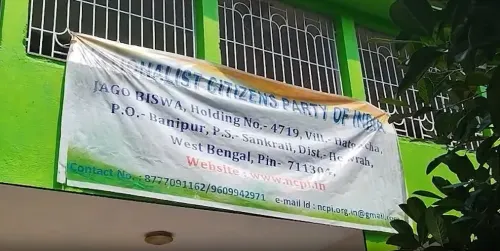
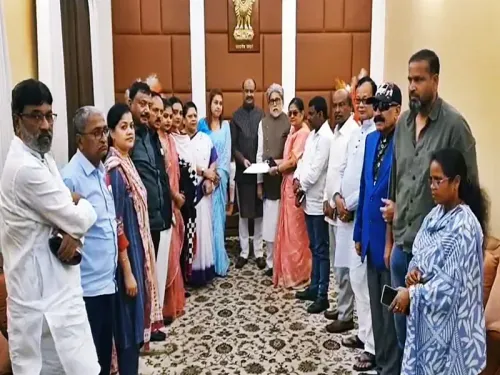
17 of 20 NCPI Lok Sabha MPs from West Bengal to join BJP next month: Cooch Behar MP
Synopsis
Just months after the TMC's landslide defeat in the 2026 West Bengal assembly polls, 17 of its 20 defected Lok Sabha MPs are now set to formally merge with the BJP — clearing the anti-defection bar of 14. Three Muslim MPs from minority-dominated Murshidabad will stay NDA-aligned but skip the direct BJP entry, revealing the fractured and transactional nature of this mega-defection.
Key Takeaways
17 of 20 Trinamool Congress-turned-NCPI Lok Sabha MPs from West Bengal will directly join the BJP before or just after Durga Puja , claimed Cooch Behar MP Jagadish Chandra Barma Basunia on 14 September 2026 .
The number 17 clears the anti-defection threshold of 14 (two-thirds of 20 MPs).
Three MPs — Abu Taher Khan (Murshidabad), Yusuf Pathan (Baharampur), and Khalilur Rahman (Jangipur) — will not join the BJP directly but will remain with the NDA .
All three non-merging MPs represent minority-dominated seats in Murshidabad district .
As of Monday, all 20 MPs are still officially listed as Trinamool Congress members in Lok Sabha records; their request for NCPI recognition to Lok Sabha Speaker Om Birla is pending.
The defections follow the TMC's landslide defeat in the 2026 West Bengal Assembly elections .
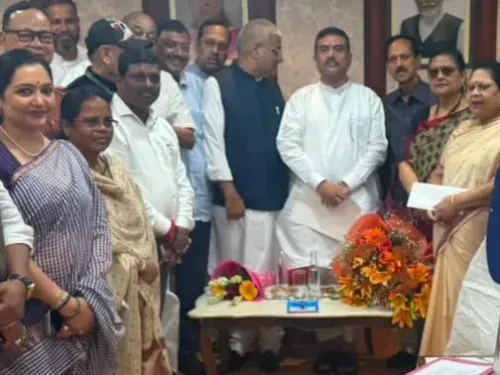
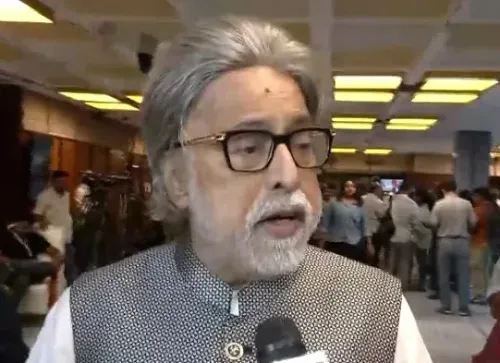
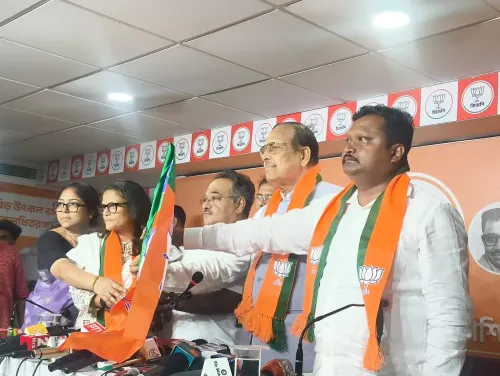
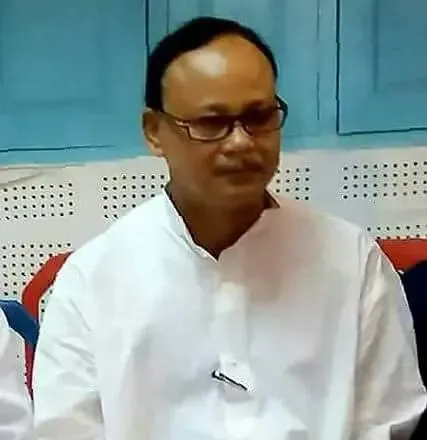
Jagadish Chandra Barma Basunia, the Lok Sabha member from Cooch Behar constituency and a prominent figure in the Nationalist Citizens' Party of India (NCPI) MPs' camp, claimed on Monday, 14 September 2026, that 17 of the 20 Trinamool Congress-turned-NCPI Lok Sabha members from West Bengal will directly join the Bharatiya Janata Party (BJP) next month. The move, if it materialises, would mark a significant political realignment in the state ahead of the forthcoming Durga Puja.
Key Developments
Basunia confirmed that the switch will take place before or just after Durga Puja, and that the number of joining MPs — 17 — clears the anti-defection threshold. 'The required number was 14 for two-thirds of the total MPs. But we have three more. So, we will not come under the anti-defection law,' Basunia said.
Notably, the three remaining MPs — Abu Taher Khan from Murshidabad constituency, Yusuf Pathan from Baharampur constituency, and Khalilur Rahman from Jangipur constituency — have opted not to join the BJP directly. All three represent minority-dominated seats in Murshidabad district.
Why Three MPs Are Staying Out of a Direct BJP Merger
Basunia explained that the three Muslim lawmakers face a practical political challenge. 'They are elected representatives from minority-dominated constituencies. So naturally, there are some problems for them in directly joining the BJP,' he said. However, he was emphatic that they would remain aligned with the National Democratic Alliance (NDA). The distinction matters: while 17 MPs will formally merge with the BJP, the remaining three will continue as NDA partners under a separate arrangement.
Background: How These MPs Switched Camps
In the 2024 Lok Sabha elections, the All India Trinamool Congress (TMC) swept West Bengal, winning 28 of 42 parliamentary seats. The landscape shifted dramatically after the 2026 West Bengal Assembly elections, which resulted in a landslide defeat for the TMC. In the aftermath, 20 of the party's sitting Lok Sabha members defected to the NCPI — a party described as virtually non-existent at the time — and simultaneously aligned themselves with the NDA.
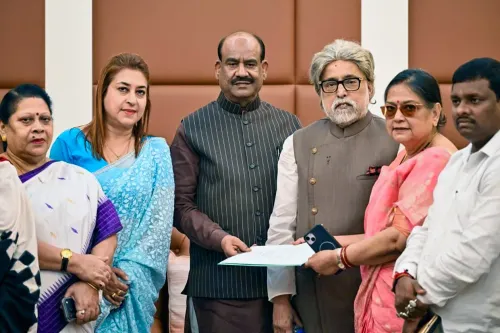
These MPs subsequently wrote to Lok Sabha Speaker Om Birla seeking formal recognition as NCPI members. However, as of Monday, that recognition had not been granted. According to official Lok Sabha records, all 20 continue to be listed as Trinamool Congress MPs — a legal ambiguity that complicates the defection arithmetic.
Anti-Defection Law: Why the Numbers Matter
Under the Tenth Schedule of the Constitution — commonly known as the anti-defection law — a merger is valid only if at least two-thirds of the members of a legislative party switch. With 20 NCPI MPs in question, the threshold is 14. Basunia's claim of 17 crossing over to the BJP would, if accurate, comfortably clear that bar. This comes amid broader scrutiny of how defection rules apply to MPs who have already switched to a new party that itself lacks formal Lok Sabha recognition.
What Happens Next
The political claims made by Basunia have, according to observers, 'kept the political pot boiling' in West Bengal's corridors of power. The BJP's formal absorption of these lawmakers — should it happen — would redraw the state's parliamentary arithmetic at a time when the TMC is already reeling from its assembly election rout. Whether the Lok Sabha Speaker grants the NCPI recognition before or after a formal BJP merger remains the critical procedural question to watch.
Point of View
3 staying NDA-adjacent — is not a spontaneous political conversion but a carefully engineered legal workaround. The three Muslim MPs from Murshidabad are being kept out of the formal BJP fold to preserve NDA's credibility in minority constituencies, even as their votes and alignment remain firmly in the coalition's pocket. What this also exposes is the fragility of the anti-defection law: MPs who switched to a party that doesn't even have Lok Sabha recognition are now debating a second switch, and the procedural vacuum created by the Speaker's silence on NCPI's recognition is enabling the entire manoeuvre. For the TMC, now in opposition in its home state and haemorrhaging its own MPs, this could accelerate the kind of collapse that turns assembly defeats into existential crises.
NationPress
14 Sept 2026
Frequently Asked Questions
Which NCPI MPs from West Bengal are joining the BJP?
According to Cooch Behar MP Jagadish Chandra Barma Basunia, 17 of the 20 Trinamool Congress-turned-NCPI Lok Sabha members from West Bengal will directly join the BJP before or just after Durga Puja. The remaining three — Abu Taher Khan, Yusuf Pathan, and Khalilur Rahman, all from Murshidabad district — will stay aligned with the NDA but not join the BJP directly.
Why won't the three Murshidabad MPs join the BJP directly?
The three MPs — Abu Taher Khan, Yusuf Pathan, and Khalilur Rahman — represent minority-dominated constituencies in Murshidabad district and reportedly face political challenges in directly joining the BJP. Basunia explained that while they will continue to support the NDA, a formal BJP entry would complicate their standing with their voter base.
Does this BJP merger violate the anti-defection law?
Basunia claims it does not. The anti-defection law requires at least two-thirds of a legislative party's members to switch for a merger to be valid. With 20 MPs in the group, the threshold is 14; the claimed 17 joiners comfortably clear that bar. However, a legal complexity remains: all 20 are still officially listed as TMC MPs in Lok Sabha records, as the Speaker has not yet recognised them as NCPI members.
How did these MPs end up in the NCPI after being elected as TMC members?
The 20 MPs were elected as Trinamool Congress candidates in the 2024 Lok Sabha elections, when TMC won 28 of West Bengal's 42 seats. After the TMC suffered a landslide defeat in the 2026 West Bengal Assembly elections, these MPs defected to the NCPI — a party with virtually no organisational footprint — and aligned with the NDA.
What is the current official status of these MPs in Lok Sabha?
Despite having written to Lok Sabha Speaker Om Birla seeking recognition as NCPI members, all 20 lawmakers are still officially listed as Trinamool Congress MPs in Lok Sabha records as of 14 September 2026. That recognition has not yet been granted, creating a procedural ambiguity around the planned BJP merger.