Giriraj Singh: India's Textile Sector Scaling New Heights
Synopsis
Union Textiles Minister Giriraj Singh said on X that India's textile sector is advancing to new heights through policy foresight, industrial innovation and artisan effort, calling it a strong base for employment, exports and sustainability under the Atmanirbhar Bharat and Viksit Bharat 2047 vision.
Key Takeaways
Union Textiles Minister Giriraj Singh posted on X on June 3, 2026, framing textiles as a pillar of Atmanirbhar Bharat.
He credited policy foresight, industrial innovation and artisan effort for the sector's growth.
The post linked textiles to employment, exports and sustainability under Viksit Bharat 2047.
Hashtags included #AtmanirbharBharat, #MakeInIndia, #ViksitBharat2047 and #Sustainability.
The messaging aligns with the PLI scheme for man-made fibre apparel and technical textiles notified in 2021.
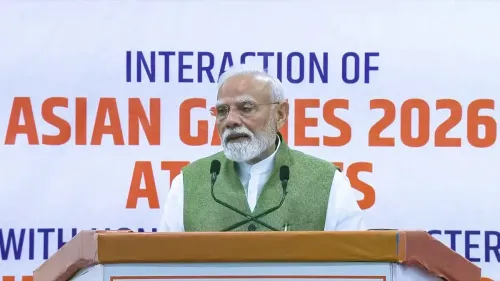
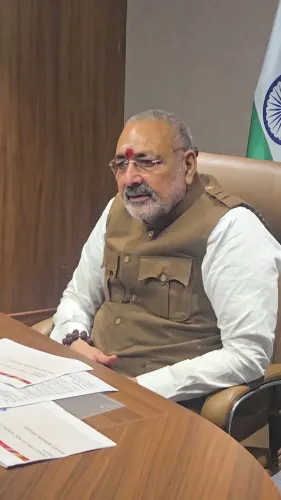
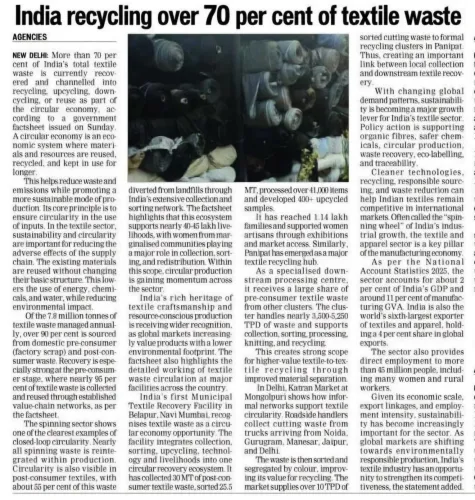
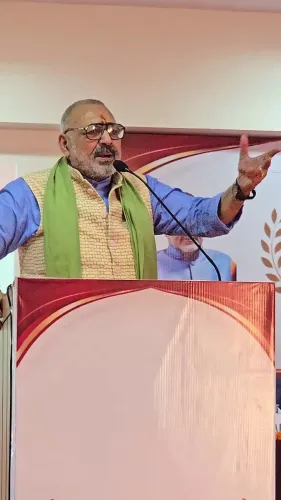
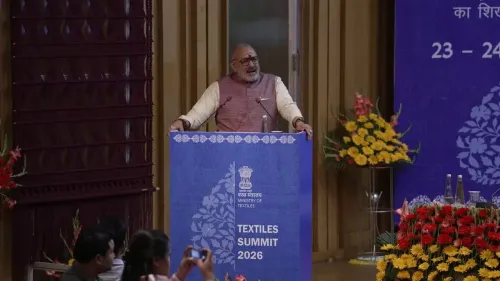
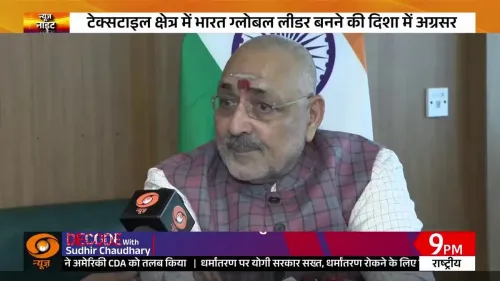
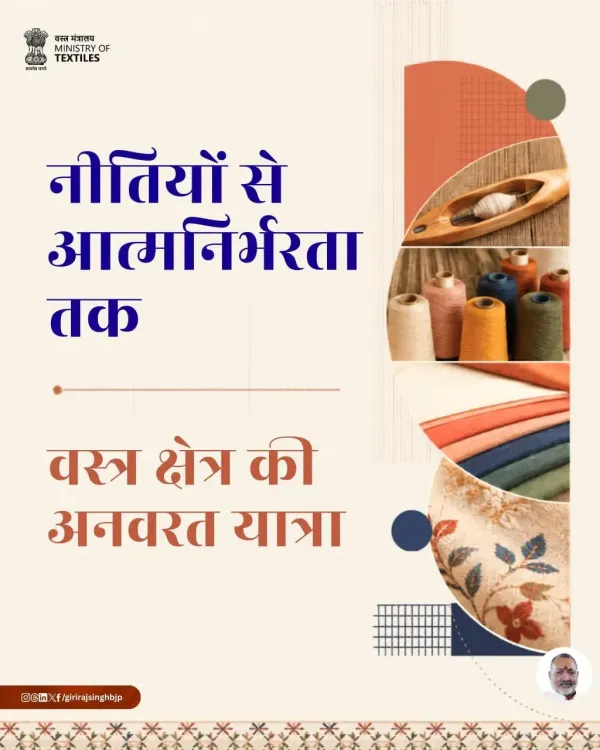
Union Textiles Minister Giriraj Singh on Wednesday, June 3, 2026 said India's textile sector was advancing to new heights on the back of forward-looking policy, industrial innovation and artisan effort, framing the industry as a pillar of the Atmanirbhar Bharat vision. In a post on X accompanied by four images, the minister linked textiles to employment, exports and sustainability goals under the Viksit Bharat 2047 roadmap.
'With foresight in policies, innovation in industry and the hard work of artisans, India's textile sector is advancing to new heights,' Singh wrote, adding that 'while strengthening the resolve of Atmanirbhar Bharat, the textile industry is becoming a strong base for employment, exports and sustainability.' The original Hindi message — नीतियों में दूरदर्शिता, उद्योग में नवाचार और कारीगरों के परिश्रम से भारत का वस्त्र क्षेत्र नई ऊँचाइयों की ओर अग्रसर है — was tagged with #Textiles, #AtmanirbharBharat, #ViksitBharat2047, #NewIndia, #MakeInIndia and #Sustainability.
Context
Singh, the Lok Sabha MP from Begusarai in Bihar and a senior BJP leader, took charge of the textiles portfolio in the Union Council of Ministers and has used social media regularly to spotlight sectoral milestones. The latest post is consistent with the ministry's messaging that positions textiles as a labour-intensive growth engine aligned with the government's self-reliance and manufacturing agenda.
The minister's three-pronged framing — policy foresight, industrial innovation and artisan effort — echoes the language used in official communications around handloom and handicraft programmes, where weavers and small clusters are treated as central to the supply chain.
Policy backdrop
The textile sector sits at the intersection of two flagship initiatives. Make in India, launched in September 2014, sought to position the country as a global manufacturing hub and boost exports in labour-intensive industries. Atmanirbhar Bharat Abhiyan, announced in May 2020, layered on dedicated measures for textiles aimed at cutting import dependence and deepening domestic value addition.
A Production Linked Incentive (PLI) scheme for man-made fibre apparel and technical textiles was notified in 2021, targeting segments where India's global share has historically lagged that of cotton-based exports. The combination of incentives, cluster development and sustainability standards reflects an attempt to align Indian capacity with the ESG requirements of Western buyers and shifting global supply chains.
Stakeholders and impact
The minister's emphasis on artisans speaks directly to handloom weavers, MSME exporters and garment manufacturers who form the bulk of the sector's workforce. Textiles is among the largest employers outside agriculture, with a heavy concentration of jobs in rural and semi-urban centres, and remains a significant foreign exchange earner.
The reference to sustainability signals continued government attention to compliance with international buyer norms — including traceability, water use and recycled-fibre standards — that increasingly determine market access in Europe and North America. For exporters, this is both a cost pressure and a competitive opening as global brands diversify sourcing.
What's next
Industry watchers will track the rollout pace of the PLI scheme for technical textiles, fresh allocations for handloom clusters in the forthcoming Union Budget, and any new measures aimed at scaling sustainable manufacturing. With Viksit Bharat 2047 serving as the government's long-horizon framework, textiles is likely to remain a recurring talking point in ministerial communication, tying job creation in weaving belts to the larger narrative of a developed India.
For Singh, whose ministry handles a sector that touches millions of livelihoods, the post functions as both a status update and a positioning statement — reiterating that textiles will be marketed as a flagship success story of the self-reliance push in the months ahead.
Point of View
Packaging textiles into the government's larger self-reliance and 2047 storyline rather than announcing fresh policy. By naming artisans alongside industry and policy, Singh tries to bridge the political constituency of handloom weavers with the export-oriented MSME base that benefits from PLI-style incentives. The sustainability reference is notable — it signals that the ministry recognises ESG compliance as a market-access issue, not just a buzzword. Expect this triad of employment, exports and sustainability to dominate textiles messaging through the next Budget cycle.
NationPress
18 Oct 2026
Frequently Asked Questions
What did Giriraj Singh say about India's textile sector?
Giriraj Singh said India's textile sector is advancing to new heights through policy foresight, industrial innovation and artisan effort. He described the industry as a strong base for employment, exports and sustainability under the Atmanirbhar Bharat resolve.
Which schemes support India's textile industry?
Make in India, launched in September 2014, and Atmanirbhar Bharat Abhiyan, announced in May 2020, are the umbrella initiatives. A Production Linked Incentive scheme for man-made fibre apparel and technical textiles was notified in 2021.
Who is Giriraj Singh?
Giriraj Singh is the Union Minister of Textiles and a senior BJP leader. He is the Lok Sabha MP from Begusarai in Bihar.
What is Viksit Bharat 2047?
Viksit Bharat 2047 is the government's long-term vision document aiming for a developed India by 2047. Textiles has been identified within it as a key employment and export driver.
Why is sustainability important for Indian textile exports?
Sustainability is increasingly tied to market access in Europe and North America, where buyers demand traceability, lower water use and recycled-fibre standards. Compliance helps Indian exporters retain and grow share as global brands diversify sourcing.