What Does the IMF Recommend for China's Growth Model?
Synopsis
The IMF has voiced strong recommendations for China to revitalize domestic demand and tackle economic disparities. With weak consumption and deflation posing serious risks, the IMF's insights could shape China's economic future and its impact on global markets.
Key Takeaways
Revitalizing domestic demand is crucial for China's economic growth.
The IMF indicates that risks are skewed towards the downside.
China's shift to a consumption-led growth model is necessary.
Continued fiscal expansion is encouraged until deflation is addressed.
Engagement in international trade disputes should be approached judiciously.
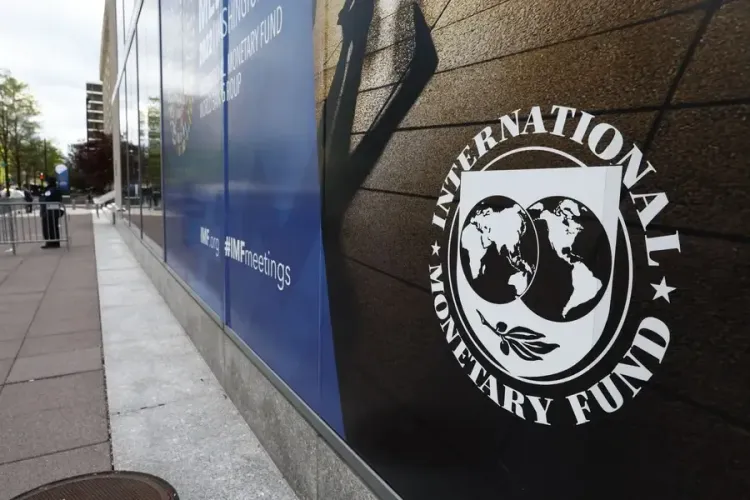
Washington, Feb 19 (NationPress) The International Monetary Fund has called on China to implement more vigorous measures to stimulate domestic demand and address economic imbalances, indicating that weak consumption and ongoing deflation could hinder growth and have repercussions for the global economy.
The IMF's Executive Board concluded its 2025 Article IV consultation with China on February 13 (local time), asserting that the economy “has shown remarkable resilience despite encountering numerous shocks in recent years.”
China's economy experienced a growth rate of 5 percent in 2025, with the IMF attributing this growth to “strong exports and policy stimulus.” However, it highlighted that “private domestic demand remained lackluster.”
Inflation was notably subdued, with the IMF stating, “headline inflation continues to be low, averaging 0 percent in 2025, while the GDP deflator continued its decline.”
Growth projections for this year indicate a slowdown, with GDP growth expected to decrease to 4.5 percent in 2026, reflecting the lasting impacts of tariffs and uncertainties in trade policy, according to the Fund. Inflation is expected to rise only gradually amid ongoing economic slack.
The IMF indicated that risks are “tilted to the downside,” warning that “a deeper-than-anticipated contraction in the property sector” could lead to “greater domestic demand weakness, entrenched deflation, and an ongoing reliance on exports.” Additionally, they noted that “renewed trade tensions represent a significant external downside risk.”
Directors emphasized that “transitioning to a consumption-driven growth model should be the primary focus.” They welcomed China's commitment to enhancing consumption within its 15th Five-Year Plan and urged for “a comprehensive and more forceful response that combines increased macroeconomic policy support with structural reforms.”
The IMF praised the fiscal expansion in 2025, suggesting that “an expansionary approach should remain until deflationary pressures are sustainably alleviated.” They recommended that spending shift “towards enhancing support for consumption and the property sector rather than inefficient investments.”
The policy strategy should incorporate further monetary easing and more exchange rate flexibility.
The IMF urged Beijing to tackle risks in the property sector, advocating for “central government funding to address unfinished housing that has been pre-sold.” They also recommended strengthening social protection to “reduce precautionary savings.”
Directors stressed “the necessity to dial back unnecessary industrial policies to minimize domestic resource misallocation, lessen fiscal burdens, and mitigate international spillovers.”
Regarding trade, the IMF highlighted China's “critical role in fostering open trade amid increasing fragmentation pressures.” They encouraged authorities “to engage constructively with partners to resolve trade disputes and exercise caution in using national security justifications for trade or investment restrictions.”
The IMF indicated that maintaining long-term debt sustainability will necessitate “significant fiscal consolidation over an extended period,” but suggested that this “should only commence once the economy has sustainably reflated.” They also called for restructuring local government financing mechanisms and enhancing fiscal frameworks.
China stands as the world’s second-largest economy and a pivotal force in global trade. In recent years, it has encountered stress in the property sector and rising local government debt, prompting targeted stimulus measures even amidst elevated trade tensions.
Point of View
I believe that the IMF's recommendations highlight the urgent need for China to pivot towards a consumption-driven growth model. The challenges posed by weak domestic demand and ongoing deflation are critical not only for China but also for the global economy. Addressing these issues with serious reforms is essential for long-term stability.
NationPress
8 Oct 2026
Frequently Asked Questions
What is the IMF's main recommendation for China?
The IMF recommends that China shifts to a consumption-led growth model while addressing economic imbalances and weak domestic demand.
What are the potential risks highlighted by the IMF?
The IMF warns of downside risks including a deeper contraction in the property sector, entrenched deflation, and renewed trade tensions.
What growth rate does the IMF project for China in 2026?
The IMF projects that China's GDP growth will slow to 4.5 percent in 2026.
How is inflation expected to trend in China according to the IMF?
Inflation is expected to rise only gradually amid persistent economic slack.
What fiscal measures does the IMF support for China?
The IMF supports maintaining an expansionary fiscal stance until deflationary pressures are alleviated, with a focus on consumption and the property sector.