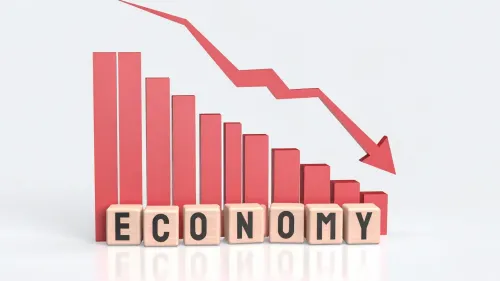
Is the Weakness of China’s Domestic Economy Hidden in Its Massive Trade Surplus?
Synopsis
Discover how China's astounding trade surplus of $1 trillion might not be the success story it appears to be. With weak domestic demand and a slowing economy, the true state of China's economic health raises significant concerns. What does this mean for the future?
Key Takeaways
China's $1 trillion trade surplus reflects underlying economic weaknesses.
Domestic demand has weakened significantly post-pandemic.
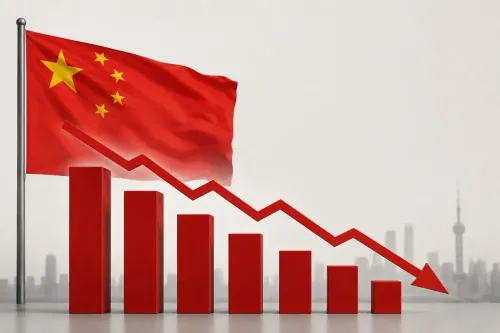
China's GDP growth has slowed to 5% .
Export dependence could escalate international tensions.
Low wages for Chinese workers highlight inequality despite trade success.
New Delhi, Jan 11 (NationPress) Although China has amassed a staggering trade surplus of $1 trillion, which is frequently perceived as a testament to the nation’s prowess as a manufacturing giant, the underlying reality reveals a different story. This surplus signals weak domestic demand, a depreciating Chinese currency, and a sluggish economy, as highlighted in an article.
The International Monetary Fund has cautioned China regarding potential economic imbalances. With a population of 1.4 billion, it is unwise for the country to depend solely on exports for maintaining robust growth, as noted by IMF Managing Director Kristalina Georgieva in the report published on the Nepal Aaja news portal.
China's reliance on an export-driven growth model may exacerbate international tensions, possibly leading to actions by other nations to limit imports from China, such as the increased tariffs imposed by the US on Chinese goods, the article asserts.
Since the pandemic, domestic consumption in China has dwindled as consumers have reduced spending, resulting in significant job losses and wage declines. The downturn in the property market has severely impacted household wealth, causing citizens to be cautious about making substantial purchases. The IMF has emphasized the necessity for comprehensive policies to stimulate consumer spending.
China's impressive trade surplus also reflects the country's economic fragility. Due to financial constraints, Chinese consumers are not spending adequately on imported products, which has led to a decrease in imports and an increase in the trade surplus. Additionally, the GDP growth rate has slowed to 5 percent, diminishing the need for imported production inputs, according to the article.
In November 2025, Chinese exports rose by 5.9 percent, whereas imports only saw a 1.9 percent increase.
The perception that this $1 trillion trade surplus casts China as a manufacturing powerhouse is based on flawed assumptions. The additional tariffs from the US have negatively impacted Chinese exports to high-value markets. In response, Beijing has sought to boost exports to less economically stable regions such as Africa, Latin America, and Southeast Asia.
In November, Chinese exports to Africa surged by 26 percent, by 14 percent to Southeast Asia, and by 7.1 percent to Latin America. Exports to the European Union also increased by 15 percent compared to the previous year. However, this export behavior has resulted in the dumping of inexpensive products in Africa, which is severely harming local industries.
To meet the demands of these economically challenged markets, Chinese manufacturers are cutting costs, which often leads to a decline in product quality. Consequently, China is becoming a hub for low-cost goods of questionable standards, capitalizing on its vast pool of cheap labor, as stated in the article.
Experts suggest that the achievement of a $1 trillion trade surplus is largely due to ultra-low pricing enabled by practices such as poor product quality, dumping, aggressive marketing, and misleading trade tactics. Notably, the benefits of this surplus do not reach Chinese workers. For instance, in 2023, the average monthly wage for a textile worker in China was $826, compared to $2,858 for a similar position in the US.
The vulnerability of China’s economy is evidenced by a meager 1.3 percent rise in retail domestic sales in November, the lowest increase since 2022. Growth in industrial production has slowed to a 15-month-low of 4.8 percent. The property sector is experiencing its worst performance in decades, with property investment plummeting by nearly 16 percent. Car sales have dropped by 8.5 percent, while home appliances saw a 19 percent decline. China's National Bureau of Statistics has acknowledged that the domestic demand remains insufficient.
Point of View
Our role is to present facts transparently. The reality of China's economy, as indicated by its massive trade surplus, highlights critical weaknesses in domestic demand and economic stability. Our commitment is to keep the audience informed about these vital issues shaping the global landscape.
NationPress
29 Sept 2026
Frequently Asked Questions
What does China's trade surplus indicate?
China's trade surplus indicates that while it is exporting more than it imports, it also signifies weak domestic demand and economic challenges.
How has the pandemic affected consumer spending in China?
The pandemic led to significant job losses and a decline in household income, causing consumers to cut back on spending.
What are the implications of China's reliance on exports?
China's dependence on export-driven growth may lead to increased global tensions and retaliatory measures from other countries.
What are the challenges faced by China's property market?
China's property market is experiencing a downturn, with investments plummeting and affecting overall consumer confidence.
How does the trade surplus affect Chinese workers?
Despite the large trade surplus, Chinese workers often see minimal benefits, with wages remaining significantly lower than their counterparts in developed countries.