Are US and China Policies Leaving Europe Behind While India Rises as a Trustworthy Economic Partner?

Synopsis
European economies are on the brink of stagnation due to tariff disputes and cheap imports. A new report reveals India's potential as a trustworthy economic partner, suggesting that stronger ties with Europe could bolster resilience and growth. Discover how global dynamics are shifting.
Key Takeaways
Europe is nearing economic stagnation due to tariff disputes and low-cost imports.
India is emerging as a reliable economic partner for Europe.
The India-EU free trade agreement could enhance cross-sector economies of scale .
The IMEC initiative aims to create resilient supply chains across regions.
Global trade dynamics are shifting, requiring market diversification .
New Delhi, Jan 28 (NationPress) European economies are facing a slowdown that is nearing stagnation due to a tariff dispute with the United States and the influx of low-cost Chinese imports, according to a recent report. It highlights that India has become a credible alternative center for economic collaboration.
The report from Maldives Insight indicates that the EU's economy is under pressure from a tariff conflict with the US, which has escalated export costs and reduced demand.
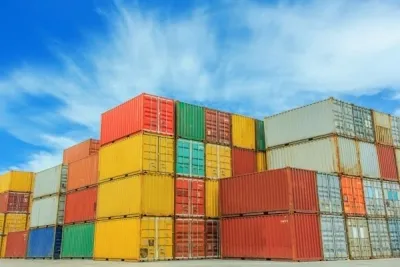
Additionally, the rise in inexpensive Chinese imports has exacerbated trade deficits and diminished the competitiveness of EU's domestic sectors.
The influx of affordable Chinese products has negatively affected critical macroeconomic indicators in the EU, such as employment rates, domestic production, and trade balance, the report states.
It criticizes the Chinese export strategy, which relies on overproduction, excess capacity, and price suppression, while also disregarding the principles of free trade.
Germany, Italy, and France, the main drivers of the EU economy, are all exhibiting notably poor growth rates of 0.2%, 0.9%, and 0.7%, respectively, with thousands of German firms filing for insolvency in 2025.
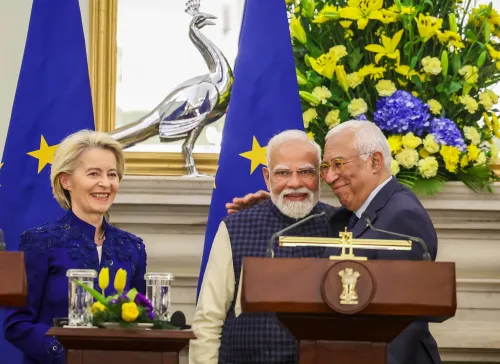
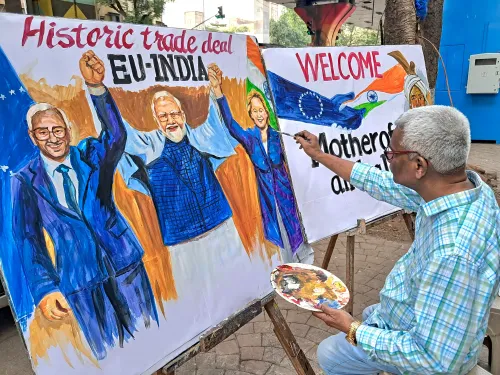
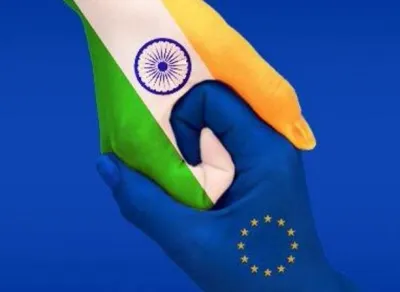
Experts are advocating for stronger economic ties between India and Europe, suggesting that the recently finalized India-EU free trade agreement could unleash significant cross-sector economies of scale and create robust supply chains for both regions.
The ambitious India-Middle East-Europe Economic Corridor (IMEC) is envisioned as a network of strategic routes that will foster resilient and diversified supply chains across various geographies, as outlined in the report.
The study also points to a perceived collapse of the rule-based order that global powers have traditionally adhered to, a sentiment echoed by Canadian Prime Minister Mark Carney and French President Emmanuel Macron.
It highlights incidents like the recent pressure on Europe from the US regarding the Greenland issue and the constant threats of imposing high tariffs, calling on European and other major powers to broaden their market bases.
Point of View
I believe that while the challenges facing Europe are significant, the rise of India as a reliable economic partner presents a unique opportunity. Strengthening ties between India and Europe may not only mitigate the current economic pressures but also foster a more balanced global trade environment. It is essential for Europe to diversify its partnerships in light of the shifting geopolitical landscape.
NationPress
23 Sept 2026
Frequently Asked Questions
What is causing the economic slowdown in Europe?
The economic slowdown in Europe is primarily due to a tariff dispute with the United States, which has raised export costs, combined with an influx of low-cost Chinese imports that affect domestic industries.
How is India positioned as an economic partner?
India is seen as a credible alternative to China, offering potential for stronger economic ties with Europe, especially following the recent India-EU free trade agreement.
What is the IMEC and its significance?
The India-Middle East-Europe Economic Corridor (IMEC) is a strategic initiative aimed at creating resilient and diversified supply chains across different regions, enhancing economic cooperation.
Why is the rule-based order collapsing?
The report suggests that the traditional rule-based order is under threat due to increasing pressure from global powers, particularly the United States, which has exerted influence on Europe regarding trade policies.
What are the implications of the tariff disputes?
Tariff disputes can lead to increased costs for exporters, reduced competitiveness for domestic industries, and ultimately, a slowdown in economic growth.