Has the Trade Agreement with the US Enhanced India's Export Competitiveness?
Synopsis
Discover how the recent trade agreement between the US and India has drastically cut tariffs on Indian goods, enhancing the nation's export competitiveness. This insightful report from SBI Research provides a detailed analysis of the economic implications and forecasts for India's market dynamics.
Key Takeaways
India has reduced tariffs from 50% to 18% due to the US-India trade deal.
This positions India favorably against major Asian exporters.
The SBI Research report anticipates positive changes for India's economy.
Potential RBI policy status quo expected in the upcoming announcement.
Global economic uncertainty persists, impacting markets.
New Delhi, Feb 4 (NationPress) India has now achieved one of the lowest tariff rates among significant Asian nations, with the recent US-India trade deal leading to a reduction in tariffs on Indian exports from 50 percent to 18 percent. According to a report from SBI Research published on Wednesday, this change is expected to bolster India's export competitiveness.
The report highlights that India's tariff is now even lower than that of Vietnam, a key trading ally of the US, allowing Indian exports to compete more effectively against other major Asian exporters.
SBI Research views the trade agreements between the US and India, as well as the EU and India, as pivotal shifts in the economic landscape that will favor India.
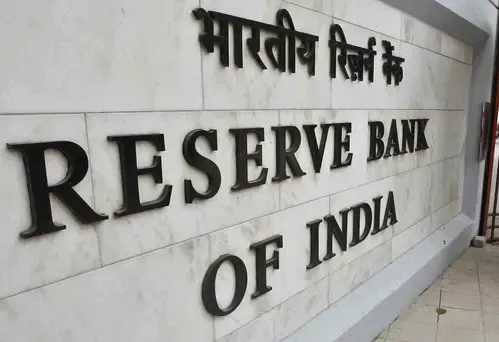
As the RBI's monetary policy announcement approaches on February 6, the report predicts that the Reserve Bank will likely keep its policies unchanged.
It also notes that despite recent easing of policy rates, government bond yields have shown persistent increases. The selection of eligible securities may affect the success of open market operations (OMO), even if the overall liquidity injection remains consistent. Thus, the RBI is anticipated to maintain the current policy stance.
Nonetheless, global economic uncertainties persist. The SBI's Geo-Economics Stress Index indicates that heightened uncertainty can lead to economic stress with a lag of 3 to 4 months.
Additionally, metal prices have rebounded after experiencing a significant sell-off last week. A weak labor market, stagnant real disposable incomes, and diminished inflationary pressures could lead to potential rate cuts by the US Federal Reserve, the report noted.
In this context, the Indian currency has fluctuated between 89-92 per dollar over the past two months, depreciating by 5.8 percent against the US dollar since April 2, 2025. This depreciation occurred when the US implemented extensive tariff hikes across various economies. However, following the India-US trade deal reducing tariffs to 18 percent, the Indian rupee appreciated significantly (more than Re 1).
The report further mentions that updated CPI weights, while maintaining the domestic inflation index, indicate a slight increase in overall CPI by 20-30 basis points. During months of higher food inflation, the revised CPI will be lower by 20-30 basis points.
Point of View
It’s crucial to acknowledge that the recent trade agreements with the US and EU mark significant progress for India’s economy. The reduced tariffs not only enhance export competitiveness but also reflect a strategic alignment with major global markets. It’s essential for India to leverage this opportunity to strengthen its economic position amidst ongoing global uncertainties.
NationPress
22 Sept 2026
Frequently Asked Questions
What is the tariff reduction percentage on Indian goods due to the trade deal?
The trade deal has reduced tariffs on Indian goods to 18 percent from the previous 50 percent.
How does India's tariff rate compare to Vietnam's?
India's tariff rate is now lower than Vietnam's, giving Indian exports a competitive edge.
What is the expected impact of the trade deal on India's exports?
The trade deal is expected to significantly improve India's export competitiveness against other major Asian exporters.
What does the SBI Research report suggest about the RBI's monetary policy?
The report anticipates that the RBI will likely maintain a status quo during its upcoming monetary policy announcement.
What economic factors are influencing the global market according to the report?
The report highlights uncertainties in the global economy, rising metal prices, and potential rate cuts by the US Fed as significant influencing factors.