Did Trump's Trade Policies Accelerate the India-EU Free Trade Agreement?
Synopsis
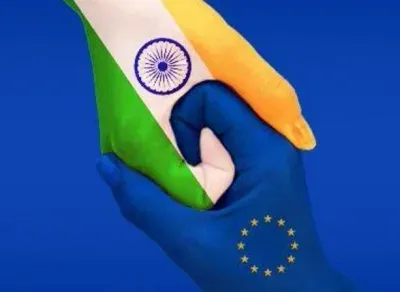
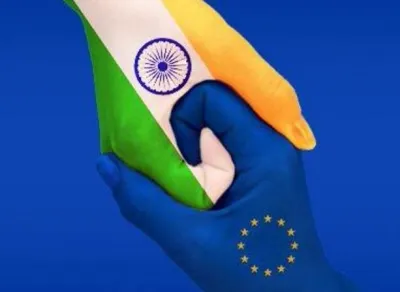
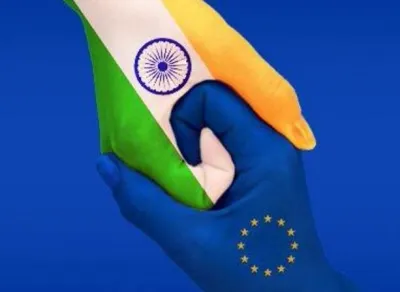
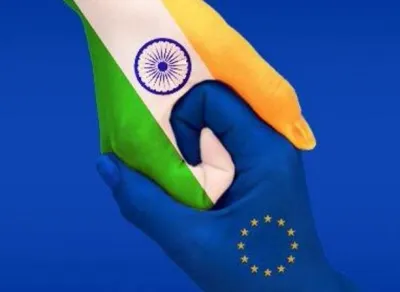
The recent free trade agreement between India and the EU marks a significant shift in international trade dynamics, largely influenced by Trump's tariffs. This historic pact, finalized after lengthy negotiations, aims to counterbalance China's influence while fostering economic cooperation between two major markets.
Key Takeaways
Historic Agreement: The India-EU trade pact marks a significant milestone in global trade.
Strategic Pivot: India's response to US tariffs reflects a strategic shift towards Europe.
Market Impact: The deal is expected to benefit farmers, small businesses, and consumers.
Countering China: The partnership aims to mitigate China's influence in critical sectors.
Security Collaboration: The agreement includes a robust security and defense partnership.
New Delhi, Jan 28 (NationPress) The disruption caused by US President Donald Trump through his "America First" trade agenda has significantly contributed to the rapid progression of the landmark free trade agreement recently finalized between India and the European Union, as reported by various Western media outlets.
After nearly two decades of inconsistent negotiations, the agreement establishes a free trade zone connecting two of the globe's largest economies, encompassing approximately two billion individuals and constituting around a quarter of the world's GDP, according to a report from Newsweek.
Experts indicated to Newsweek that the imposition of US tariffs ranging from 25% to 50% on steel, aluminum, and other Indian exports, coupled with the breakdown of US-India trade discussions in the previous year, compelled New Delhi to explore alternative partnerships.
Meanwhile, European allies experienced the repercussions of transatlantic tensions, with Trump even hinting at tariffs due to Europe's refusal to sell Greenland. An EU diplomat remarked to Newsweek, "Trump’s tariffs provided us with a favorable momentum in the final stages," implying that apprehensions regarding US trade conflicts aided India and the EU in overcoming remaining obstacles.
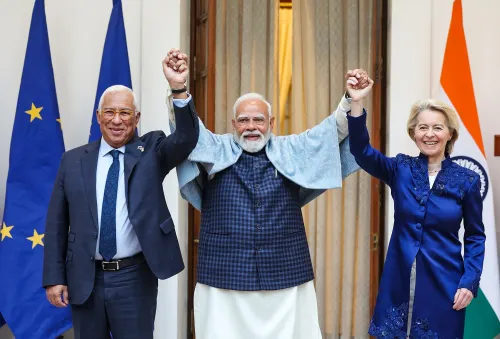
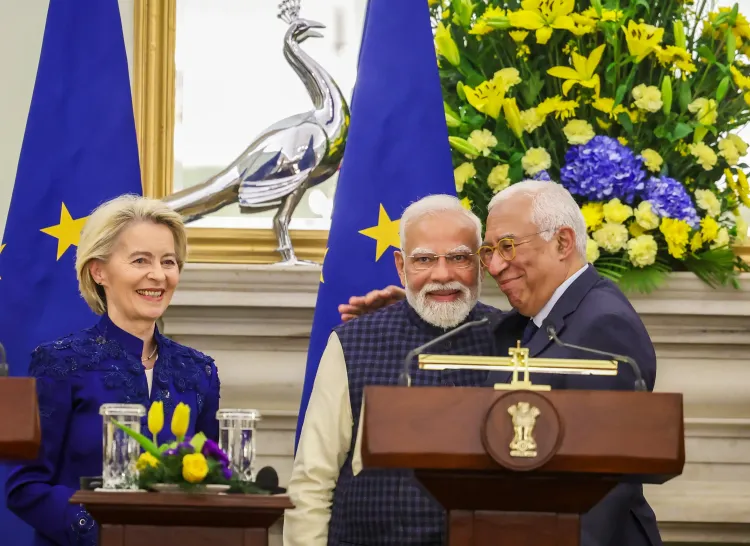
European Council President Antonio Costa portrayed the deal as a direct response to the tariff wars initiated by Washington. He commended it as a "geopolitical stabilizer" that supports the international rules-based trading system during a time of increasing unilateralism.
According to the report, "This agreement serves as a counter to the recent US trade strategy: rather than adopting protectionist measures like Washington, Brussels and New Delhi opted to finalize the largest free trade agreement they've ever signed; emphasizing that the global economy will not pause for anyone."
Additionally, experts in New Delhi perceive this partnership as a strategic counterbalance to China's dominance. Both India and the EU have grown increasingly cautious of China's substantial sway over critical supply chains and its aggressive expansion in Asia.
European Commission President Ursula von der Leyen stated, "We will strengthen our strategic relationship even further," highlighting that diversifying from single sources is a crucial objective.
The new agreement includes the inaugural India–EU Security and Defence Partnership (SDP), a complementary agreement signed alongside the trade pact.
This comprehensive security framework will enhance collaboration in maritime security, defense technology, cybersecurity, space, and counter-terrorism, among other sectors.
Furthermore, the agreement paves the way for European firms to relocate portions of their production to India in vital industries such as batteries and specialty chemicals, mitigating concerns regarding the influx of Chinese components that could undermine tariff advantages, as noted in the report.
The announcement of the deal provided a significant platform for the leaders involved, with Indian Prime Minister Narendra Modi characterizing this FTA as "the largest free trade agreement in history," underscoring its magnitude and importance. Modi highlighted the benefits the pact would bring to ordinary Indians, from farmers and small enterprises gaining export opportunities to consumers enjoying lower prices, thereby reinforcing his reputation as a leader capable of enhancing India's global economic profile.
Point of View
This agreement signifies India's strategic pivot towards Europe amidst rising geopolitical tensions. While the ramifications of Trump's tariffs are evident, it is essential to view this pact not just as a response, but as a proactive step towards sustainable economic growth and diversification of trade partnerships.
NationPress
22 Sept 2026
Frequently Asked Questions
What is the significance of the India-EU free trade agreement?
The agreement unites two of the world's largest economies, creating a free trade zone that is expected to enhance economic cooperation and counterbalance China's influence.
How did Trump's trade policies influence this agreement?
Trump's tariffs on Indian exports prompted New Delhi to explore alternative partnerships, accelerating the negotiations and finalization of the trade deal with the EU.
What sectors will benefit from the India-EU trade pact?
Industries such as agriculture, small businesses, and technology are expected to gain significantly, with consumers likely enjoying lower prices on goods.
What is the India-EU Security and Defence Partnership?
This partnership, signed alongside the trade agreement, aims to deepen cooperation in areas such as maritime security, defense technology, and counter-terrorism.
How does this agreement impact global trade dynamics?
It positions India and the EU as key players in the global market, promoting a rules-based trading system in response to rising unilateralism.