Is the India-EU Trade Pact Raising Concerns in Washington?
Synopsis
The recent free trade agreement between India and the EU has sparked significant concern in Washington. This article explores the implications of this landmark deal and the potential consequences for U.S. trade strategy, highlighting reactions from key figures and experts.
Key Takeaways
The India-EU trade agreement is a significant development in global trade.
Washington expresses concern over being sidelined in trade dynamics.
Key figures highlight the need for the U.S. to reassess its trade strategies.
The pact creates a free-trade zone that benefits both parties.
Critics raise concerns about regulatory challenges and protections.
Washington, Jan 29 (NationPress) The announcement of a groundbreaking free trade agreement between India and the European Union has elicited concern in Washington. Influential lawmakers, high-ranking officials, and policy analysts warned that the United States risks being left behind in the evolving global trade landscape.
This trade pact is seen as a transformative move by New Delhi and Brussels, potentially reshaping global economic and strategic partnerships.
Senator Mark Kelly expressed that this deal signifies escalating discontent among U.S. allies regarding Washington’s trade policies. In a post on X, the Arizona Democrat noted, “The EU has established a trade and security arrangement with India, while Canada and the UK are in talks with China.”
Kelly attributed this trend to former President Donald Trump's actions that have strained relationships with allies. He cautioned that such developments could have adverse effects for the U.S., stating, “These agreements our allies are forging with other nations impact us negatively.”
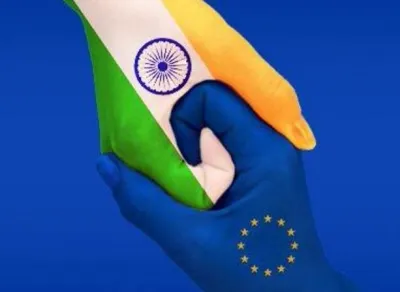
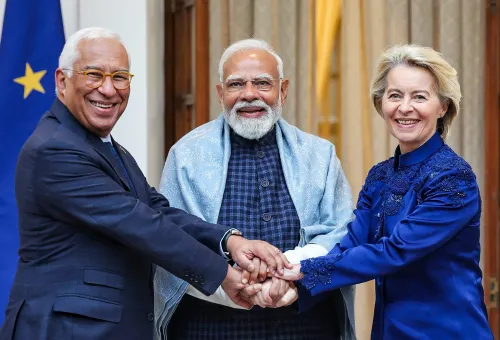
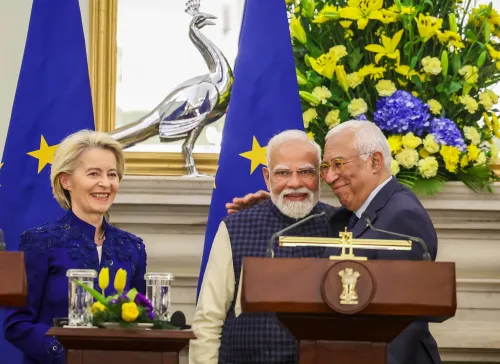
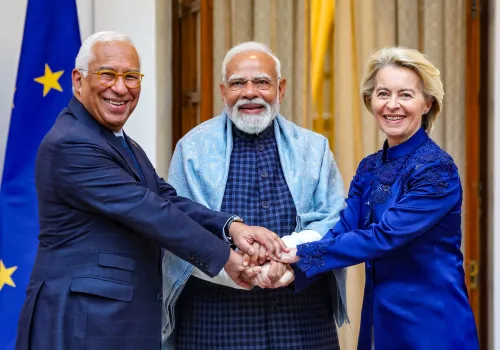
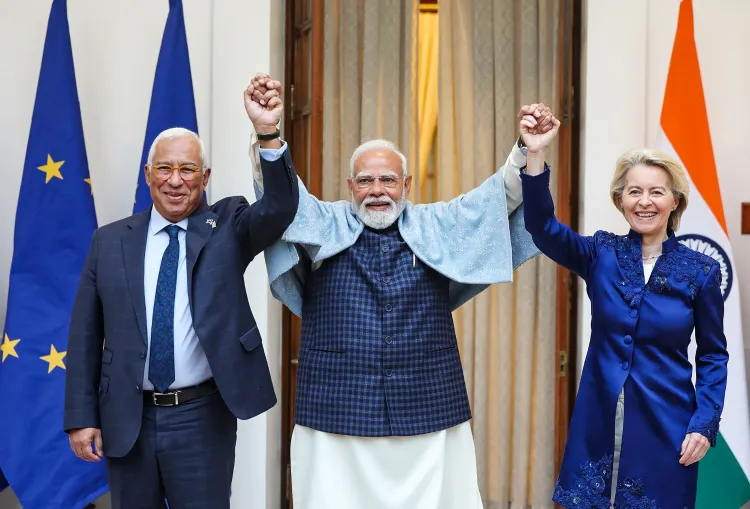
The India-EU agreement was unveiled this week in New Delhi, and leaders on both sides hailed it as the most significant trade pact in India's history. European Commission President Ursula von der Leyen labeled it “the mother of all deals.”
She emphasized that the pact establishes a “free-trade zone encompassing 2 billion people, with mutual benefits for both parties.” This agreement connects two of the globe’s largest economies amidst a climate of trade tensions and geopolitical uncertainty.
Officials from the Trump administration also conveyed their disappointment regarding Europe’s decision. Treasury Secretary Scott Bessent criticized the EU for not aligning with Washington on tariffs.
“They are acting in their own best interests,” Bessent shared in an interview with CNBC. “However, I find the Europeans quite disappointing.” He remarked, “They were not willing to collaborate with us on higher tariffs, and now they pursue this trade deal.”
In Washington, policy experts indicated that this agreement signals a need for the U.S. to reevaluate its trade strategy. The Information Technology and Innovation Foundation remarked that the deal illustrates how other significant economies are advancing while the United States risks falling behind.
“The EU-India free trade agreement should serve as a wake-up call for Washington,” said Rodrigo Balbontin, associate director for trade, intellectual property, and digital technology governance at ITIF. He noted that the United States is being relegated “to the sidelines” as other nations lower tariffs and establish new trade regulations.
Balbontin pointed out that the agreement carries certain drawbacks. “Numerous European digital regulations, especially the Digital Markets Act, discriminate against multinational corporations,” he stated. He also mentioned that India is known to be “one of the most challenging major economies in terms of intellectual property protection and enforcement.”
Nevertheless, he acknowledged that the pact could indirectly benefit Washington. “If this agreement helps to diminish behind-the-border barriers, it could ultimately serve American interests,” Balbontin concluded, as the Trump administration seeks fresh trade agreements.
ITIF expressed support for the strengthening economic relationship between India and the EU. “In a shifting global trade environment marked by increasing protectionism, ITIF endorses a free trade agreement between two prominent democracies,” Balbontin stated.
He emphasized that “the primary challenge of this century revolves around China’s mercantilist practices.”
Other trade specialists advocated caution in evaluating the deal’s repercussions. Mark Linscott, a former U.S. trade official, deemed the agreement a significant diplomatic milestone but cautioned against overestimating its impact.
“It is imperative to recognize that the India-EU free trade agreement deserves attention,” Linscott noted in a piece for the Atlantic Council. He indicated that it is “unlikely to revolutionize global trade or spur substantial economic growth.”
Linscott pointed out that many advantages will materialize gradually through incremental tariff reductions and regulatory clarity. He noted that sensitive topics, such as agriculture, intellectual property rights, and the EU’s Carbon Border Adjustment Mechanism, were postponed for future negotiations.
He also highlighted that the deal still needs domestic ratifications. In the EU, this involves approval from member nations and the European Parliament.
From a Washington perspective, Linscott asserted that the pact need not jeopardize U.S. trade relations. “There is no reason it should undermine the U.S. trade connections with either the EU or India,” he remarked. He suggested that it could even energize efforts toward a U.S.-India trade agreement.
India and the EU first embarked on negotiations for a trade pact in 2007. Discussions were stalled for several years over tariffs, market access, and regulatory issues. Negotiations resumed in 2021.
Together, India and the EU account for over one-fifth of global economic output. The full implications of the agreement will take time to unfold. However, the response in Washington underscores a growing concern that as partners advance, the United States may need to reevaluate its trade strategies.
Point of View
I believe that the new trade agreement between India and the EU should serve as a crucial reminder for the U.S. to reassess its trade policies. In an era defined by rapid global changes, it is vital for America to remain engaged and proactive in fostering international partnerships.
NationPress
1 Oct 2026
Frequently Asked Questions
What is the significance of the India-EU trade agreement?
The India-EU trade agreement is considered a landmark deal, marking a major shift in global trade dynamics and potentially reshaping strategic alliances.
How might this agreement affect U.S. trade policy?
The agreement has prompted concern in Washington, suggesting that the U.S. may need to rethink its trade strategy to avoid being sidelined in global economic developments.
What are the potential benefits of the India-EU trade pact?
The pact establishes a free-trade zone for 2 billion people, creating mutual economic benefits and fostering closer ties between two major economies.
Are there any criticisms of the trade agreement?
Critics point out shortcomings, such as discriminatory regulations against multinational companies and challenges in intellectual property enforcement in India.
What are the next steps for the India-EU trade deal?
The agreement requires domestic approvals in the EU, including consent from member states and the European Parliament, before it can be fully enacted.