Is the European Commission President Optimistic About the Free Trade Pact with India?
Synopsis
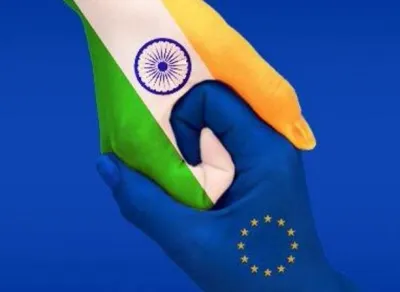
As India prepares for Republic Day celebrations with European leaders, optimism is high regarding the impending free trade agreement. President Ursula von der Leyen highlights the significance of this historic deal, expected to create a massive market and strengthen ties between two democratic powerhouses.
Key Takeaways
Historic Trade Agreement: The India-EU free trade agreement is set to be a landmark deal.
Market Potential: The agreement could connect a market of 2 billion people.
Economic Growth: It will enhance economic collaboration between two major democracies.
Zero-Duty Access: India seeks favorable terms for its labor-intensive sectors.
Security Partnership: Additional agreements on security and mobility are expected.
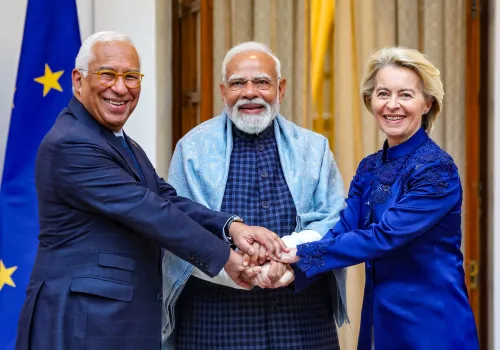
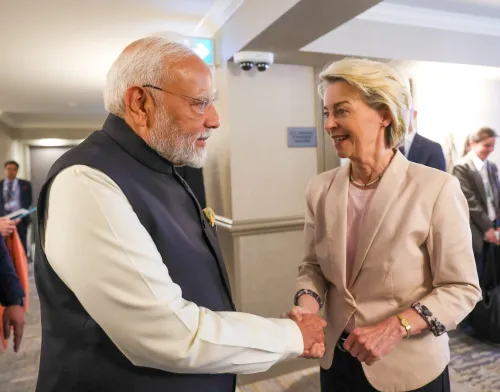
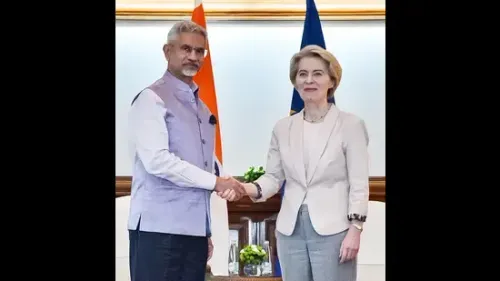
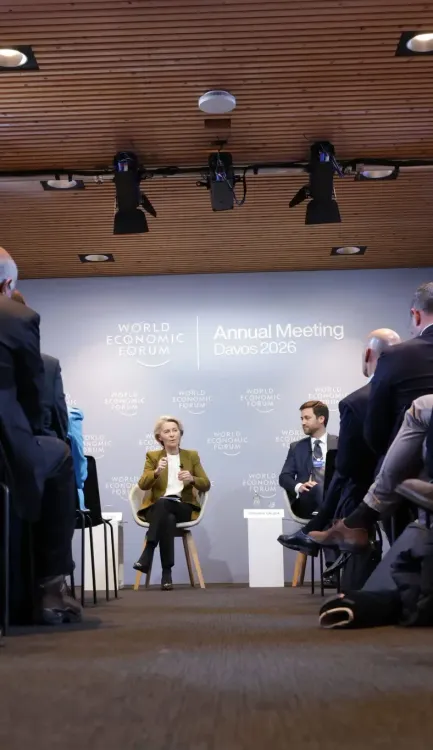
New Delhi, Jan 23 (NationPress) As India gears up to host prominent European leaders for the Republic Day festivities on January 26, European Commission President Ursula von der Leyen expresses optimism regarding the India-Europe free trade agreement.
Von der Leyen emphasized that Europe is seeking to diversify its markets amid the ongoing US tariff challenges and significant shifts in geo-economics.
"Following Davos, my travels will take me to India. There’s still progress to be made, but we are nearing a historic trade agreement. Some have dubbed it the mother of all deals, potentially uniting a market of 2 billion people that represents nearly a quarter of global GDP," she stated at the World Economic Forum.
"Significantly, this will provide Europe with a first-mover advantage in one of the world’s most rapidly expanding and dynamic regions. Europe is eager to engage with the growth hubs of today and the economic leaders of the future."
India and the European Union are on the verge of finalizing a landmark Free Trade Agreement, with an official announcement anticipated on January 27, right after the Republic Day events, which will be graced by the leading EU officials as chief guests.
Sources indicate that the India-EU summit set for January 27 will herald the successful conclusion of Free Trade Agreement (FTA) discussions. A document will be ratified by both parties to declare the end of FTA negotiations, after which the agreement will undergo the necessary legal processes and ratification by both the European Parliament and Council.
Additionally, both parties are expected to sign a security and defense partnership agreement, along with a pact to facilitate easier mobility for Indian professionals seeking employment in the EU.
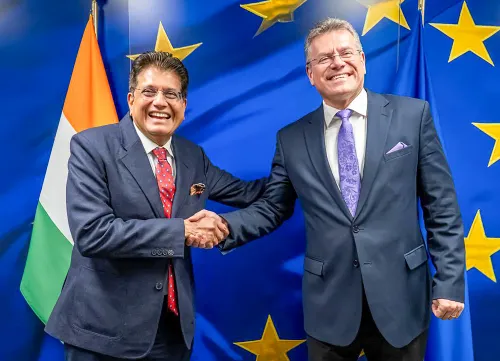
This trade deal is poised to be the largest India has ever signed, encompassing goods and services with the EU, which is one of India’s primary export markets. Commerce Minister Piyush Goyal has dubbed it the mother of all deals to highlight its importance.
With a combined market of nearly 2 billion individuals, this agreement will connect two of the world’s largest democratic economies against a backdrop of global economic uncertainty stemming from the US tariff disruptions and geopolitical tensions.
The European Union stands as India’s largest trading partner, with trade in goods reaching $135 billion in FY24. The FTA is anticipated to unlock further market access and economic synergies. However, discussions continue on sensitive topics such as the EU’s Carbon Border Adjustment Mechanism (CBAM).
India advocates for zero-duty access in its labor-intensive sectors, including textiles, leather, apparel, gems and jewelry, and handicrafts.
Recently, Commerce Minister Goyal announced that negotiations for the trade agreement between India and the European Union have moved into their final stages.
Point of View
I believe this trade agreement between India and the European Union marks a significant step forward in international relations and economic collaboration. It emphasizes the importance of diversifying trade partnerships in a changing global landscape. This agreement not only benefits both parties economically but also strengthens democratic ties between two major players.
NationPress
19 Sept 2026
Frequently Asked Questions
What is the significance of the India-EU free trade agreement?
The India-EU free trade agreement is significant as it is expected to create a vast market connecting nearly 2 billion people and enhance trade relations between two of the world's largest democratic economies.
When is the formal announcement of the free trade agreement expected?
The formal announcement of the free trade agreement is anticipated on January 27, following the Republic Day celebrations.
What sectors is India focusing on for zero-duty access?
India is pushing for zero-duty access for its labor-intensive sectors, including textiles, leather, apparel, gems and jewelry, and handicrafts.
What additional agreements will be signed alongside the trade deal?
Alongside the trade deal, a security and defense partnership agreement and a pact to enhance mobility for Indian professionals in the EU will also be signed.
What are the expected challenges in the negotiations?
Challenges in the negotiations include discussions on sensitive areas such as the EU's Carbon Border Adjustment Mechanism (CBAM).