Did India-EU FTA Encourage the US to Forge a Trade Deal with India?

Synopsis
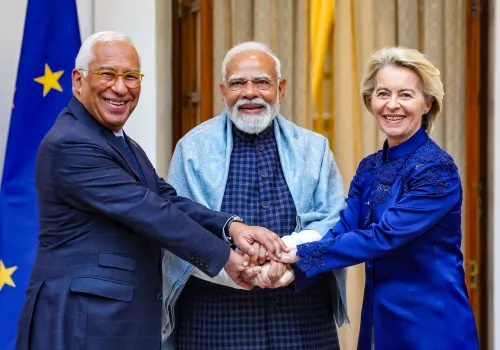
The recent India-EU FTA may have catalyzed the US to engage in trade negotiations with India, as highlighted by a South Asia expert. This agreement could reshape trade dynamics and foster collaborative efforts between the nations. Explore how these developments could impact the global trade landscape.
Key Takeaways
India's FTA with the EU may have influenced US trade negotiations.
Tariffs on Indian exports to the US will reduce from 25% to 18%.
The US will lift a punitive tariff on Indian oil imports from Russia.
Experts believe the US secured a better deal than the EU's agreement.
The deal opens opportunities for collaboration on critical global issues.
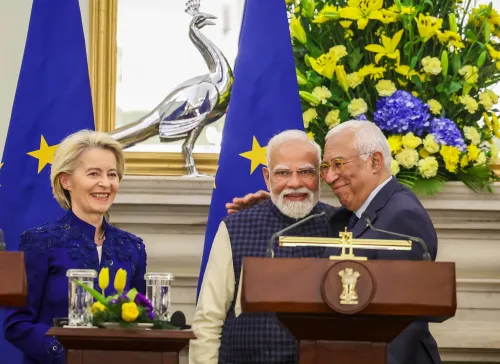
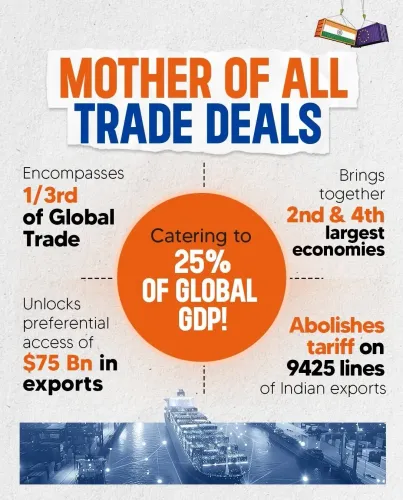
New York, Feb 3 (NationPress) The recent conclusion of India’s free trade agreement (FTA) with the European Union may have influenced the United States to pursue a trade deal with India, a South Asia expert from the Asia Society noted.
Farwa Aamer, director of South Asia Initiatives at the Asia Society Policy Institute (ASPI), stated, “While India-US trade discussions have been ongoing, the recent EU agreement might have acted as a catalyst for the US to accelerate negotiations”.
“The timing is intriguing, as this deal follows closely after the EU-FTA,” she added.
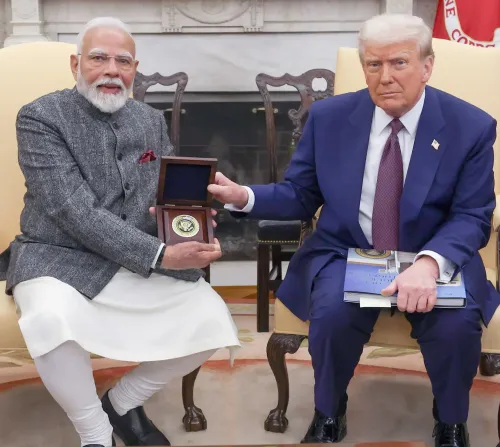
Both Prime Minister Narendra Modi and US President Donald Trump announced a trade agreement aiming to decrease the tariffs on India's exports to 18%, down from the 25% imposed by Washington last year.
As per the White House, the US will also rescind the punitive 25% tariff that Trump had enforced on India regarding purchases of Russian oil.
This significant development emerged after nearly a year of often tumultuous negotiations between the two nations.
“For India, the issue with Russia persists,” Aamer remarked. “Even as it shifts its oil import strategy away from Russia, maintaining stable relations remains a priority.”
The agreement was revealed following a phone discussion between PM Modi and President Trump.
Aamer emphasized, “It was ultimately the engagement at the leadership level that has been discussed since the outset that facilitated the deal.”
Wendy Cutler, an expert with extensive trade experience, noted that the India-US agreement would provide India with a competitive edge over its Southeast Asian rivals.
“Crucially, the US reciprocal tariff for India will drop to 18%, giving Indian exporters a slight advantage in the US market compared to their ASEAN counterparts, who face tariffs between 19-20%,” she explained.
Cutler, who previously served as the acting Deputy US Trade Representative and is now senior vice president at ASPI, suggested that the US likely secured a more favorable deal than the EU.
Regarding India’s tariff and non-tariff reductions impacting trade, she added, “Trump’s statements are becoming less specific, merely indicating that India ‘will move’ towards zero percent”.
Nevertheless, based on Trump’s announcement on Truth Social, it appears that the US achieved broader and deeper tariff reductions than what the EU managed in its recently signed FTA with Delhi.
While tariffs on certain EU exports, such as electronics and machinery, will gradually be eliminated, others, like alcoholic beverages, will be lowered to 20%.
Trump stated on Truth Social that India will “move forward to lower their Tariffs and Non-Tariff Barriers against the United States, to ZERO.”
Overall, Cutler remarked that the India-US agreement “will pave the way for the two countries to collaborate on other urgent issues related to critical minerals, technology partnerships, and supply chain resilience.”
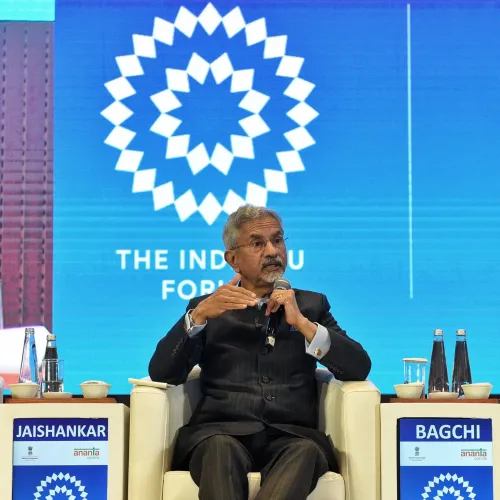
External Affairs Minister S Jaishankar arrived in New York on Monday as part of his visit to Washington for the Critical Minerals Ministerial convened by US Secretary of State Marco Rubio.
Point of View
Especially in the context of recent agreements with the European Union. As these nations explore new pathways for collaboration, the potential benefits for India in terms of trade tariffs and market access could be pivotal. The insights shared by experts emphasize the importance of leadership engagement in fostering these agreements.
NationPress
29 Sept 2026
Frequently Asked Questions
What is the significance of the India-EU FTA?
The India-EU FTA is significant as it may have prompted the US to pursue a trade deal with India, thereby reshaping trade relations in the region.
How will the new trade agreement affect tariffs?
The new trade agreement will lower tariffs on India's exports to the US from 25% to 18%, providing Indian exporters with a competitive advantage.
What other issues are likely to be addressed by the India-US trade deal?
The agreement may pave the way for cooperation on critical minerals, technology partnerships, and supply chain resilience.
Who announced the trade agreement?
The trade agreement was announced by Prime Minister Narendra Modi and US President Donald Trump after discussions between the two leaders.
What impact will this deal have on Southeast Asian competitors?
The deal is expected to give India an advantage over Southeast Asian competitors, who face higher tariffs in the US market.