EU-India Free Trade Agreement: A Strategic Response to Global Shifts
Synopsis
Discover how the newly finalized EU-India Free Trade Agreement (FTA) reflects a strategic response to a changing global landscape. This deal not only strengthens bilateral ties but also serves as a safeguard for India amidst geopolitical tensions.
Key Takeaways
Strategic Hedge: The FTA serves as a safeguard for India against economic pressures.
Diversifying Partnerships: The EU aims to broaden its trade alliances amid global tensions.
Political Visibility: Leaders from both sides showcased their commitment to the agreement.
Global Implications: The deal reflects a response to challenges in the international order.
Economic Benefits: Anticipated boosts in trade and job creation for both economies.
New Delhi, March 4 (NationPress) The recent completion of the EU-India Free Trade Agreement (FTA) negotiations occurs amidst a significant transformation in the global strategic landscape. This shift has prompted both parties to enhance their economic collaboration, as noted in an article by the European Policy Centre (EPC).
"The EU has recently intensified its efforts to diversify its trading partners with remarkable determination. In Brussels, decision-makers have grown increasingly concerned about the state-driven economic practices of China while also facing a more aggressive and often unpredictable trade policy from the US. This, combined with the broader fragmentation of global economic governance, has strengthened the EU's commitment to lessen strategic dependencies and expand its network of economic allies," the article authored by Almut Maller and Ivano di Carlo states.
In light of Russia's invasion of Ukraine and the assertive pursuit of national interests by both Washington and Beijing, the EU is apprehensive about the sustainability of open markets and the rules-based international order that underpins the bloc's prosperity. Within this context, the new FTA with India is seen as a crucial element of this diversification strategy, the article further elaborates.
The FTA also offers India a "strategic safeguard" against the economic pressures exerted by the Donald Trump administration regarding its imports of inexpensive oil from Russia.
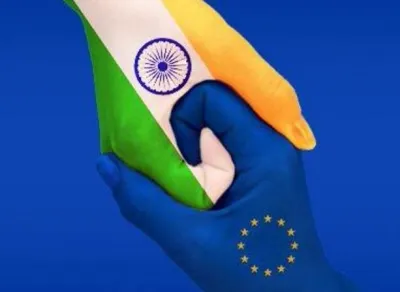
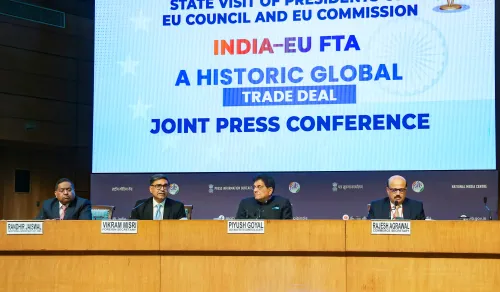
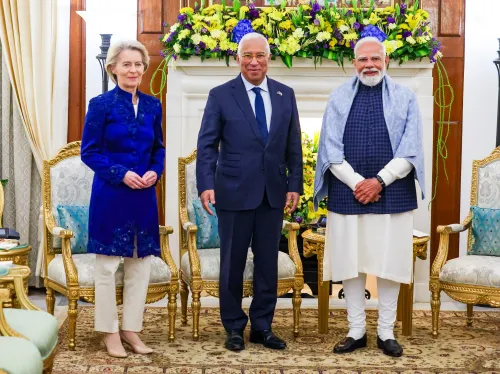
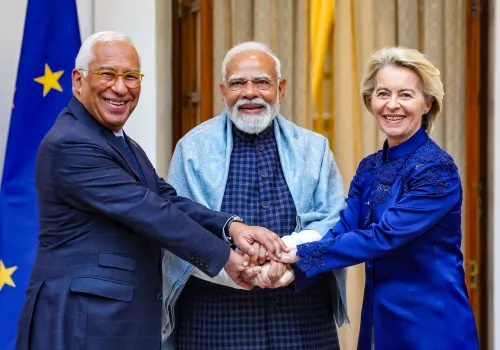
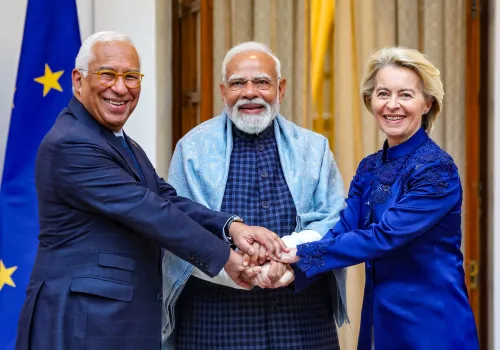
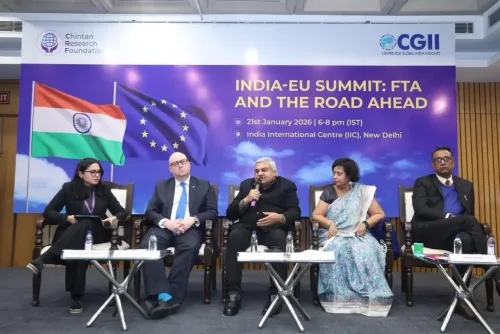
Political leaders from the EU and India have opted to prominently showcase their renewed trade commitment, referring to it as "the mother of all deals." European leaders also participated in India's high-profile Republic Day celebrations to underscore this alliance.
"In addition to the favorable economic implications for trade between the EU and India as assessed by economists, both parties aim to present their new partnership as a timely response from two of the world’s largest democratic economies to reinforce credible and dependable trade frameworks, with aspirations of creating a significant impact that extends beyond their bilateral relationship," the article notes.
For the EU, the political stakes are particularly elevated. Brussels must illustrate the effectiveness of its new trade strategy in addressing the challenges posed by the US during Donald Trump's presidency, as the article concludes.
Point of View
The EU-India FTA reflects a significant step towards strengthening economic ties in a time of global uncertainty. It is crucial for both parties to navigate these changes strategically, ensuring mutual benefits while addressing geopolitical pressures.
NationPress
1 Oct 2026
Frequently Asked Questions
What is the EU-India Free Trade Agreement?
The EU-India Free Trade Agreement is a comprehensive trade deal aimed at enhancing economic cooperation between the European Union and India, addressing tariff reductions, and fostering mutual trade benefits.
Why is the FTA important for India?
The FTA provides India with a strategic hedge against external pressures, particularly regarding its oil imports from Russia, while also opening up new market opportunities in Europe.
How does the FTA impact EU's trade strategy?
The FTA represents a key component of the EU's strategy to diversify its trade partnerships and reduce dependency on single markets, particularly in light of tensions with China and the US.
What are the anticipated benefits of the EU-India FTA?
The agreement is expected to boost bilateral trade, create jobs, and strengthen economic frameworks, enhancing the cooperation between two of the world's largest democracies.
What political significance does the FTA hold?
The FTA symbolizes a commitment to uphold open markets and a rules-based international order, reinforcing the political and economic alliance between the EU and India.