Pinarayi Vijayan slams Kerala Governor Arlekar for 'constitutional violations'
Synopsis
Kerala's top opposition leader Pinarayi Vijayan has accused Governor Rajendra Arlekar of running a 'parallel administration' by directly summoning the state police chief — bypassing the elected government — and warned that unchecked Raj Bhavan overreach could hand police control to the RSS. His equally sharp attack on the ruling UDF for 'surrendering' without a fight raises the political temperature significantly.
Key Takeaways
Pinarayi Vijayan on 17 August accused Governor Rajendra Vishwanath Arlekar of violating constitutional norms by directly summoning the Kerala state police chief without consulting the Chief Minister.
Vijayan cited the Supreme Court's 2016 Nabam Rebia judgment , which held that Article 163 does not grant Governors unfettered discretionary powers.
He warned that unchecked gubernatorial intervention in state police affairs could eventually lead to RSS influence over the police administration.
The UDF government was accused of 'culpable silence,' with Vijayan arguing its passivity was being interpreted by the Governor as submission.
Vijayan contrasted the UDF's response with the previous LDF government , which had formally directed officials not to attend Lok Bhavan meetings.
He called the UDF's alleged surrender of the elected government's rights 'an insult to the voters.'
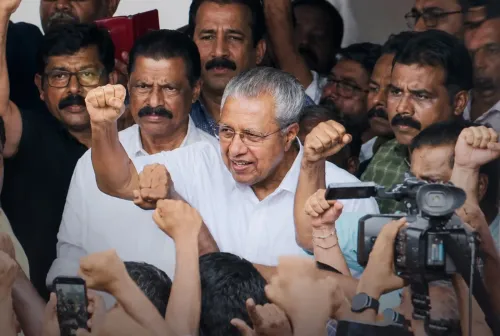
Kerala's Leader of the Opposition Pinarayi Vijayan on Monday, 17 August launched a sharp offensive against Governor Rajendra Vishwanath Arlekar, accusing him of brazenly violating constitutional norms by directly summoning the state police chief without consulting the Chief Minister or the minister concerned. Vijayan simultaneously trained his fire on the ruling United Democratic Front (UDF) government, accusing it of a 'surrender' that was emboldening the Raj Bhavan to deepen its reach into state administration.
The Constitutional Charge Against the Governor
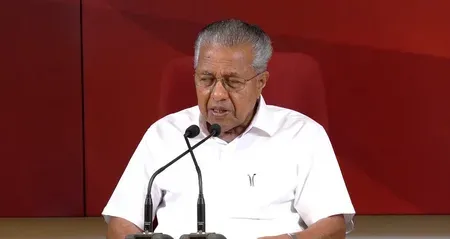
In a strongly worded post on social media, Vijayan described the Governor's direct summons to the police chief as 'thoroughly undemocratic' and an attempt to run a parallel administration by reducing the elected government to a 'mere spectator.' He invoked the Supreme Court's 2016 judgment in the Nabam Rebia case, arguing that the court had unambiguously held that Article 163 of the Constitution does not confer unfettered discretionary powers on a Governor.
'The Governor's attempt to run a parallel administration by reducing the government to a mere spectator is undesirable,' Vijayan said, insisting that the Governor was constitutionally bound to act on the advice and directions of the Council of Ministers. He also questioned whether the state police chief had attended the meeting with prior permission from the minister concerned.
Warning of RSS Influence Over Police
Vijayan went further, alleging that the Governor's direct intervention in the functioning of the state police — the body responsible for maintaining law and order — was a 'completely wrong course of action.' He warned that if left unchecked, such interventions could eventually lead to handing over the state's police administration to the Rashtriya Swayamsevak Sangh (RSS).
He also flagged a separate reported incident in which the Governor had convened a meeting of officials at Lok Bhavan in connection with International Yoga Day, alleging that the Chief Secretary had reportedly expressed displeasure over that meeting as well.
UDF Government Accused of 'Culpable Silence'
Vijayan reserved pointed criticism for the UDF government, accusing it of maintaining a 'culpable silence' even after the Opposition had raised the issue formally. He argued that the government's passivity was being read by the Governor as submission, thereby creating space for further overreach into other departments.
He said the Chief Minister had failed to act, and that the government had not uttered 'even a single word' against what he characterised as the Governor's excessive exercise of power. Vijayan called the UDF's alleged abdication of the elected government's constitutional rights 'an insult to the voters.'
LDF's Own Record Cited as Contrast
Drawing a direct comparison with his own tenure, Vijayan recalled that the Communist Party of India (Marxist) (CPI-M)-led Left Democratic Front (LDF) government had mounted a 'strong constitutional defence' when faced with similar interventions from Lok Bhavan. He noted that the then Chief Minister had written formally to Lok Bhavan and had directed officials not to attend such meetings — a contrast, he argued, with the current government's approach.
Broader Stakes: Federal Rights and Constitutional Precedent
Vijayan cautioned that the issue should not be reduced to a matter of 'adjustment politics' between the Governor and the state government. He argued it was fundamentally about the constitutional and federal rights of an elected government and carried far-reaching consequences for the federal structure of Indian democracy. With the Kerala political landscape already polarised ahead of future electoral cycles, the Governor-government standoff is likely to intensify.
Point of View
He frames the CPI-M as the only credible defender of Kerala's constitutional autonomy. But the charge deserves scrutiny on both sides. Governor-government friction is not new in Kerala — the previous LDF tenure was itself marked by prolonged standoffs with Raj Bhavan, some of which ended in legal stalemates rather than clear constitutional victories. The invocation of Nabam Rebia is legally sound, but its application to a police-chief summons is contested territory. What is undeniable is that the UDF government's public silence on gubernatorial overreach — if sustained — cedes the constitutional high ground to the Opposition, a gift no ruling coalition can afford.
NationPress
2 Oct 2026
Frequently Asked Questions
Why did Pinarayi Vijayan attack Kerala Governor Rajendra Arlekar?
Vijayan accused Governor Arlekar of directly summoning the state police chief without consulting the Chief Minister or the minister concerned, which he called a violation of constitutional norms. He argued the move amounted to an attempt to run a parallel administration, bypassing the elected government.
What is the Nabam Rebia case and why is it relevant?
The Nabam Rebia case is a 2016 Supreme Court judgment that held Governors do not have unfettered discretionary powers under Article 163 of the Constitution and must generally act on the advice of the Council of Ministers. Vijayan cited it to argue that Governor Arlekar's unilateral action had no constitutional basis.
What did Vijayan say about the UDF government's response?
Vijayan accused the UDF government of maintaining a 'culpable silence' and failing to push back against the Governor's interventions. He argued this passivity was being read by the Governor as submission and was opening the door to further overreach into other state departments.
How does this compare to the previous LDF government's approach?
Vijayan recalled that the CPI-M-led LDF government had formally written to Lok Bhavan and directed officials not to attend Governor-convened meetings when similar overreach occurred. He presented this as a contrast to the current UDF government's inaction.
What are the broader implications of the Governor-government conflict in Kerala?
Vijayan warned the dispute is not merely about 'adjustment politics' but concerns the constitutional and federal rights of an elected state government, with potentially far-reaching consequences for India's federal structure. He also alleged that unchecked gubernatorial control over the state police could eventually benefit the RSS.