India: A Key Economic and Geopolitical Partner for the EU
Synopsis
A recent report reveals how India's vast demographic potential and expanding economy offer the EU unique opportunities for economic growth and geopolitical engagement, reshaping international relations.
Key Takeaways
India's demographic potential positions it as a significant player for the EU.
The revival of the EU-India Free Trade Agreement negotiations indicates a strategic shift.
Europe's engagement with India complements efforts to counterbalance China's influence.
Collaboration focuses on critical technologies and sustainability.
Strategic partnerships must align with internal cohesion and regulatory frameworks.
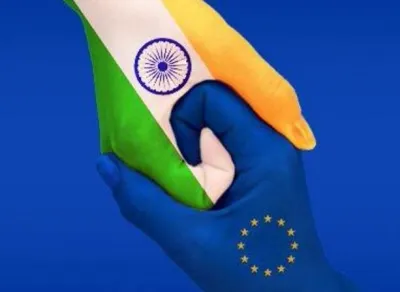
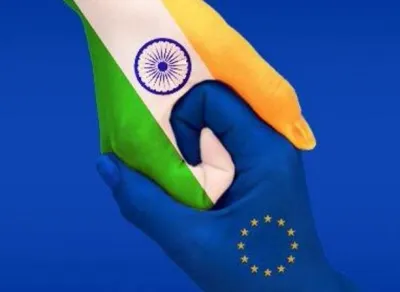
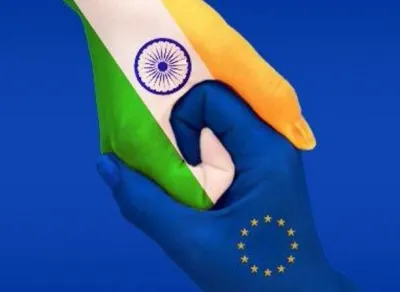
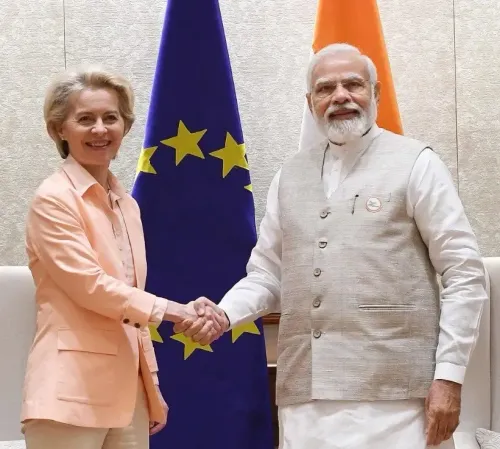
New Delhi, March 7 (NationPress) With its vast demographic potential, growing industrial sector, and aspirations for a more significant global presence, India presents the European Union (EU) with unique economic prospects and geopolitical significance, according to a recent report.
The article published in EU Reporter highlights that one of the most evident signs of this transformation is the rapid strengthening of EU–India relations.
As per the report, the revival of talks for a long-awaited free trade agreement, along with increased collaboration on supply chains, digital governance, eco-friendly technologies, and critical infrastructure, coupled with the EU's increasing involvement in the Indo-Pacific, indicates a deliberate strategic choice rather than a mere diplomatic formality.
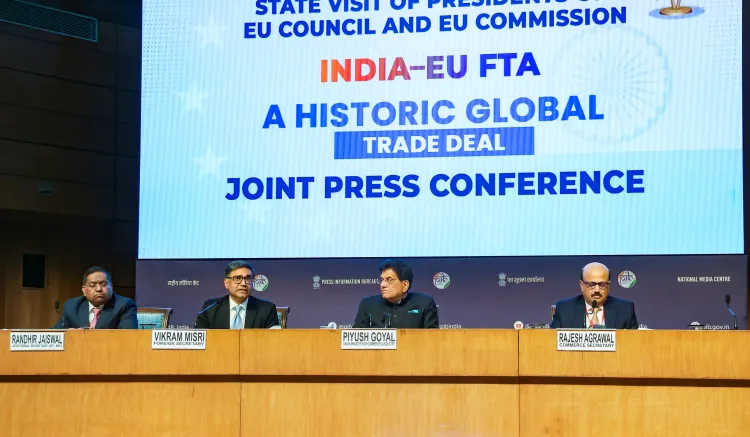
The anticipated successful completion of the negotiations regarding the EU-India Free Trade Agreement (FTA) occurs amidst a significant shift in the global strategic landscape, prompting both parties to intensify efforts to recalibrate their economic partnership.
Additionally, Europe’s strategic pivot toward India signifies an acknowledgment of a transforming world order.
“The achievement of this partnership will hinge on the Union's ability to merge external relations with internal stability. Europe has the potential to diversify its alliances, but without institutional unity, its strategic credibility may remain tenuous,” the report emphasized.
The enhanced collaboration between the EU and Israel in areas like research, cybersecurity, and energy initiatives in the Eastern Mediterranean follows similar logic to that of its engagement with India.
“Brussels aims to bolster networks in critical technologies and regional balances. These partnerships are not replacements for existing alliances but rather complementary layers of resilience,” the report stated.
Collaboration with India can be viewed through two lenses.
It serves to complement broader Western initiatives aimed at counterbalancing China’s influence in the Indo-Pacific.
At the same time, it showcases Europe’s intention to cultivate strategic flexibility—the ability to broaden partnerships without compromising alliance commitments, as mentioned in the report.
The EU-India relationship also reflects a wider challenge for Europe.
The report noted that enhancing economic ties with a rising power must be carefully balanced with the Union’s regulatory agendas, sustainability commitments, and internal political cohesion.
Point of View
I recognize the importance of India's rising influence on the global stage and its implications for the EU. The report underscores the necessity for strategic partnerships in an increasingly multipolar world, emphasizing the importance of balancing economic interests with regulatory priorities.
NationPress
19 Sept 2026
Frequently Asked Questions
What economic opportunities does India offer the EU?
India offers the EU a growing industrial base, potential for a free trade agreement, and collaboration in critical technologies, supply chains, and sustainable practices.
How does the EU-India relationship impact global geopolitics?
The EU's engagement with India is part of a broader strategy to balance China's influence in the Indo-Pacific and ensure regional stability.
What challenges does the EU face in its relationship with India?
The EU must balance deepening economic ties with India against its regulatory priorities, sustainability commitments, and internal political alignment.