CM Pema Khandu hails BRO's 'Keep a Book, Take a Book' drive in Tawang
Synopsis
Arunachal Pradesh CM Pema Khandu has applauded BRO's 763 BRTF for launching 'Keep a Book, Take a Book' reading outlets across schools and tourist spots in Tawang, calling it nation-building beyond infrastructure.
Key Takeaways
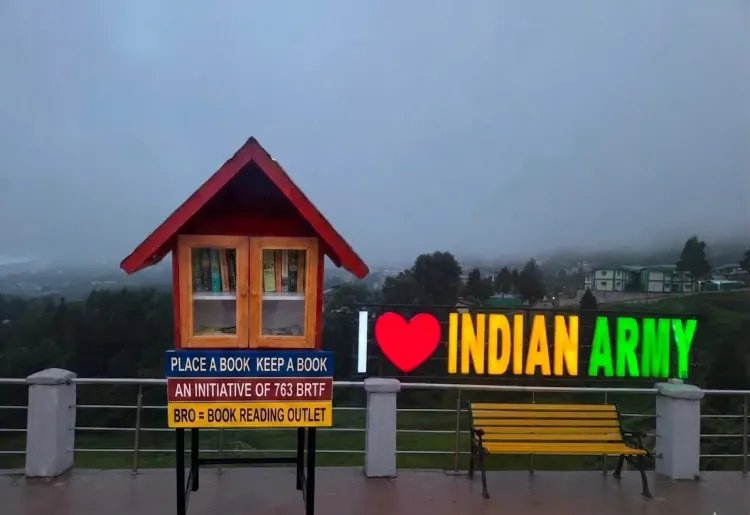
763 BRTF, Project Vartak, BRO has set up free Book Reading Outlets in Tawang under the 'Keep a Book, Take a Book' concept.
Outlets are placed at schools and tourist spots, targeting students, local communities, and travellers.
The initiative requires no cost or registration — books are left and taken freely by participants.
CM Pema Khandu described the drive as 'nation-building beyond infrastructure' on 4 August 2026 .
Project Vartak is BRO's Arunachal Pradesh project, primarily known for road construction in strategic border terrain.
Tawang's high-altitude, remote location makes decentralised literacy access particularly significant.
Books are now travelling to India's borders — and the army engineers who build roads through the Himalayas are making it happen. Arunachal Pradesh Chief Minister Pema Khandu on Tuesday, 4 August 2026, praised 763 Border Roads Task Force (BRTF) of Project Vartak, Border Roads Organisation (BRO), for setting up free Book Reading Outlets across schools and tourist spots in Tawang under the 'Keep a Book, Take a Book' concept.
The initiative is disarmingly simple: leave a book, pick one up. No cost, no registration, no barriers. Outlets placed at schools and tourist locations mean the scheme reaches three distinct audiences at once — students hungry for learning, local communities in one of India's most remote frontier districts, and the steady stream of travellers who make the pilgrimage to Tawang's monasteries and war memorials.
BRO's quiet pivot from roads to reading rooms
Project Vartak is the BRO project responsible for road construction and maintenance in Arunachal Pradesh. The 763 BRTF unit operates under its umbrella, typically tasked with building and sustaining border connectivity in some of the country's most strategically sensitive terrain. Deploying that same organisational muscle toward literacy outreach marks a visible, if unofficial, expansion of what 'border infrastructure' can mean.
CM Khandu called it 'nation-building beyond infrastructure' — a phrase that signals how the initiative is being read politically and culturally. Tawang, which sits at roughly 10,000 feet above sea level near the China border, has long been a focal point of India's developmental and strategic attention. A literacy initiative here carries weight well beyond its modest footprint.
Why a book-swap scheme at the frontier matters
Access to reading material in high-altitude border districts is genuinely constrained — supply chains are long, bookshops are scarce, and school libraries are often thin. A decentralised, self-replenishing model like 'Keep a Book, Take a Book' sidesteps all of that. It asks only that the community sustain it, which is also its quiet bet on civic participation.
Placing outlets at Tawang's tourist spots is a practical masterstroke: visitors from across India naturally bring books with them and are often willing to leave one behind. The local community, in turn, gains access to a rotating, self-refreshing collection — something no fixed budget could easily replicate.
For a district that doubles as both a cultural landmark and a geopolitical flashpoint, the message is layered: the frontier is not just defended, it is nurtured.
Point of View
CM Khandu reinforces a political narrative that development in border districts is holistic — roads, connectivity, and now culture. The 'Keep a Book, Take a Book' model is also notable for its zero-cost scalability: if it takes root in Tawang, replication across other BRO-administered districts becomes an easy ask. The real test will be whether the community sustains the book stock once the initial push fades.
NationPress
4 Aug 2026
Frequently Asked Questions
What is the 'Keep a Book, Take a Book' initiative in Tawang?
It is a free book-exchange programme launched by 763 BRTF, Project Vartak, BRO in Tawang , where anyone can leave a book and take one in return at outlets set up across schools and tourist spots.
Which BRO unit started the book reading outlets in Tawang?
763 Border Roads Task Force (BRTF) , operating under Project Vartak of the Border Roads Organisation, launched the initiative.
What did CM Pema Khandu say about the BRO book initiative?
CM Pema Khandu praised the initiative as a 'thoughtful' and 'wonderful example of nation-building beyond infrastructure,' applauding 763 BRTF for taking reading culture to border communities.
Where exactly are the book outlets set up in Tawang?
The outlets have been placed at schools and tourist spots across Tawang , targeting students, local residents, and visitors to the district.
What is Project Vartak of the BRO?
Project Vartak is the Border Roads Organisation's project responsible for road construction and maintenance in Arunachal Pradesh , operating in strategically sensitive border terrain.