India's 2026 Trade Agreements: A New Era of Global Economic Integration
Synopsis
India's trade agreements in 2026 are reshaping its global economic landscape, signaling a pivotal shift towards deeper integration. With landmark deals and enhanced partnerships, the nation is set to boost exports, attract investments, and create jobs. Explore how these agreements are transforming India's trade ecosystem.
Key Takeaways
India's trade agreements in 2026 indicate a significant shift towards global economic integration.
Key partnerships include the EU, US, Israel, Canada, and ASEAN nations.
These agreements aim to enhance market access, boost exports, and attract investments.
The India-GCC FTA is set to promote trade and regional security.
India's trade ecosystem is becoming increasingly resilient and interconnected.
New Delhi, Feb 27 (NationPress) India’s trade agreements in 2026 mark a significant transition towards enhanced global economic integration, as confirmed by an official statement released on Friday.
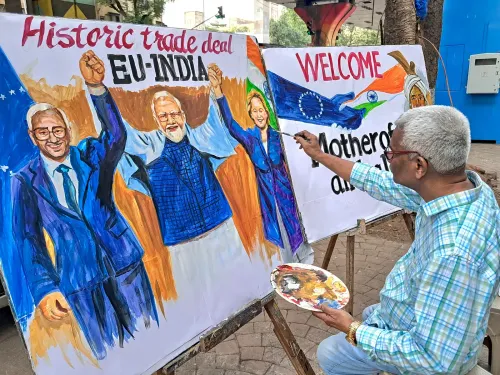
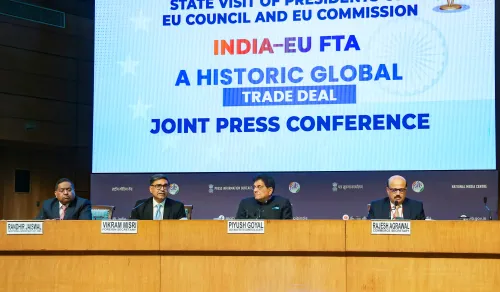
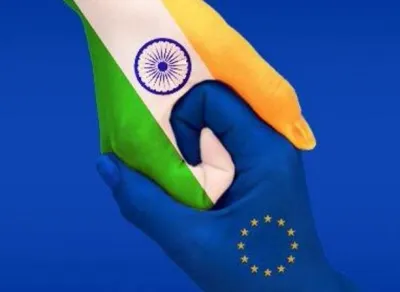
A landmark accord with the European Union, along with additional fortified alliances, is broadening market access, elevating exports, attracting investments, and generating new job opportunities across various sectors.
“With supportive domestic policies, financial frameworks, and regulatory measures aimed at enhancing exporter competitiveness, India’s trade landscape is evolving into a more resilient and globally interconnected system,” the statement elaborated.
Importantly, several leading economies are currently in active discussions with India to deepen trade and investment connections through Free Trade Agreements (FTAs) and comprehensive economic partnerships.
In February, India established a framework understanding with the United States for an Interim Agreement designed to foster reciprocal and mutually advantageous trade.
This framework reinforces both nations' dedication to the broader negotiations surrounding the US-India Bilateral Trade Agreement (BTA), which will encompass further market access commitments and promote more robust supply chains.
Additionally, India and Israel formalized the Terms of Reference for a Free Trade Agreement (FTA) in November, with the inaugural round of FTA discussions wrapping up this month, laying the groundwork for structured dialogues on targeted areas to enhance trade and economic collaboration.
“Negotiations for the ASEAN-India Trade in Goods Agreement (AITIGA) are also progressing, with the potential to unlock the full economic capabilities of member nations and further solidify regional cooperation,” the statement noted.
Furthermore, talks between India and Mexico have focused on reinforcing bilateral trade and investment connections, emphasizing trade expansion, investment growth, enhanced economic collaboration, business partnerships, and exploration of opportunities across various sectors.
Concurrently, discussions with Canada continue regarding a Comprehensive Economic Partnership Agreement, supported by mutually agreed terms of reference.
This proposed agreement aims to increase bilateral trade to approximately $50 billion by 2030 through tariff reductions and clearer frameworks for services and investments.
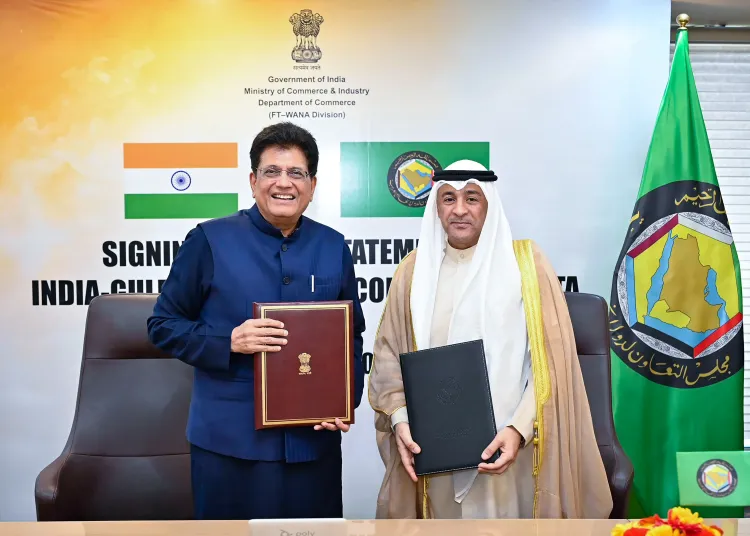
The statement also mentioned that the Terms of Reference (ToR) for the India-GCC Free Trade Agreement (FTA) were signed this month, followed by a Joint Statement formally initiating negotiations for a comprehensive and mutually beneficial agreement.
This FTA aims to facilitate the smooth flow of goods and services, attract investments, while simultaneously expanding job opportunities and promoting food and energy security in the region, thereby strengthening deep economic ties.
Point of View
It is clear that the nation is strategically positioning itself for a robust economic future. The focus on enhancing partnerships with major economies like the US, EU, and others reflects a thoughtful approach to fostering resilience and competitiveness in the global market. This is a commendable step toward ensuring that India remains a key player on the world stage.
NationPress
17 Sept 2026
Frequently Asked Questions
What are the key trade agreements India has signed in 2026?
In 2026, India has signed key trade agreements with the European Union, the United States, Israel, and is in discussions with Canada and ASEAN member countries, focusing on enhancing trade and investment ties.
How will these agreements impact India's economy?
These agreements are expected to broaden market access, increase exports, attract foreign investment, and create new job opportunities, thereby strengthening India's economic landscape.
What is the goal of the India-Canada Comprehensive Economic Partnership Agreement?
The goal of the India-Canada Comprehensive Economic Partnership Agreement is to elevate bilateral trade to approximately $50 billion by 2030 through tariff reductions and clearer frameworks for services and investments.
What are the benefits of the India-GCC Free Trade Agreement?
The India-GCC Free Trade Agreement aims to facilitate the seamless flow of goods and services, attract investments, and expand job opportunities while promoting food and energy security in the region.
What potential does the ASEAN-India Trade in Goods Agreement hold?
The ASEAN-India Trade in Goods Agreement has the potential to unlock the full economic capabilities of member countries and strengthen regional cooperation.