Karnataka signs ISEG pact for Bengaluru Economic Master Plan 2032–2037
Synopsis
As Bengaluru marks 500 years of its founding, Karnataka has formally partnered with ISEG to draft an Economic Master Plan through 2037 — backed by a ₹2 lakh crore phased programme. With the city generating 42% of India's software exports and a per capita income double the state average, the blueprint could define whether India's tech capital can truly compete on a global urban stage.
Key Takeaways
Karnataka signed a Statement of Intent with ISEG on 6 May to prepare a Bengaluru Economic Master Plan for 2032–2037 .
Shivakumar presided over the signing at Vidhana Soudha , Bengaluru.
Bengaluru contributes 42% of India's software exports and has a metropolitan per capita income of $8,850 — reportedly double the Karnataka state average.
A phased infrastructure plan worth nearly ₹2 lakh crore is already being implemented.
ISEG has been given four months to submit the draft blueprint; it has previously prepared plans for Mumbai, Pune, Visakhapatnam , and Varanasi .
The plan will address employment, tourism, housing, and traffic — with inputs from citizens, industry, and key sectors.
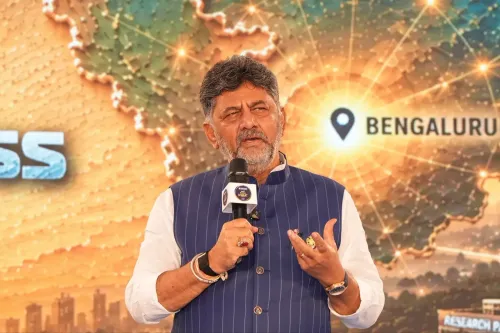
The Karnataka government on 6 May signed a Statement of Intent with the Institute for Sustainable Employment and Growth (ISEG) to prepare a comprehensive Economic Master Plan for Bengaluru, setting the city on a formal path to compete with global metropolitan hubs. The agreement was exchanged at Vidhana Soudha in the presence of Deputy Chief Minister D.K. Shivakumar, who also holds the Bengaluru Development portfolio.
What the Agreement Covers
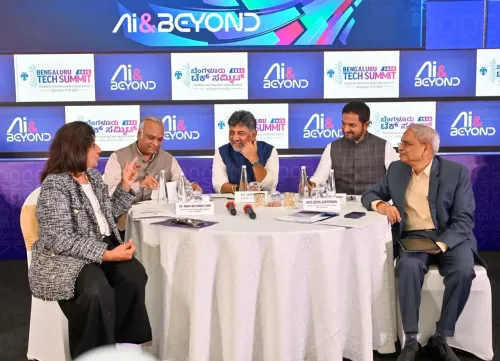
Additional Chief Secretary of the Urban Development Department Tushar Giri Nath and ISEG Director Shirish Sankhe exchanged the signed documents at the ceremony. The master plan is envisaged for the period 2032 to 2037 and will be data-driven, covering employment creation, tourism development, housing schemes, and traffic congestion management. According to Shivakumar, the blueprint will not impose any additional financial burden on the state exchequer, with opinions to be sought from citizens, industry, and sectors including energy, water, urban development, and information technology.
Bengaluru by the Numbers
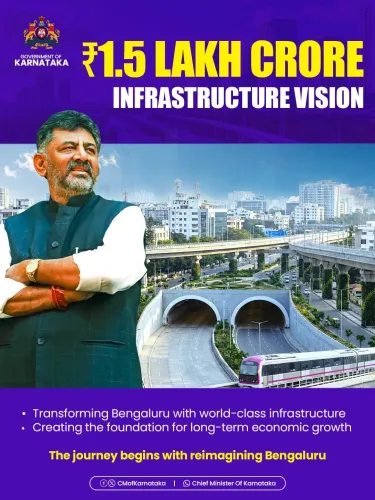
The city's economic weight makes the exercise significant. Bengaluru contributes 42% of India's software exports and spans urban, rural, and southern districts covering more than 8,000 sq km, with a population of 16 million. The per capita income in the Bengaluru Metropolitan Area stands at $8,850 — reportedly double the Karnataka state average. A phased infrastructure plan worth nearly ₹2 lakh crore is already being implemented, according to Shivakumar.
What Deputy CM Shivakumar Said
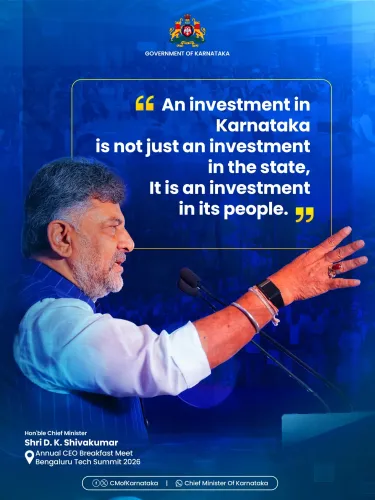
Speaking at the event, Shivakumar said, "As Bengaluru city completes 500 years after its formation, we have been deliberating on formulating a comprehensive Economic Master Plan for the period 2032 to 2037. We have therefore decided to give Bengaluru a new form and renewed strength." He added that the city had received "record levels of economic strength" over the past three years and that a blueprint would provide clear directions on employment zones, tourism corridors, housing schemes, and traffic solutions. On congestion, he noted: "I have seen heavier traffic congestion in other cities of the country like Mumbai, Delhi, and Kolkata. We have formulated a plan on how to solve this problem."
ISEG's Track Record and Timeline
ISEG has previously formulated similar urban economic plans for Mumbai, Visakhapatnam, Pune, and Varanasi. The foundation has been given a four-month window to submit the Bengaluru blueprint. Shivakumar directed state officials to extend full cooperation to the ISEG team and called on citizens, developers, industrialists, and educational institutions to participate in shaping the plan.
What Comes Next
With the Statement of Intent now signed, ISEG is expected to begin consultations across key sectors immediately, with the draft blueprint due within four months. The master plan will then inform Bengaluru's long-term urban and economic strategy through 2037, as the city marks its 500th year of recorded history. Whether the ambitious ₹2 lakh crore phased programme and the new master plan can together address Bengaluru's chronic infrastructure gaps — from potholed roads to water scarcity — will be the real measure of success.
Point of View
Not a talking point. But the gap between vision documents and ground reality in Indian urban governance is equally well-documented. ISEG's prior plans for Mumbai and Pune were credible exercises; whether Karnataka's political will can translate a 2032–2037 master plan into actionable zoning, infrastructure delivery, and jobs accountability is the harder question. The ₹2 lakh crore figure already in motion sounds large, but Bengaluru's infrastructure deficit — water, roads, public transit — has compounded for two decades. A data-driven master plan is necessary; it is far from sufficient.
NationPress
20 Sept 2026
Frequently Asked Questions
What is the Bengaluru Economic Master Plan signed by Karnataka and ISEG?
It is a comprehensive urban and economic blueprint for Bengaluru covering the period 2032 to 2037, to be prepared by the Institute for Sustainable Employment and Growth (ISEG) under a Statement of Intent signed on 6 May. The plan will address employment creation, tourism, housing, and traffic congestion, guided by data and citizen inputs.
Who signed the Karnataka-ISEG agreement and where?
Additional Chief Secretary Tushar Giri Nath and ISEG Director Shirish Sankhe exchanged the signed documents at Vidhana Soudha, Bengaluru, in the presence of Deputy Chief Minister D.K. Shivakumar on 6 May.
Why is Bengaluru being given an Economic Master Plan now?
The city is marking 500 years since its founding, and Karnataka wants to formalise a long-term growth strategy. Bengaluru contributes 42% of India's software exports and has a metropolitan per capita income of $8,850 — reportedly double the state average — making structured planning critical to sustaining that lead.
How long will ISEG take to prepare the Bengaluru blueprint?
ISEG has been given four months to submit the draft Economic Master Plan. The foundation has previously prepared similar plans for Mumbai, Visakhapatnam, Pune, and Varanasi.
Will the Bengaluru master plan cost Karnataka additional money?
Deputy CM Shivakumar has stated the data-driven Economic Master Plan will not impose any additional financial burden on the state. A separate phased infrastructure programme worth nearly ₹2 lakh crore is already being implemented independently.